Abu Dhabi vs Dubai for Expats: Cost of Living, Lifestyle, and Career Compared
Updated Sources DCT Abu Dhabi, UAE Legislation
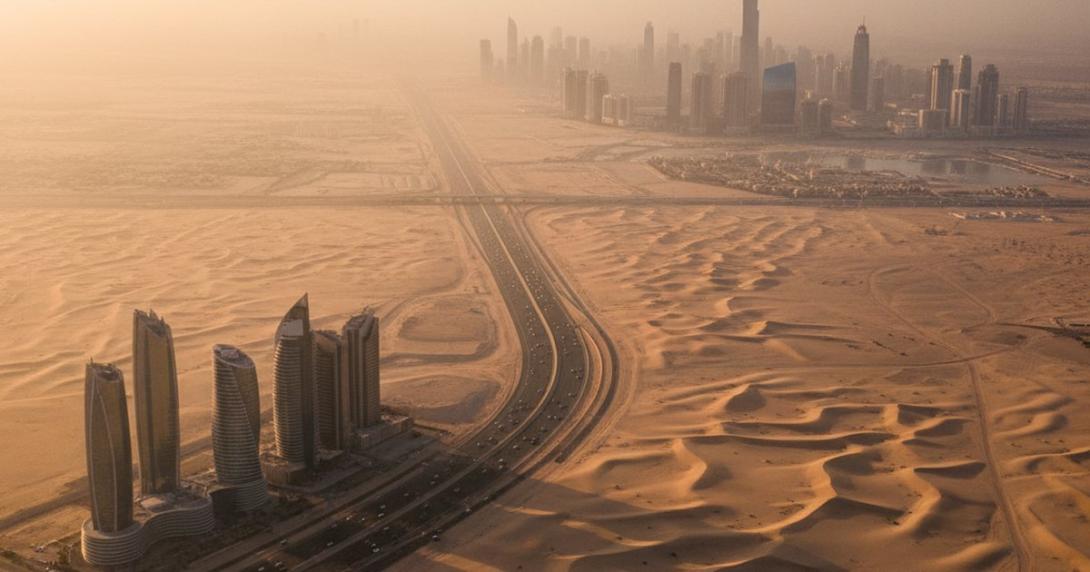
Abu Dhabi and Dubai are 140 kilometres apart, share a federation, and look superficially similar from the outside — but they feel like different countries to the expats who live in them. Dubai is the UAE's commercial and tourist capital: dense, fast-paced, international, glitzy. Abu Dhabi is the political and oil capital: spacious, quieter, more conservative, with a stronger institutional and government presence. Salaries are often higher in Abu Dhabi, especially for energy, government, defence, and finance roles. Lifestyle, schools, healthcare, and entertainment are excellent in both. This guide walks through the differences across the dimensions that actually matter when you are deciding where to base yourself.
Abu Dhabi vs Dubai at a Glance
Rents are average asking rents from Bayut's H1 2026 rental reports, across the affordable and mid-tier areas each report covers.
| Factor | Abu Dhabi | Dubai |
|---|---|---|
| Population (whole emirate) | 4.14 million (2024) | 4.58 million (end of 2025) |
| 1-bedroom apartment (annual rent) | AED 59,000–94,000 | AED 56,000–104,000 |
| Salary index for the same role | Often higher in energy, government and defence | Baseline |
| Pace of life | Calmer, more institutional | Fast-paced, commercial |
| Alcohol | No personal licence since 2020: aged 21+, from licensed shops, drunk at home or in licensed venues | Licensed venues and shops under Dubai's own rules; aged 21+ |
| Metro | No metro | Yes — Red Line (with its Route 2020 branch) and Green Line |
| Best for | Families, government / energy / defence careers, longer-term settlers | International careers, single professionals, lifestyle, rapid networking |
Cost of Living: Rent
Rent is the single biggest line item for most expats and the most direct comparison point between the two emirates. The table gives average asking rents from Bayut's H1 2026 rental market reports for each emirate, from the cheapest to the dearest of the affordable and mid-tier areas each report covers; the 3-bedroom row covers luxury areas, because the reports give no 3-bedroom apartment rents for affordable or mid-tier areas, and ultra-luxury areas cost more. On these figures the cheapest areas of the two emirates cost about the same, and Dubai's dearer mid-tier areas cost more.
| Apartment type | Abu Dhabi (annual, H1 2026) | Dubai (annual, H1 2026) |
|---|---|---|
| Studio | AED 39,000–70,000 | AED 40,000–73,000 |
| 1 bedroom | AED 59,000–94,000 | AED 56,000–104,000 |
| 2 bedrooms | AED 70,000–128,000 | AED 72,000–148,000 |
| 3 bedrooms (luxury areas) | AED 145,000–235,000 | AED 212,000–362,000 |
| Villa (3–4 bed) | AED 132,000–261,000 | AED 112,000–341,000 |
Abu Dhabi's rental market is concentrated on the main island (Reem Island, Saadiyat, Yas, the Corniche, and the older central areas) and increasingly on the mainland (Khalifa City, Mohammed Bin Zayed City, Al Reef). Dubai has a much wider range of distinct neighbourhoods at very different price points — Downtown, Marina, JBR, Business Bay, Al Barsha, JLT, Dubai South, etc. — which means Dubai offers both cheaper and more expensive options depending on where you choose to live.
Cost of Living: Everything Else
Outside of rent, day-to-day costs are very similar across both emirates. Supermarket prices at Carrefour, Lulu, Spinneys, and Waitrose are essentially identical. Utility bills (TAQA Distribution, formerly ADDC, in Abu Dhabi; DEWA in Dubai) are broadly comparable for similar-sized accommodation. Fuel prices are set nationally and identical across all emirates.
Where costs diverge is in dining, entertainment, and lifestyle services. Dubai has more competition and a wider price range across both ends of the market — you can eat very cheaply or very expensively depending on where you go. Abu Dhabi's restaurant scene is smaller and slightly skewed upmarket; mid-range dining tends to be a touch more expensive than equivalent Dubai venues.
Salaries: Where Abu Dhabi Often Pulls Ahead
For comparable roles, salaries in Abu Dhabi are often higher than in Dubai — particularly in energy, oil and gas, government and semi-government, defence, sovereign wealth (Mubadala, ADIA, ADQ), and international institutions. Abu Dhabi-based employers are also more likely to offer traditional expatriate packages: housing allowance, school fees, annual flights.
Dubai's salary picture is more mixed. The commercial sector is broader and more competitive, but salaries are benchmarked tightly to market rates. Tech, media, hospitality, retail, and aviation are large employer categories. Salary packages in Dubai are more often "all-in" without separate housing or school allowances.
For a senior professional with the same skill set, the calculation is usually: a slightly higher base in Abu Dhabi plus traditional package extras versus a slightly lower base in Dubai with no allowances but a more international career trajectory. Both can work; they suit different career stages.
Lifestyle: Pace, Dress Code, and Alcohol
Dubai is the more cosmopolitan and faster-paced of the two. The city is built for tourists and international business, so the public realm in tourist and residential areas is relaxed about dress code. Bars and licensed restaurants are everywhere. Federal law allows drinking or possessing alcohol only "in the cases and at places authorized" by each emirate's rules, punishes drinking it in a public place or anywhere else not authorised with up to six months' imprisonment and/or a fine, and makes it a crime to sell or serve alcohol to anyone under 21 (Federal Decree-Law No. 31 of 2021, Article 363). Dubai's licensed shops sell under Dubai's own rules, so check what the shop asks for before you buy.
Abu Dhabi is more conservative in pace and atmosphere, but it stopped issuing personal alcohol licences in September 2020: anyone aged 21 or over may buy alcohol from licensed shops for personal consumption, not for resale or storage, and may drink it only at home or inside licensed venues (DCT Abu Dhabi Circular 67/2020). Dress code in Abu Dhabi public spaces and government offices is slightly more conservative than equivalent Dubai venues; modest dress is expected in malls and public buildings.
Both emirates have UNESCO-recognised cultural assets. Abu Dhabi hosts the Louvre Abu Dhabi, the Sheikh Zayed Grand Mosque, Saadiyat cultural district (Guggenheim Abu Dhabi opens 2026), the Qasr Al Watan presidential palace tour, and Yas Island (F1 Etihad Airways Grand Prix, Ferrari World, Yas Waterworld, Warner Bros World). Dubai's lifestyle stack is different — the Dubai Mall, Burj Khalifa, Palm Jumeirah, Dubai Marina nightlife, beach clubs, and a much larger restaurant scene.
Schools and Education
Both emirates have strong international school options across British, American, Indian (CBSE), French, German, and IB curricula. Abu Dhabi's private schools are regulated by ADEK (Abu Dhabi Department of Education and Knowledge); Dubai's are regulated by KHDA (Knowledge and Human Development Authority).
Dubai has slightly more raw choice — 233 private schools (KHDA, 2025–26) against 220 across the emirate of Abu Dhabi (ADEK, October 2025) — and some of the most well-known international school brands have multiple Dubai campuses. Abu Dhabi's school market is slightly smaller but very high-quality, with strong British and American school options especially on Saadiyat and Yas Islands.
Fees vary widely by school and year group in both emirates. KHDA's Dubai school directory, read in October 2026, lists annual tuition from AED 2,859 to AED 161,000 per child; in Abu Dhabi, ADEK regulates each school's fees, so compare the schools you are considering school by school.
School fees are the second biggest expat cost after rent. Many Abu Dhabi-based employers (especially government and oil-and-gas) cover school fees as part of the employment package; Dubai's mid-market employers more commonly do not.
Healthcare
Both emirates have excellent private healthcare. Abu Dhabi's network is anchored by Cleveland Clinic Abu Dhabi, Mediclinic Airport Road, Burjeel, and NMC. Dubai's network is broader and more decentralised, with American Hospital Dubai, Mediclinic City Hospital, Saudi German, Aster, NMC, and a long list of specialty clinics.
Mandatory health insurance is in place in both emirates. In Abu Dhabi, employers and sponsors must insure their employees and their families (one spouse and three children under 18); Thiqa, the Abu Dhabi Government's programme, covers UAE nationals, those with a similar status and non-UAE nationals sponsored by a UAE national family member. In Dubai (DHA-regulated), the Essential Benefits Plan is the minimum — most employers provide more comprehensive plans on top.
Commute and Public Transport
Dubai has the UAE's only metro system (the Red Line, including its Route 2020 branch, and the Green Line) plus tram, bus, and water-taxi networks. The metro is the spine of intra-Dubai commuting for many expats, particularly those living and working along Sheikh Zayed Road.
Abu Dhabi has no metro. Public transport is bus-based, supplemented by Careem and Uber. Most Abu Dhabi residents drive — fortunately the city's grid layout, wide roads, and lower traffic density make driving easier than in central Dubai. Darb toll gates charge AED 4 a crossing at peak hours on the four main bridges into Abu Dhabi, and around the clock since 4 May 2026 at two newer gates: Al Qurm, on Wahat Al Karama Street at Sheikh Zayed Street, and Ghantoot, on Sheikh Maktoum bin Rashid Street (Sheikh Mohammed bin Rashid Al Maktoum Street is the alternative route).
Inter-city: Abu Dhabi to Dubai is 140 km along the E11 highway, about 1 hour 15 minutes off-peak by car. RTA intercity buses run between the two, and Etihad Rail's passenger network, running between Abu Dhabi and Fujairah since 30 June 2026, adds its Dubai station from 30 September 2026.
Career Trajectories: Who Goes Where
Abu Dhabi tends to attract: energy professionals (ADNOC, Mubadala Energy), defence and aerospace (EDGE Group, Rolls-Royce, Northrop Grumman), sovereign wealth and finance (ADIA, Mubadala, ADQ), government and semi-government roles, academia (NYU Abu Dhabi, Sorbonne), and senior expats with families looking for a quieter life with strong long-term packages.
Dubai tends to attract: tech professionals, financial services (DIFC banks, hedge funds, asset managers), media and creative (Dubai Media City), aviation (Emirates, Etihad ground operations), hospitality, real estate, retail, and entrepreneurs starting businesses in free zones (DMCC, Dubai Internet City, JAFZA, IFZA).
For early-career expats and those building international networks fast, Dubai's commercial density usually wins. For senior expats with families, longer time horizons, and traditional package preferences, Abu Dhabi often comes out ahead.
Which Is Right for You?
Choose Abu Dhabi if: you have a family with children, your career is in energy, government, sovereign wealth, defence, or academia, you value a calmer pace and broader living space, you prefer cultural and outdoor lifestyle (Corniche, Saadiyat, Yas) over nightlife, or your employer is offering a traditional expat package with housing and school fees.
Choose Dubai if: you are a single professional or couple without children, your career is in tech, finance, media, hospitality, or entrepreneurship, you value speed and density of professional networking, you want metro access and shorter intra-city commutes, or you prefer the wider lifestyle and entertainment range.
Many expats spend years in one emirate before moving to the other as life circumstances change — Dubai for the early career, Abu Dhabi when settling down with a family is a common arc.
Part of the UAE Expat Guide — see the full series for the rest of the relocation sequence.
Frequently Asked Questions
Is Abu Dhabi cheaper than Dubai?
Slightly, at the dearer end: in Bayut's H1 2026 reports, a 1-bedroom averaged AED 59,000–94,000 a year in asking rent across Abu Dhabi's affordable and mid-tier areas, against AED 56,000–104,000 in Dubai's. Day-to-day costs (groceries, utilities, fuel) are essentially identical between the two emirates. Where Abu Dhabi has a meaningful cost advantage is in employer-provided packages — Abu Dhabi-based employers more commonly cover housing and school fees as part of the package.
Are salaries higher in Abu Dhabi or Dubai?
For comparable roles, Abu Dhabi salaries can be higher, particularly in energy, oil and gas, government and semi-government, defence, and sovereign wealth. Dubai's salary picture is more mixed — competitive in tech, finance, and media but rarely higher than Abu Dhabi's traditional sectors. Abu Dhabi packages also more commonly include housing and school fees on top of base salary.
Do I need an alcohol licence in Abu Dhabi?
No. Abu Dhabi cancelled personal alcohol licences in September 2020 (DCT Abu Dhabi Circular 67/2020): anyone aged 21 or over may buy alcohol from licensed shops for personal consumption, not for resale or storage, and may drink it only at home or inside licensed venues. Drinking in a public place, or anywhere else not authorised, is a crime under federal law (Federal Decree-Law No. 31 of 2021, Article 363).
How long is the drive from Abu Dhabi to Dubai?
Approximately 1 hour 15 minutes off-peak along the E11 highway. The 140-kilometre drive can stretch to 2 hours during morning and evening rush hours, particularly Friday-Sunday traffic. Many expats commute weekly or daily between the two for work, especially professionals based in one and partners working in the other.
Are international schools cheaper in Abu Dhabi than Dubai?
There is no official like-for-like comparison, and fees vary widely by school and year group in both emirates. KHDA's Dubai school directory, read in October 2026, lists annual tuition from AED 2,859 to AED 161,000 per child; in Abu Dhabi, ADEK regulates each school's fees, so compare the schools you are considering.
Does Abu Dhabi have a metro?
No, Abu Dhabi does not currently have a metro system — only Dubai does. Public transport in Abu Dhabi is bus-based, supplemented by ride-hailing apps. Most residents drive; the city's grid layout and lower traffic density make driving easier than in central Dubai.
Is Abu Dhabi or Dubai better for families?
Abu Dhabi tends to be the family choice. The pace is calmer, residential spaces are larger for the rent, traffic is lower, schools are excellent (and often covered by employer packages), and the city is built around family-friendly destinations — the Corniche, Saadiyat, Yas Island, and the cultural attractions on Saadiyat Cultural District. Dubai works for families too but the pace and density are higher and packages less commonly include school fees.
Can I live in one emirate and work in the other?
Yes, and many expats do. Your UAE residence visa is issued based on your employer's emirate, but you can live anywhere in the UAE. The 140 km Abu Dhabi–Dubai corridor is busy with daily and weekly commuters, particularly senior professionals working in Abu Dhabi who maintain a Dubai household, or vice versa.
Sources
The pages this guide is based on, official ones first, and when each was last checked against it.
-
DCT Abu Dhabi Circular 67/2020 of 15 September 2020 — personal alcohol licences cancelled; anyone aged 21 or over may buy from licensed shops for personal consumption, not resale or storage, and drink at home or inside licensed venues
-
UAE Legislation Federal Decree-Law No. 31 of 2021 (the Crimes and Penalties Law), Article 363 — alcohol only in the cases and places each emirate authorises, the penalty for drinking it in a public place or anywhere else not authorised, and the ban on selling or serving it to anyone under 21; read from the Wayback Machine's capture of 2 Mar 2026
-
UAE Government Portal Health insurance — Thiqa covers UAE nationals, those with a similar status and non-UAE nationals sponsored by a UAE national family member; in Abu Dhabi employers and sponsors insure employees and their families (one spouse, three children under 18); Dubai employers insure their employees
-
DHA The Essential Benefits Plan as the minimum cover Dubai employers must provide
-
Statistics Centre – Abu Dhabi The emirate's 2024 population of 4,135,985
-
Digital Dubai Dubai's population of 4.58 million at the end of 2025, from the Dubai Data and Statistics Establishment
-
KHDA Dubai's 233 private schools for 2025–26
-
KHDA Dubai private schools directory — each school's annual fee by year group, read in October 2026, from AED 2,859 (Crescent English School, KG 1) to AED 161,000 (GEMS School of Research and Innovation, Years 7–9)
-
ADEK The 220 private schools across the emirate of Abu Dhabi (October 2025)
-
Etihad Rail Passenger services between Abu Dhabi and Fujairah from 30 June 2026, and the opening of its Dubai station on 30 September 2026
-
Abu Dhabi Mobility The Al Qurm and Ghantoot Darb gates, AED 4 a crossing around the clock from 4 May 2026, and the alternative routes
-
UAE Government Portal Abu Dhabi's Darb toll gates on the four bridges into Abu Dhabi city, at AED 4 a crossing at peak hours
-
RTA The Red Line, with its branch to Expo 2020 station, the Green Line, and the intercity buses between Dubai and Abu Dhabi
-
UAE Government Portal ADDC and AADC merged to form TAQA Distribution, the power and water distributor in the emirate of Abu Dhabi
-
Bayut (market data) Dubai Rental Market Report H1 2026 — average asking rents by unit type in its affordable, mid-tier and luxury areas
-
Bayut (market data) Abu Dhabi Rental Market Report H1 2026 — average asking rents by unit type in its affordable, mid-tier and luxury areas
Spotted something out of date? Tell us, and we re-check it against the source.
General information based mainly on official public sources, not legal, immigration, tax, financial or medical advice. Rules and fees change: confirm with the relevant authority or a qualified professional before acting. See our Terms of Use.