Renting in Dubai: Ejari, RERA Index, Cheques and the Process Explained
Updated Sources Dubai Land Department, Dubai Legislation Portal
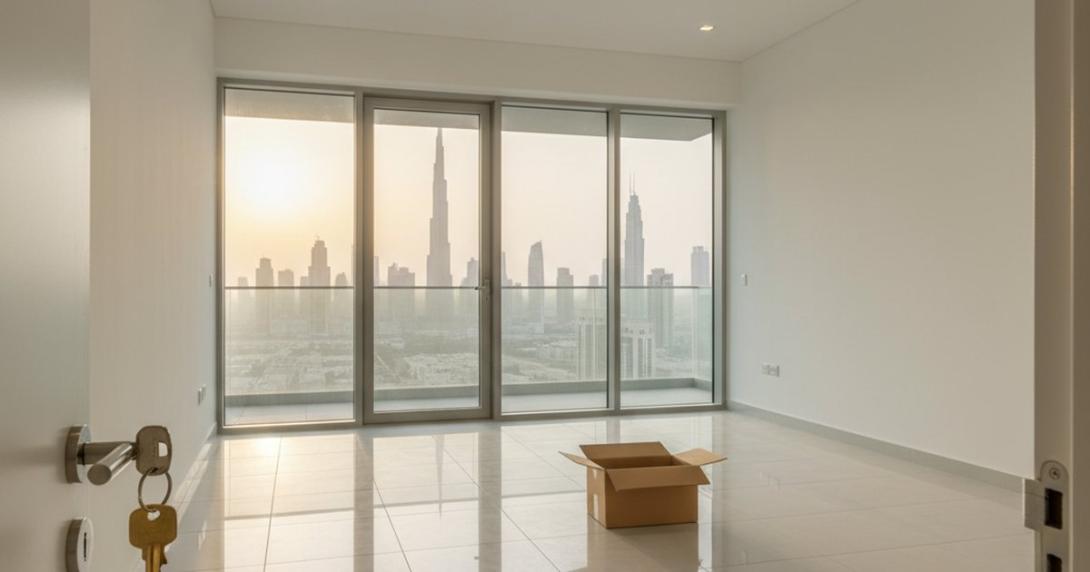
Renting in Dubai is a straightforward process once you understand the local conventions, but those conventions are unlike anywhere else most expats have rented before. The biggest differences: rent is typically paid by post-dated cheques rather than monthly direct debit, you register the lease with a government system called Ejari, usually before the keys are handed over, and rent increases on existing tenancies are governed by a public index (the RERA rental index) that landlords cannot legally exceed. This guide walks through the full process — from finding a place to moving in — and the tenant rights you can fall back on if something goes wrong.
At a Glance
| Item | Detail |
|---|---|
| Standard lease length | 1 year, renewable |
| Security deposit | Set in the lease; the law sets no amount |
| Agent's commission | Up to 5% of annual rent + 5% VAT |
| Rent payment | 1–12 post-dated cheques per year, as agreed with the landlord |
| Ejari registration fee | AED 177.75 (Dubai REST app or DLD website) or AED 220 (trustee centre) |
| DEWA security deposit | AED 2,000 (apartment) or AED 4,000 (villa), per DEWA's move-in page as of June 2026 |
| Notice to change rent or terms | At least 90 days before lease expiry — either side, unless the contract says otherwise |
| Eviction notice | 12 months minimum at lease end, through a Notary Public or by registered mail, on grounds the law lists; sooner for unpaid rent, unapproved subletting and other breaches the law lists, or repairs to buildings 20+ years old |
How Much It Costs Upfront
The total cash needed at signing is significantly more than just the first cheque. Plan for the following on a 1-bedroom apartment renting at AED 80,000 annual:
| Item | Cost (example) | Notes |
|---|---|---|
| First rent cheque | AED 20,000 (4 cheques) to AED 80,000 (1 cheque) | Depends on cheque count agreed |
| Security deposit | AED 4,000 | Example at 5% of annual rent; the law sets no amount |
| Agent's commission | AED 4,200 | Up to 5%, plus 5% VAT on the commission |
| Ejari registration | AED 177.75–220 | One-off; app or trustee centre, including the service partner's fee |
| DEWA connection | AED 2,155 | AED 2,000 deposit + AED 155 activation fees (DEWA, June 2026) |
| Housing fee (5% of rent) | AED 4,000/year | Charged via DEWA, paid monthly |
| Chiller / cooling deposit (if separate) | Varies by provider | For Empower/Tabreed buildings; check the provider's current charges |
| Total cash at signing | ~AED 30,000–95,000 | Depending on cheque structure |
The Cheque System
Almost all Dubai rent is paid in post-dated cheques drawn on a UAE bank. The landlord receives the cheques at signing and deposits them on the dates written. Rent is rarely paid by direct debit or bank transfer — the cheque system is so embedded that most landlords simply will not consider alternatives.
The number of cheques covering the year is the most negotiated point of any lease:
- 1 cheque (full year upfront). Best price; landlords often discount the rent for a single cheque. Rare for high-end apartments.
- 2 cheques (every 6 months). Common compromise. Slight discount possible.
- 4 cheques (quarterly). The standard expat option. No discount, no premium.
- 6 cheques (every 2 months). Some landlords accept; usually slight premium on rent.
- 12 cheques (monthly). Increasingly common, especially through corporate landlords. Some landlords charge a higher rent for it.
You write the cheques at signing. Each one carries the date it can be deposited. Make sure your bank account has cleared funds for each cheque on its due date — bouncing a rent cheque is a serious matter in the UAE. Stopping payment without a lawful reason, emptying or closing the account, or signing a cheque so it cannot be cashed is a crime under Article 675 of the Commercial Transactions Law (Federal Decree-Law No. 50 of 2022), punishable by six months to two years in prison and/or a fine of at least 10% of the cheque's value (minimum AED 5,000). A cheque that bounces only for lack of funds has not been a crime since 2 January 2022, but the landlord can have it enforced directly by the court's execution judge (Article 667), who can attach up to a quarter of your salary (Civil Procedure Code, Article 242); the landlord can also pursue civil and Rental Disputes Centre claims, and seek your eviction if the rent is still unpaid 30 days after a formal notice, unless the lease says otherwise.
Finding an Apartment
Most expats start with online portals. Dubai's biggest are Property Finder, Bayut, and Dubizzle. Each lists apartments from agents and direct landlords. Filter by area, price, bedrooms, furnished/unfurnished, and chiller-included to narrow the field.
Two practical tips: agent listings on the portals are often duplicates (the same apartment listed by multiple agents), and sticker prices are sometimes optimistic. Drive a hard bargain — there is more room below the advertised rent in a soft market than in a tight one.
Major popular areas for expats (for the current average rent in any of them, run the area and unit size through DLD's rental index, described below):
- Downtown / Business Bay. Premium central location near the Burj Khalifa and Dubai Mall.
- Dubai Marina / JBR. Beachfront, walkable, restaurants and bars.
- JLT (Jumeirah Lake Towers). Marina-adjacent, more value, metro access.
- Al Barsha / Mall of the Emirates. Mid-range, good for families.
- Bur Dubai / Deira. Older central neighbourhoods, lower prices.
- Dubai Hills / Damac Hills / Arabian Ranches. Family-oriented, villa-heavy, away from the centre.
- Dubai South / Town Square / Mira. Newer outer developments, lower prices, longer commutes.
Ejari Registration
Ejari is Dubai's mandatory tenancy-registration system, run by the Real Estate Regulatory Agency (RERA) under the Dubai Land Department. Every legal lease in Dubai must be registered in Ejari — without it you cannot get DEWA connected, and GDRFA Dubai asks for an Ejari-registered lease (or a title deed) before you can sponsor family members.
The registration is the landlord's legal responsibility, but in practice it is often delegated to the agent or the tenant. The fee is AED 177.75 through the Dubai REST app or DLD's website, or AED 220 at a Real Estate Services Trustee Centre; both totals include DLD's AED 100 registration fee, AED 10 knowledge and AED 10 innovation fees, and the service partner's fee with its VAT. At a trustee centre DLD puts the service time at 25 minutes, excluding waiting; through the app an employee reviews the request and the certificate arrives by email.
Documents DLD asks for:
- Through the Dubai REST app: a copy of the Unified Tenancy Contract
- At a trustee centre: the original Unified Tenancy Contract, the applicant's Emirates ID, and a power of attorney if a representative applies
Once registered, you receive an Ejari certificate with a unique registration number — keep a copy of this PDF; you will be asked for it many times in the first months.
DEWA Setup
DEWA (Dubai Electricity and Water Authority) handles electricity and water for most of Dubai. Once Ejari is issued, DEWA receives the tenancy details automatically and emails you a welcome message with your new account number, the security deposit and a payment link; no separate application is needed. DEWA's move-in page, as captured in June 2026, lists a refundable deposit of AED 2,000 (apartment) or AED 4,000 (villa) plus AED 155 in activation fees, and promises connection within 15 working hours of payment; the deposit comes back when you move out and final bills are settled.
Cooling (district AC) is often separate from DEWA in newer towers — handled by Empower, Tabreed, EmiCool, or Palm District Cooling depending on the building. The cooling provider may also require its own deposit and connection in your name; check its current charges.
Internet and TV: Etisalat (now branded e&) and du are the two licensed providers. Most buildings are wired for one or both. Prices depend on speed and TV add-ons; compare both providers' current plans.
The RERA Rental Index
The RERA rental index is the single most important tenant protection in Dubai. It is a public index of average market rents maintained by the Dubai Land Department; since 2 January 2025 it has run as the Smart Rental Index, which values each building on its condition, finishes and maintenance, location and services. The index dictates how much a landlord can legally raise the rent at lease renewal — and whether they can raise it at all.
The rules in summary:
| Current rent vs market rate (per RERA index) | Maximum allowed increase |
|---|---|
| Within 10% of market rate | 0% — no increase allowed |
| 11–20% below market rate | 5% |
| 21–30% below market rate | 10% |
| 31–40% below market rate | 15% |
| More than 40% below market rate | 20% |
If your landlord proposes an illegal increase at renewal, you can decline it and continue at the existing rent. If the landlord refuses to renew on those terms, you can file a complaint with the Rental Disputes Centre (RDC) — the rental tribunal at the Dubai Land Department.
Check the current rate for your home on the official Dubai REST app, DubaiNow or the Dubai Land Department's rental-index page: the calculator asks for your contract's expiry date, the property type, the area, the number of rooms and your current rent.
Tenant Rights at Renewal and Eviction
Dubai's tenancy law (Law No. 26 of 2007 and amendments) gives tenants substantial protections. Two are most important:
The 90-day rule. Unless the contract says otherwise, either party — landlord or tenant — must give at least 90 days' written notice before the end of the current tenancy if they want to change the rent or any other lease term. If the landlord does not give notice and proposes a higher rent within 90 days of expiry, the tenant can refuse and the lease auto-renews on the existing terms.
The 12-month eviction notice. When the lease ends, a landlord cannot evict the tenant without 12 months' written notice served through a Notary Public or by registered mail, and only on specific grounds: the landlord (or a first-degree relative) wants to occupy the property and the landlord owns no other suitable property; the landlord wants to sell; or demolition and reconstruction (with permits), or renovation that cannot be done with the tenant in place (confirmed by a Dubai Municipality technical report), requires vacant possession. If the Rental Disputes Centre grants an eviction for personal or family use and the landlord lets the property to someone else within two years, you can ask the Centre for fair compensation. Separately, under Dubai Law No. 3 of 2026 on building quality and safety, tenants of a building 20 or more years old must move out within three months once the authority approves a technical report that requires repairs before the building can be certified, and have priority to return afterwards at the same rent unless agreed otherwise.
Disputes go to the Rental Disputes Centre (RDC) at the Dubai Land Department. RDC filing fees are 3.5% of the annual rent, at least AED 500 and at most AED 20,000 (3.5% of the amount claimed, up to AED 15,000, for a money claim), plus small service charges. Under Decree No. 26 of 2013, a conciliator first tries to settle the dispute, within 15 days of the parties appearing unless a judge extends that; if it settles, half of the court fee paid for basic claims is refunded. Otherwise a tribunal must rule within 30 days of the claim being referred to it, extendable by another 30 days.
Step by Step: From Viewing to Move-In
Step 1 — Find an apartment. Use Property Finder, Bayut, or Dubizzle. Schedule viewings; take notes; negotiate rent.
Step 2 — Reserve. Once you agree a price, the agent typically asks for a security cheque (often a "good faith" cheque held until contract signing) and copies of your passport and Emirates ID to start drafting the contract.
Step 3 — Sign the contract and hand over cheques. The lease is signed at the agent's office or the landlord's premises. You hand over the rent cheques (post-dated), security deposit cheque, and agent's commission cheque (or transfer for the commission). Insist on a signed receipt for each.
Step 4 — Ejari registration. Within a few days of signing, the landlord (or the agent on their behalf) registers the lease in Ejari. You receive the Ejari certificate.
Step 5 — DEWA + cooling setup. Pay the DEWA deposit through the link DEWA emails once Ejari is issued, and apply through the cooling provider's portal. DEWA's move-in page (June 2026) promises supply within 15 working hours of payment.
Step 6 — Move in. Conduct a snagging inspection on day one. Photograph any existing damage and email it to the landlord/agent within the first week so it cannot be charged against your deposit at move-out.
Step 7 — Update Emirates ID address. If your residence visa has been issued under a previous address (or a hotel address while you searched), update your Emirates ID address with the ICP via icp.gov.ae once Ejari is complete.
Furnished vs Unfurnished
Most Dubai rentals are unfurnished. Furnished options are common in tourist-popular areas (Marina, Downtown, JBR) and command a premium. Furnished is convenient short-term but rarely worth the premium for a year or longer — once you've furnished a one-bedroom apartment yourself from IKEA or Pan Emirates, the savings soon catch up.
Short-Term Rentals (Holiday Homes)
Short-term rentals via Airbnb, holiday-home operators such as Frank Porter, Driven Properties and Maison Privee, and similar platforms are an option for the first 1–6 months while you find a permanent place. Rates are well above the equivalent annual rent but typically include bills, furniture and cleaning. A useful bridge for new arrivals not yet ready to commit to a 12-month lease.
Part of the UAE Expat Guide — see the full series for the rest of the relocation sequence.
Frequently Asked Questions
How much do I need upfront to rent an apartment in Dubai?
Plan for roughly 35–45% of the annual rent in cash at signing on a four-cheque lease, and more on fewer cheques — covering the first cheque, a security deposit (the law sets no amount), an agent's commission of up to 5% + VAT, the AED 177.75–220 Ejari fee, the AED 2,000–4,000 DEWA deposit (DEWA's June 2026 figures), and any cooling-provider deposit. On an AED 80,000 1-bedroom apartment that's around AED 30,000–95,000 depending on cheque structure.
What is Ejari and is it mandatory?
Ejari is Dubai's mandatory tenancy-registration system run by the Real Estate Regulatory Agency (RERA). Every legal lease in Dubai must be registered in Ejari before the tenant can get DEWA connected or open a family-sponsorship file with GDRFA Dubai. Registration costs AED 177.75 through the Dubai REST app or AED 220 at a trustee centre, and is the landlord's legal responsibility.
How many cheques do I need to write for rent in Dubai?
The standard is 4 cheques (quarterly). Other common arrangements are 1 cheque (full-year upfront, often at a discount), 2 cheques (every 6 months), 6 cheques (every 2 months), or 12 cheques (monthly, sometimes at a higher rent). The cheque count is negotiated as part of the lease.
How much can a Dubai landlord increase my rent at renewal?
It depends entirely on how your current rent compares to the RERA rental index for your area and apartment size. If you are within 10% of the index, no increase is allowed. If you are 11–20% below, up to 5%. 21–30% below: up to 10%. 31–40% below: up to 15%. More than 40% below: up to 20%. Check the current index on the Dubai REST app.
What happens if a rent cheque bounces in Dubai?
Stopping payment without a lawful reason, emptying, closing or deliberately freezing the account, or signing a cheque so it cannot be cashed is a crime under Article 675 of the Commercial Transactions Law (Federal Decree-Law No. 50 of 2022): six months to two years in prison and/or a fine of at least 10% of the cheque's value (minimum AED 5,000), doubled for a repeat offence. Using a cheque in a fraud carries at least a year in prison and a fine of AED 20,000–100,000 (Article 676). A cheque that bounces only for lack of funds has not been a crime since 2 January 2022, but the landlord can have it enforced directly by the court's execution judge, who can attach up to a quarter of your salary (Civil Procedure Code, Article 242); the landlord can also pursue you through the Rental Disputes Centre, and seek your eviction if the rent is still unpaid 30 days after a formal notice, unless the lease says otherwise. Bounced cheques also damage your banking record. Always make sure cleared funds are in the account before each cheque date.
Can my landlord evict me at the end of the lease?
Only with 12 months' written notice served through a Notary Public or by registered mail, and only on the grounds the law lists: the landlord (or a first-degree relative) wants to occupy the property and the landlord owns no other suitable property; the landlord wants to sell it; or demolition and reconstruction, or renovation that cannot be done while you live there, is planned. If the Rental Disputes Centre grants an eviction for personal or family use and the landlord lets the property to someone else within two years, you can ask the Centre for fair compensation. Separately, under Dubai Law No. 3 of 2026 on building quality and safety, tenants of a building 20 or more years old must move out within three months once the authority approves a technical report that requires repairs before the building can be certified, and have priority to return afterwards at the same rent unless agreed otherwise.
Do I get my security deposit back at move-out?
Yes — minus any deductions for damage beyond fair wear and tear. A snagging inspection on day one (photographs of any pre-existing damage, sent to the landlord/agent within the first week) is essential to protect the deposit. Disputes go to the Rental Disputes Centre.
What is the RERA rental index?
The RERA rental index is a public index of average market rents maintained by the Dubai Land Department; since 2 January 2025 it has run as the Smart Rental Index, which values each building on its condition, finishes and maintenance, location and services. It dictates the maximum allowable rent increase at renewal. Check it on the Dubai REST app or the Dubai Land Department's rental index page before any rent negotiation.
When the tenancy turns adversarial, two companion guides go deeper: is your rent increase legal? (the Decree 43/2013 slabs and the RERA calculator) and Dubai rental disputes (eviction notices, deposits, and filing at the RDC). For other emirates, see renting in Abu Dhabi and renting in Sharjah, and for move-in mechanics utilities setup.
Sources
The pages this guide is based on, official ones first, and when each was last checked against it.
-
Dubai Land Department Ejari registration — AED 177.75 through the Dubai REST app or website, AED 220 at a trustee centre, the documents asked for and the 25-minute service time
-
Dubai Legislation Portal Law No. 33 of 2008 — leases registered with RERA (Art. 4), the 90-day notice to change terms (Art. 14), eviction grounds and the 12-month notice (Art. 25), and the two-year bar on re-letting after an own-use eviction (Art. 26)
-
Dubai Legislation Portal Law No. 26 of 2007 — renewal on the same terms (Art. 6) and the security deposit and its return, less ordinary wear and tear (Arts 20–21)
-
Dubai Legislation Portal Law No. 3 of 2026 on building quality and safety — occupants of a building 20 or more years old must vacate within three months of the approval of a technical report that requires repairs (Art. 12), with priority to return at the same rent (Art. 15)
-
Dubai Land Department Decree No. 43 of 2013 — the five rent-increase slabs measured against the RERA index
-
Dubai Land Department The Smart Rental Index, in use since 2 January 2025, and how it values each building
-
Dubai Land Department The rental index calculator — what it asks for and the channels that offer it
-
Rental Disputes Center Filing fees (3.5%, AED 500 to AED 20,000; AED 15,000 cap on money claims) and half the fee refunded on a settlement
-
Dubai Legislation Portal Decree No. 26 of 2013 — conciliation within 15 days and a ruling within 30 days of referral
-
UAE Government Portal Leasing — landlords register leases with DLD, the 5% housing fee on DEWA bills, and broker commission of up to 5%
-
UAE Government Portal DEWA connection after Ejari, by welcome email with a payment link
-
DEWA Move-in — AED 2,000 or AED 4,000 deposit, AED 155 activation fees, connection within 15 working hours; read from the Wayback Machine's capture of 8 Jun 2026
-
GDRFA Dubai Sponsor file registration — an Ejari-registered lease or a DLD title deed
-
UAE Government Portal The Commercial Transactions Law (Federal Decree-Law No. 50 of 2022) — a returned cheque as an executive document (Art. 667) and the cheque offences and penalties (Arts 675–676)
-
UAE Legislation The Civil Procedure Code (Federal Decree-Law No. 42 of 2022) — salaries attachable only up to a quarter of the wage (Art. 242); read from the Wayback Machine's capture of 11 Jan 2026
-
CBUAE Cheques FAQ — a cheque without sufficient funds stopped being a crime on 2 January 2022, and returned cheques are reported to the Al Etihad Credit Bureau
-
UAE Government Portal Emirates ID — updating your address with ICP
Spotted something out of date? Tell us, and we re-check it against the source.
General information based mainly on official public sources, not legal, immigration, tax, financial or medical advice. Rules and fees change: confirm with the relevant authority or a qualified professional before acting. See our Terms of Use.