الإمارات العربية المتحدة
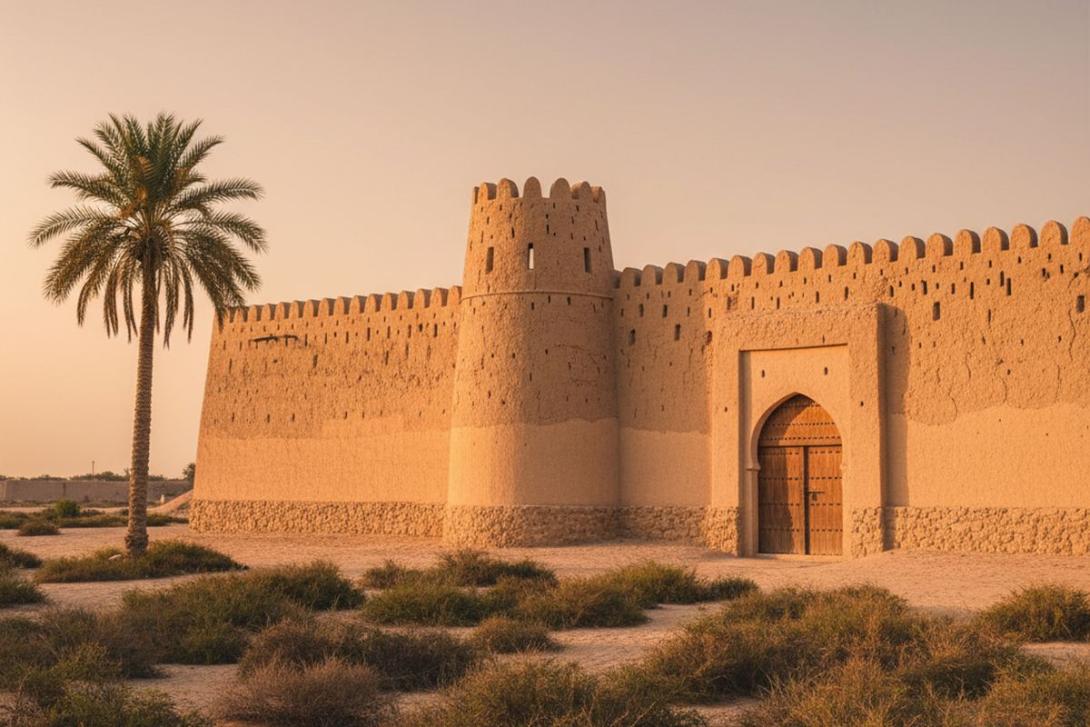
The National Museum of Ras Al Khaimah is housed inside Al Qawasim Fort, an 18th-century mud-brick and stone structure in the old town that once served as the ruling Al Qasimi family's residence. The fort was restored and opened as the national museum in 1987, and its galleries now cover 7,000 years of regional history — from the Bronze Age tombs at Shimal, through the medieval port of Julfar, to the pearling era that defined RAK's economy until the mid-20th century. It is the most substantive cultural site in the emirate and a natural counterpoint to the adventure tourism at Jebel Jais and the beach development at Al Marjan Island. This guide covers each gallery, the building's history, and the practicalities of visiting.
At a Glance
| Field | Value |
|---|---|
| Location | Old Town, Ras Al Khaimah city, near Al Hisn Avenue |
| Building | Al Qawasim Fort — former ruling-family residence |
| Established as museum | 1987, after major restoration |
| Building age | 18th century (~250 years old) |
| Galleries | Archaeology, Natural History, Pearl Diving, Maritime, Ethnography, Qawasim history |
| Hours | Approximately 8 a.m. – 5 p.m. Sat–Thu (some sources list 6 p.m.); closed Fridays |
| Admission | Approximately AED 5–15 adult; children free or discounted |
| Closed days | Friday (and possibly Mondays for maintenance — confirm at the gate) |
| Distance from RAK Corniche | ~5–10 minutes by car |
| Distance from Dubai | ~115 km / 75 minutes via E311 |
| Best for | History enthusiasts, archaeology fans, cultural day-trippers |
The Building: Al Qawasim Fort
The fort itself is the most important exhibit. It dates to the 18th century and was built as a residence for the ruling Al Qasimi family — the same dynasty that still rules both Ras Al Khaimah and Sharjah today. Construction is traditional: thick mud-brick walls on stone foundations, coral-and-gypsum render, palm-trunk ceiling beams, and a defensive watchtower at one corner. The footprint is roughly square, with rooms arranged around an internal courtyard in the standard Gulf fort plan.
Over its working life the building served three overlapping roles: private residence for the ruling family, military fort during periods of conflict (most notably the early 19th-century campaigns against the British Royal Navy), and — in the late 20th century — local police headquarters. By the early 1980s the building had deteriorated, and a heritage restoration programme stabilised the structure, replaced damaged timber, and preserved the original mud-brick fabric wherever possible. The museum opened in 1987.
The restoration was conservative, which is to its credit — wandering between rooms, you are walking through original walls. Watch for the wooden ceiling beams, the original carved doors, and the rooftop wind tower.
The Collection
The collection is organised by theme rather than strict chronology, distributed across the rooms of the fort. Plan on 90 minutes to two hours to see it properly.
Archaeology
The archaeology gallery is the museum's strongest section, reflecting the fact that RAK is one of the most archaeologically rich emirates in the UAE. Headline sites:
- Shimal — Iron Age burial chambers in the foothills north of RAK city, dating roughly 1,300–300 BCE. Pottery, bronze weapons, and personal ornaments from the tombs are on display.
- Julfar — the medieval Islamic port north of present-day RAK city, active roughly 9th–16th century. Finds include glazed ceramics, Chinese porcelain fragments, and coins.
- Tell Abraq and Hili-era material — early Bronze Age artefacts (~3,000 BCE) connecting RAK to the wider Umm Al Nar and Hafit cultures.
Interpretation is bilingual (Arabic and English) but relatively brief — background reading helps you get more out of the gallery.
Pearl Diving
Pearl diving was the backbone of RAK's economy from the 18th century until the natural-pearl market collapsed in the 1930s. The pearling gallery covers it in detail: divers' equipment (nose clips, finger guards, rope baskets), tools for opening and grading shells, scale models of pearling dhows, weights and measures, and recorded oral histories. A small case displays natural pearls graded by size and quality. It is one of the more thoughtful pearling displays in the country — a serious social-history exhibit, not a cabinet of curiosities.
Maritime History
The maritime room covers RAK's role as a Gulf trading port and the maritime power of the Qawasim dynasty in the 18th and early 19th centuries. The Qawasim controlled a substantial fleet that ranged the Lower Gulf and the southern Indian Ocean, leading to conflict with the British East India Company. The naval campaigns of 1809 and 1819 — and the General Maritime Treaty of 1820 that renamed the coast the "Trucial Coast" — are presented here from the local perspective, more nuanced than the familiar "Pirate Coast" framing.
Ethnography and Traditional Life
The ethnography gallery covers daily life across RAK's three traditional environments: coast, inland date-palm oases, and Hajar mountain villages. Exhibits include Bedouin tools, woven palm-frond goods, traditional weapons (khanjars, matchlock rifles), pottery from local kilns, and a detailed display of silver jewellery — hair ornaments, bridal pieces, amulets.
Natural History
A smaller gallery covers the flora and fauna of the Hajar mountains and coastal sabkha (salt flats), with preserved bird, reptile, and small-mammal specimens, plus geological samples from the range. It is the lightest section but a useful primer for anyone heading to Jebel Jais afterwards.
Getting There
By Car
The fort is in RAK's old town, off Al Hisn Avenue. From the RAK Corniche or the Hilton Al Hamra side, allow 10–15 minutes by car. From Dubai, drive north on Sheikh Mohammed bin Zayed Road (E311) — total time around 75 minutes from Dubai Marina outside rush hour. From Sharjah, allow 50–60 minutes. Free parking is available on the streets immediately outside the fort.
By Taxi or Ride-Hailing
Careem operates in RAK. A local taxi from a Corniche hotel costs approximately AED 25–40. From Dubai Marina, expect AED 200–280 one-way; the cost normally makes self-drive more economical for a half-day visit.
By Bus
RTA inter-emirate route E400 connects Dubai's Union bus station with RAK's main terminal in roughly 90 minutes. From the bus terminal, take a local taxi to the museum — about 10 minutes. Total trip from Dubai is around 2.5 hours each way.
Best Time to Visit
- November to March — peak season. Comfortable air temperatures of 18–28 °C make exploring the open courtyard and the rooftop sections pleasant. Mornings are quietest; the museum gets a small bump of school groups mid-morning on weekdays.
- April and October — daytime visits are still workable, but aim for the first hour after opening.
- May to September — interior galleries are air-conditioned, but the fort's open courtyard and rooftop become uncomfortable from late morning. Visit early or late in the day.
The museum is closed on Fridays (or at least Friday mornings — check on the day) and may close on Mondays for maintenance. Ramadan hours are usually shortened — confirm by phone before you go.
Practical Notes
- Admission is approximately AED 5–15 for adults; children are normally free or heavily discounted. Cash accepted; card may not be — bring small notes.
- Photography is allowed in most galleries; do not use flash near artefacts.
- Allow 90 minutes to two hours to see the museum properly. Speed-runners can do it in 45 minutes.
- Wear flat, closed shoes — the fort has uneven flagstones and a few short flights of stairs to upper rooms.
- There is no on-site café. Several Emirati and Indian restaurants are within a five-minute drive in old RAK.
- Wheelchair access is partial: the ground-floor galleries are accessible, but the rooftop and upper rooms involve stairs.
- Modest dress is appreciated — covered shoulders and knees.
- Interpretation is in Arabic and English. Captions are concise; a curated guidebook or audio guide is not consistently available, so background reading helps.
Compared with Fujairah Fort
If you are choosing between this and Fujairah Fort, the two are complementary rather than duplicative. Fujairah's fort is older (16th-century), more dramatic from the outside, and sits high on a rocky outcrop above date palm groves — the better photograph. RAK's fort is larger inside, with a richer collection for archaeology and the pearling economy. RAK rewards a slower visit; Fujairah rewards a quick stop on a coastal drive.
Nearby
The museum sits inside Ras Al Khaimah's old town, which is worth a 30-minute walk in its own right — narrow streets, a few small shops selling traditional goods, and the old souq in walking distance. Al Marjan Island is a 25-minute drive south for an afternoon at the beach or sunset at one of the resort restaurants. Jebel Jais is roughly an hour's drive inland for the country's highest road, a viewing deck, and the world's longest zipline — best paired with the museum across two days rather than crammed into one. For a longer cultural circuit, RAK's old pearling village at Al Jazirah Al Hamra is 20 minutes south of the city.
Frequently Asked Questions
What is the National Museum of Ras Al Khaimah?
It is the emirate's main historical museum, housed inside the 18th-century Al Qawasim Fort in RAK's old town. The museum opened in 1987 after a major restoration, and its galleries cover archaeology, pearl diving, maritime history, ethnography, and the history of the ruling Qawasim dynasty.
How old is the building?
The fort dates to the 18th century — roughly 250 years old. It was built as a residence for the ruling Al Qasimi family and later served as a fort, palace, and police headquarters before its restoration as a museum in 1987.
How much is admission?
Approximately AED 5–15 for adults, with children typically free or discounted. Cash is the safest bet — bring small notes. Confirm exact pricing at the gate, as the museum updates fees periodically.
What are the opening hours?
Roughly 8 a.m. to 5 p.m. Saturday through Thursday (some sources list closing as late as 6 p.m.). The museum is closed on Fridays — and possibly on Mondays for maintenance, so call ahead if Monday is your only option. Hours are shortened during Ramadan.
Where is the museum located?
In RAK's old town, off Al Hisn Avenue, approximately 5–10 minutes by car from RAK Corniche. From Dubai it is about 115 km / 75 minutes via Sheikh Mohammed bin Zayed Road (E311).
Is photography allowed?
Yes, in most galleries. Flash photography is not permitted near artefacts. Tripods and large camera rigs are not normally allowed without prior permission.
How long do I need to see the museum?
Plan on 90 minutes to two hours for a full visit including the courtyard and rooftop. A focused visit covering the archaeology and pearling galleries can be done in 45–60 minutes.
Is the museum suitable for children?
Older children with an interest in history will enjoy it; very young children may find it dry, as interpretation is text-heavy and there are no interactive exhibits. The fort itself — courtyard, watchtower, old wooden doors — usually holds attention for the first 30 minutes.
Is there parking?
Yes. Free street parking is available immediately outside the fort and rarely fills up outside school holidays.
How does it compare to Fujairah Fort?
Both are restored historic forts converted into museums. RAK's is larger inside with stronger archaeology and pearling collections — better for a longer visit. Fujairah Fort is older (16th-century) and more dramatic from the outside — better for a short, photo-led stop. If you have time, do both.
Is the museum wheelchair accessible?
Partially. The ground-floor galleries and central courtyard are accessible, but the rooftop and several upper rooms are reached by stairs only. Call ahead if step-free access throughout is essential.