الإمارات العربية المتحدة
Ajman Fish Market is one of the most authentic working fish markets in the UAE — a no-frills seafood hall on the Ajman fishing harbour, used by locals daily and increasingly visited by travellers chasing the real UAE. Concrete floors, fluorescent lights, dhows unloading at dawn, and a thick brine smell: it is everything Dubai's glossier waterfront markets are not. The 5–7 AM auction is the heart of it, when hotel buyers, restaurant owners, and individual customers bid on the night's catch. This guide covers what to see, when to come, how the cook-your-catch tradition works, and how to slot a visit into a wider Ajman trip.
At a Glance
| Field | Value |
|---|---|
| Location | Ajman Harbour, central Ajman |
| Type | Working wholesale-and-retail fish market with dawn auction |
| Active hours | 5 AM – 12 noon (morning), 3 PM – 9 PM (afternoon retail) |
| Peak times | Friday and Saturday early mornings; weekday dawns are quieter |
| Catch types | Hammour, kingfish (kanaad), sherry, red snapper, sultan ibrahim, prawns, crabs, squid, sardines, occasional lobster |
| Cleaning service | Free or low-cost gutting and scaling at most stalls |
| Cook-your-catch | Several restaurants near the market cook your purchase for a small fee |
| Distance from Ajman Corniche | ~5–10 minutes by car |
| Distance from Dubai | ~35 km / 35–45 minutes via E311 |
| Best for | Food-curious travellers, photographers, anyone wanting a real working-life UAE experience |
The Market
Ajman Fish Market sits on the working harbour, where the emirate's small wooden fishing boats and traditional dhows tie up between trips. Unlike the renovated, air-conditioned seafood halls in Dubai and Abu Dhabi, it has been kept deliberately functional — a place of business first, a tourist sight second, and that is precisely why it is worth visiting.
The Setting
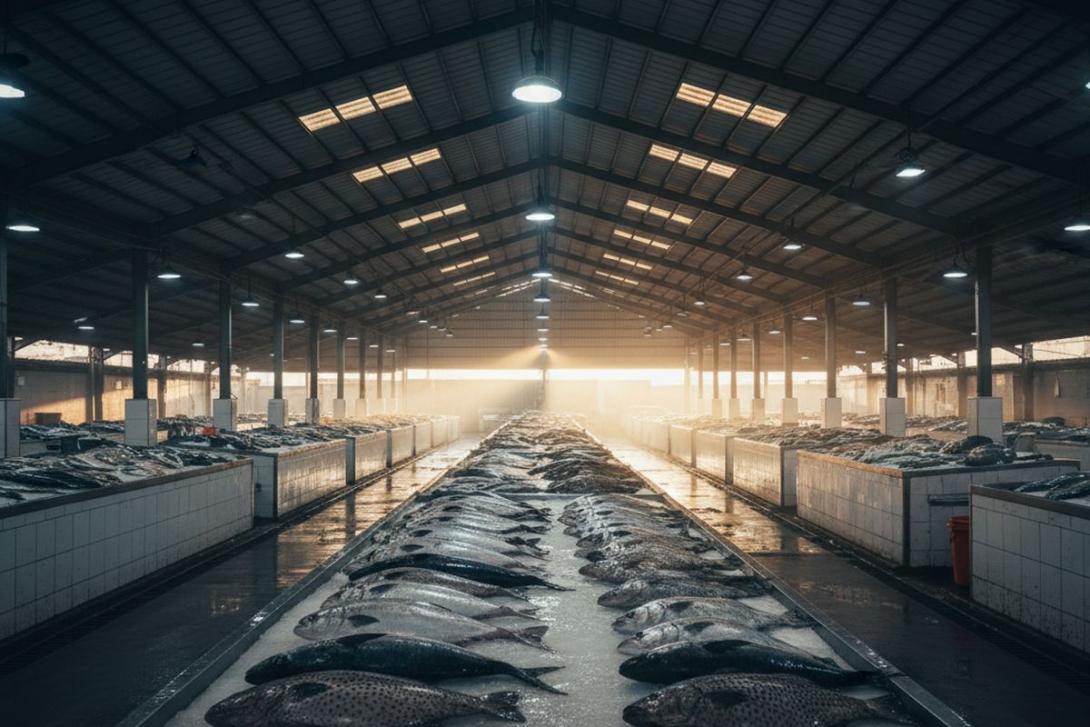
The main market is a long covered hall with a concrete floor that is hosed down between sessions. Traders' stalls run in rows under fluorescent lighting, each one a stainless-steel slab piled with crushed ice and that morning's fish. The smell is unmistakable, the floor is wet, and the soundtrack mixes Arabic, Urdu, Malayalam, and Tagalog as buyers and sellers haggle over kilos and crates. Outside, the harbour is the second half of the experience: dhows nudging the quay, men in waterproof aprons hauling polystyrene boxes off boats, gulls circling for scraps.
The Catch
What is on the slabs depends on what came in the previous night. A typical day brings:
- Hammour — the local grouper, a UAE staple, usually sold whole
- Kingfish (kanaad) — large, firm-fleshed, the most common grilling fish
- Sherry (emperor) — pink-skinned, mild, popular with Emirati families
- Red snapper — a reliable everyday fish
- Sultan Ibrahim (red mullet) — small, sweet, fried whole
- Prawns and shrimp — graded by size, from tiny sardine-prawns to tiger prawns
- Crabs — mud crabs and blue swimmers, often live
- Squid and cuttlefish — whole or pre-cleaned
- Sardines — cheap, plentiful, sold by the bucket
- Lobster — only on lucky days, usually pre-spoken for
Availability and pricing track the previous night's weather. After a calm, productive night the market overflows; after rough seas, slabs are leaner and prices climb.
The Auction Floor
The morning auction between roughly 5 AM and 7 AM is the most atmospheric window of the day. A separate auction area handles the wholesale trade: large lots of fish in polystyrene crates are walked in front of buyers — restaurant chefs, hotel sourcing agents, market resellers — who bid in fast, abbreviated calls. Visitors can watch from the edges, but this is a working trading floor, not a performance, and the pace is brisk. By 7–8 AM the wholesale lots are gone and the retail stalls are at their fullest. By noon the morning session winds down before the afternoon retail reopens around 3 PM.
The Cook-Your-Catch Tradition
A small cluster of restaurants around the market specialises in cooking fish you have just bought. The mechanic is simple: pick a fish at a stall, hand it to the cleaning station for gutting and scaling (free or a few dirhams), and walk it across to one of the cook-your-catch kitchens. They weigh it, ask how you want it cooked — usually grilled, fried, steamed, or in biryani — and serve it with rice, salad, dips, and Arabic or Indian flatbread. The cooking fee is charged separately from the fish and the total bill almost always comes in well below a sit-down seafood restaurant of equivalent quality.
This is how many Ajman residents eat seafood, and the single most common reason short-stay visitors come up from Dubai: buy at 7 AM, eat at 8 AM, drive home before the heat.
How to Visit
Etiquette
- Cash is preferred. Some stalls accept card; small notes make bargaining easier.
- Bargaining is expected on retail purchases, particularly larger fish or multiple kilos. A polite counter-offer of 10–15% is normal.
- Ask before photographing traders. Wide shots of the hall and harbour are fine; close-up portraits should be asked for first.
- Dress modestly with closed shoes — the floor is wet — and shoulders and knees covered for both men and women.
- Mind the floor. Crushed ice and fish water make it slippery; trainers or rubber-soled sandals beat flip-flops.
What to Expect
The market is loud, busy, and unpretentious. There are no guided tours, no air-conditioning in the hall, no English-language signage, and no formal queue system at the stalls — buyers simply step up. Most traders speak workable English and will happily explain what each fish is and how locals cook it. If you are not buying, walk through clear of the active stalls; if you are, look at three or four stalls before deciding.
Pricing
Pricing varies by species, size, and the day's supply, and we will not quote specific dirham figures because they change daily. As a guide, retail seafood at Ajman is meaningfully cheaper than Dubai's supermarket fish counters, and small fish (sardines, sultan ibrahim, smaller prawns) are dramatically cheaper than large premium fish (hammour, kingfish, lobster). Cleaning is usually free or token-priced. The cook-your-catch fee is a separate per-kilo or per-fish charge.
Getting There
By Car
Most visitors drive. From Dubai, take Sheikh Mohammed bin Zayed Road (E311) north and exit for central Ajman; the market is signposted near the harbour. Total drive time is 35–45 minutes outside rush hour. From Sharjah, the trip is 20–25 minutes via the coastal road. Free parking is available in a large open lot outside the market, although it fills up fast on Friday and Saturday mornings.
By Taxi or Ride-Hailing
Careem and Uber operate in Ajman; a one-way ride from Dubai Marina is roughly AED 80–120. From Sharjah, a metered taxi to Ajman Harbour is typically AED 30–50. Plan a return ride before you set out — pickups from the harbour can take 10–15 minutes during peak hours.
By Bus
There is no direct public-transport link to the market. The nearest practical option is the Dubai-to-Ajman intercity bus (RTA E400 / E411 from Union or Etisalat stations) to Ajman bus terminal, then a 10-minute taxi to the harbour.
Best Time
- 5–7 AM weekdays — dawn auction at its busiest, fewest tourists, freshest catch.
- 7–9 AM weekends — the most photogenic window, with strong morning light over the harbour and dhows still unloading; expect more visitors.
- 3–5 PM — quieter afternoon retail with leftover stock, but no auction and less atmosphere.
- 5–9 PM — fine for picking up dinner ingredients, but the boats are tied up and the working-life energy of the morning is gone.
The market runs year-round. November to March is pleasant enough to linger on the harbour and shoot photos. June to September you want to be in and out by 8 AM at the latest; the harbour heat and humidity become punishing by mid-morning.
Practical Notes
- Bring a cool bag if driving any distance with your purchase; stalls pack fish in iced plastic bags, fine for 30–45 minutes but not a long drive.
- Wear clothes you don't mind getting splashed — stray water and fish scales come with the territory.
- The market is family-friendly, but young children may find the smell and live crabs intense; the harbour outside is the easier draw.
- The site is alcohol-free.
- ATMs are limited at the harbour. Withdraw cash before arriving.
- Allow 45–90 minutes for a casual visit, longer if eating at a cook-your-catch restaurant.
- The market opens during Ramadan with adjusted hours, particularly later evening sessions.
Nearby
The fish market is a useful first stop on a wider Ajman day. Ajman Corniche is 5–10 minutes south for a post-market beachfront walk and coffee. Ajman Museum, inside the 18th-century Ajman Fort, is around 10 minutes inland and pairs naturally with the harbour as a heritage half-day. Al Zorah Nature Reserve sits at the northern edge of the emirate, roughly 15 minutes north, and works well as a late-morning add-on once the market closes for its midday break.
Frequently Asked Questions
What is Ajman Fish Market?
Ajman Fish Market is a working wholesale-and-retail seafood market on the Ajman fishing harbour. It runs a dawn auction between roughly 5 AM and 7 AM, retails fresh catch through the morning and afternoon, and is widely regarded as one of the most authentic fish markets in the UAE.
What time does Ajman Fish Market open?
The market is busiest between 5 AM and 12 noon, and reopens for an afternoon retail session from around 3 PM to 9 PM. The 5–7 AM dawn window is the most atmospheric for visitors.
Is Ajman Fish Market worth visiting?
Yes, particularly for travellers interested in food, photography, or seeing the working side of the UAE that malls and beach resorts do not show. It is one of the few places in the country where you can watch a live fish auction, see dhows unload, and eat your purchase cooked nearby within an hour.
What kinds of fish can you buy at Ajman Fish Market?
Typical catch includes hammour (UAE grouper), kingfish (kanaad), sherry, red snapper, sultan ibrahim (red mullet), prawns, crabs, squid, sardines, and occasionally lobster. Daily availability depends on the previous night's fishing.
Is there a cook-your-catch restaurant at Ajman Fish Market?
Yes. Several small restaurants near the market specialise in cooking fish you have just bought. They charge a separate per-kilo or per-fish fee and will grill, fry, steam, or biryani your purchase with rice, salad, and bread.
How do I get to Ajman Fish Market from Dubai?
Drive north on Sheikh Mohammed bin Zayed Road (E311) and exit for central Ajman; the market is signposted near the harbour. The 35 km trip takes 35–45 minutes outside rush hour. Taxis and ride-hailing run AED 80–120 each way from Dubai Marina.
Can you bargain at Ajman Fish Market?
Yes. Bargaining is expected for retail purchases, particularly on larger fish or multiple kilos. Prices are not fixed; a polite counter-offer of 10–15% is normal. Cash is preferred.
Is there parking at Ajman Fish Market?
Yes — a large free open-air car park sits immediately outside the market. It fills up quickly on Friday and Saturday mornings; arriving before 7 AM almost always guarantees a space.
Is Ajman Fish Market suitable for children?
The market is family-friendly and many local families shop there with children. Younger children may find the smell, noise, and live crabs intense; the open harbour outside, with dhows tied up, is usually an easier draw.
How does Ajman Fish Market compare to Dubai's Waterfront Market?
Dubai's Waterfront Market in Deira is much larger, fully air-conditioned, and more polished, with a wider international supply chain. Ajman is smaller, less manicured, and more local — the trading is closer to its working roots, the dhow harbour is right outside, and the cook-your-catch tradition is more developed. For an authentic, working market, Ajman is the stronger pick; for a comfortable, one-stop seafood hall, Dubai is easier.