Dubai South Business Hub: Logistics, Aviation & Expo City
Updated
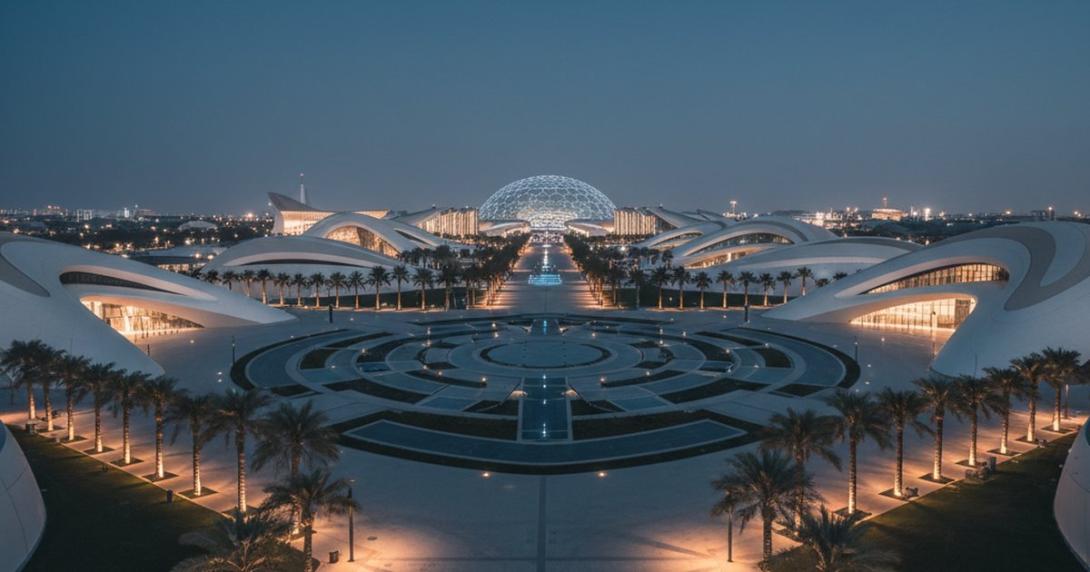
Dubai South is the most consequential bet on Dubai's geography that has not yet paid off. A 145 km² aerotropolis at the southern edge of the emirate, anchored by Al Maktoum International Airport and integrating the Expo 2020 legacy precinct, it is designed to be Dubai's planned future urban centre — where, by the 2030s and 2040s, the bulk of the city's air traffic and a meaningful share of its population are intended to live. Today it functions as Dubai's specialist hub for air-cargo logistics and aviation services, with Expo City Dubai layered on top as an events and sustainability district. This guide covers what's actually here for businesses now, the long-term thesis, and the trade-offs of being early to a master plan still building itself out.
At a Glance
| Field | Value |
|---|---|
| Location | Southern Dubai, between Sheikh Zayed Road and the Abu Dhabi border |
| Area | 145 km² master-planned aerotropolis |
| Anchor | Al Maktoum International Airport (DWC) |
| Established | 2006 as Dubai World Central; rebranded Dubai South 2015 |
| Master plan model | Aerotropolis — city built around the airport |
| Districts | Aviation, Logistics, Business Park, Commercial, Residential, Expo City Dubai |
| Free zone status | Yes — Dubai South Free Zone with sector-specialist licences |
| Distance from Downtown Dubai | ~40 km, 30-45 minutes by Sheikh Zayed Road |
| Metro link | Red Line extension from Expo 2020 station to Expo City |
| Notable tenants | Emirates Group flight training centre, Aramex regional HQ, MRO and aviation services firms |
| Why pick it | Air-cargo proximity, lower cost vs central Dubai, Expo City events, long-term DWC airport thesis |
What is Dubai South
Dubai South is a master-planned aerotropolis — a city designed from scratch around an airport rather than appended to one. The 145 km² footprint covers Dubai's southwestern corridor towards Abu Dhabi. The defining anchor is Al Maktoum International Airport, which began cargo operations in 2010 and passenger flights in 2013.
The project launched in 2006 as Dubai World Central (DWC) — a name retained today as the airport's IATA code. In 2015 the master plan was rebranded Dubai South, separating the airport (DWC) from the surrounding city. The aerotropolis logic underpins everything: rather than a CBD with an airport on the edge, the airport sits in the middle, with logistics and aviation tenants in inner rings, business and residential districts further out, and Expo City at the eastern edge.
The strategic case rests on the gradual migration of Dubai's main passenger operations from DXB to DWC, phased over the 2030s and 2040s. Once complete, DWC is planned to handle around 260 million passengers per year — making it the world's largest airport and shifting Dubai's economic centre of gravity south by roughly 40 km.
Districts
Dubai South is a multi-district master plan, and the choice of district is the first decision a tenant has to make.
Aviation District. Hangars, MRO facilities, training centres, OEM regional offices, and ground-handling operators. Home to the Emirates Group flight training centre. Offers airside access for tenants whose businesses depend on direct contact with the apron.
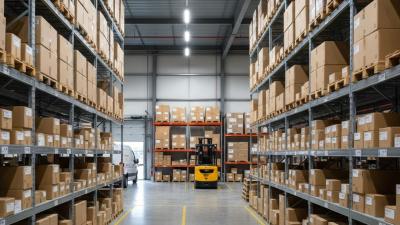
Logistics District. Warehousing, freight forwarding, third-party logistics, and customs brokerage, with the distinctive feature of airside-connected warehouses — units that allow cargo to move from aircraft to bonded storage without an intervening road leg. The natural home for express, perishables, e-commerce fulfilment, and high-value air-freight businesses.
Business Park. Regional headquarters and professional services without warehouse needs. Aramex's regional HQ sits here. Where service-led companies that need a Dubai South address incorporate.
Commercial District. Retail, F&B, and lifestyle tenants serving the master-plan workforce.
Residential District. The Pulse and Urbana communities — apartments and villas pitched at the aerotropolis workforce. A real residential footprint that distinguishes Dubai South from a pure industrial zone.
Expo City Dubai. The Expo 2020 legacy site, a permanent district for events, sustainability, education, and a growing tech tenant base. Pavilion-style buildings and master-planned open space carry over from the Expo.
For most founders the practical choice narrows to Logistics, Aviation, Business Park, or Expo City. The wider free zone framework covers licences and costs.
Why Pick Dubai South for Your Business
Air-cargo proximity. The most differentiated reason. The Logistics District sits directly adjacent to the airport cargo terminals, and selected warehouses have airside connectivity that no other Dubai free zone offers. For air-freight, perishables, express, and aviation MRO operators, this is structural.
Lower cost vs central Dubai. Office, warehouse, and residential rents at Dubai South sit materially below Marina, Downtown, JLT, or Internet City. Service licences are competitively priced — typically from around AED 12,500 — but the bigger savings sit in real estate.
Long-term thesis. The DXB-to-DWC migration is the strategic anchor. If Dubai's main airport moves over the coming two decades, the centre of gravity for hospitality, logistics, aviation, and office demand shifts with it. Tenants planting a flag now are positioned for that shift; those who wait will pay the post-shift premium. A decade-plus thesis, not a 12-month one.
Expo City Dubai. The Expo 2020 legacy gives Dubai South an asset no other free zone has — a purpose-built international events district. Hosting COP28 in December 2023 reasserted Expo City's role as Dubai's primary venue for global summits.
Al Maktoum airport expansion. The publicly announced USD 35 billion+ expansion programme will scale DWC towards roughly 260 million passenger capacity — a build-out at a scale Dubai has not seen since the original DXB and Sheikh Zayed Road era.
Companies Based at Dubai South
The tenant base is concentrated around aviation, logistics, and — increasingly — the Expo City overlay.
Emirates Group flight training centre. The Aviation District anchor. A large training campus for cabin crew, pilots, and engineering staff, drawing aviation-services firms into orbit around it.
Dubai Aviation City Corporation (DACC). The master-plan operator that interfaces between tenants and the wider Dubai government. Founders deal with DACC-affiliated entities throughout the licensing and real-estate process.
Aramex regional headquarters. The logistics and express major operates a regional HQ at Dubai South, anchoring the cluster of express and freight operators that have followed.
Various 3PL and freight forwarding firms. Express operators, customs brokers, and bonded-warehouse logistics specialists populate the Logistics District. The mix is strongest in air-freight verticals — perishables, e-commerce, pharma cold chain, high-value general cargo.
Aviation services firms. Independent MRO operators, ground-handling agents, and aviation training providers sit alongside Emirates' flight training campus. The cluster is small relative to long-term plans but already coherent.
Tech and sustainability tenants at Expo City post-COP28. COP28 in December 2023 catalysed a wave of sustainability and climate-tech relocations. Pavilion conversions, event-economy operators, and selected tech firms have moved in.
Logistics Use Case
The cleanest case for a Dubai South licence is air-cargo logistics into and out of the GCC. A typical setup involves a bonded warehouse in the Logistics District with airside cargo connectivity, a Logistics or E-commerce licence under Dubai South Free Zone, and a GCC distribution model — inbound air freight clears at DWC into the bonded warehouse, then is fulfilled across UAE, Saudi Arabia, Oman, Qatar, Kuwait, and Bahrain.
The same setup supports e-commerce same-day or next-day Gulf delivery on high-value SKUs that justify air freight. For pharma, perishables, and high-value general cargo, airside connectivity delivers a faster chain than any sea-port alternative. The sea-freight equivalent sits at JAFZA; the two free zones together form Dubai's logistics duopoly.
Aviation Use Case
The Aviation District serves three core profiles. MRO operators — maintenance, repair, and overhaul of aircraft, engines, components, and avionics, with hangar and apron access plus an Aviation licence as the structural requirements. Aviation training — the Emirates Group flight training centre is the anchor, but independent ATPL, type rating, simulator, and engineering training providers also operate from the district, serving Saudi, GCC, and South Asian carriers. Aircraft leasing and trading — leasing companies, brokers, and asset-management firms benefit from a Dubai South Aviation licence and proximity to the airport, with free-zone tax treatment for qualifying activities as the structural benefit.
Expo City Pivot
Expo 2020 was always planned to leave a permanent legacy precinct. Expo City Dubai today is best understood as a sustainable city showcase repurposed for long-term commercial use. The site closed to public visitors in spring 2022 and reopened as Expo City later that year — pavilions retained, district cooling and master-planned open space carried over, narrative shifted from "world's fair legacy" to "model sustainable city."
COP28 in December 2023 confirmed Expo City's role as Dubai's primary venue for very large international conferences. The COP28 effect is visible in tenant demand: sustainability NGOs, climate-tech firms, and event-economy operators have taken space. The pavilion stock positions Expo City for tech firms — particularly climate-tech and event-tech — that want a non-tower Dubai address. Not at the scale of Internet City yet, but the trajectory is clear.
Trade-offs
Distance. Dubai South is roughly 40 km from Downtown Dubai. The drive on Sheikh Zayed Road runs 30-45 minutes outside peak, longer in rush hour. Many companies licensed at Dubai South maintain a co-working seat or meeting room closer to town.
Maturity. Large stretches of the 145 km² master plan are still empty desert. The Aviation District, parts of Logistics, Business Park, and The Pulse are operational; in between, the build-out is still happening. Tenants who want a fully formed urban context today are better served by Marina, JLT, or DIFC.
Connectivity. The Dubai Metro Red Line extension from the Expo 2020 station reaches Expo City and serves the eastern edge of Dubai South, but does not yet thread the rest of the master plan. For most tenants Dubai South remains car-dependent.
Lifestyle. Restaurants, retail, and the F&B density that makes Marina and DMCC livable are limited. The Pulse and Expo City have anchor venues, but the casual coffee-and-laptop layer is thin.
Frequently Asked Questions
What is Dubai South?
Dubai South is a 145 km² master-planned aerotropolis at the southern edge of Dubai, anchored by Al Maktoum International Airport. Launched in 2006 as Dubai World Central and rebranded in 2015, it operates as a free zone for aviation, logistics, e-commerce, light manufacturing, services, and hospitality, and incorporates the Expo 2020 legacy site as Expo City Dubai.
Where is Dubai South?
Dubai South sits at the southern edge of Dubai, roughly 40 km southwest of Downtown, on the corridor towards Abu Dhabi via Sheikh Mohammed Bin Zayed Road (E311). The defining geographic anchor is Al Maktoum International Airport.
Is Dubai South a free zone?
Yes. Dubai South Free Zone offers Service, Trading, Industrial, Logistics, Aviation, and E-commerce licences with 100% foreign ownership, 0% corporate tax for Qualifying Free Zone Persons, and 0% personal income tax. Detail in the Dubai South free zone guide.
What companies are at Dubai South?
The tenant base is concentrated in aviation and logistics, including the Emirates Group flight training centre, Aramex's regional headquarters, 3PL and freight forwarding operators, MRO and ground-handling firms, and aviation training providers. Expo City Dubai has attracted sustainability, climate-tech, and event-economy tenants, particularly after COP28 in December 2023.
Is Al Maktoum airport open?
Yes. Al Maktoum International Airport (DWC) has been operational for cargo since 2010 and for passenger flights since 2013. It currently runs at a fraction of its planned capacity. The long-term plan is to scale DWC to around 260 million passengers per year and migrate operations from DXB in phases through the 2030s and 2040s.
What is Expo City Dubai?
Expo City Dubai is the permanent legacy precinct on the former Expo 2020 site, integrated into Dubai South. After Expo 2020 closed in spring 2022, the site was repurposed as a sustainable city showcase. It hosted COP28 in December 2023 and operates as Dubai's primary large-scale international events venue.
How do I get to Dubai South?
By road, the main access is Sheikh Zayed Road southbound or Sheikh Mohammed Bin Zayed Road (E311) — typically 30-45 minutes from Downtown Dubai outside peak. The Dubai Metro Red Line extension reaches Expo City, but most of Dubai South remains car-dependent.
Is Dubai South cheaper than Dubai Marina?
Yes, materially. Office, warehouse, and residential rents at Dubai South sit well below Dubai Marina, Downtown, and JLT. Service licences start from around AED 12,500. The cost gap reflects both location and the maturity discount of an area still building out.
Will DXB airport close?
Eventually, yes — the stated plan is to migrate scheduled passenger operations from DXB to DWC in phases over the 2030s and 2040s, and ultimately repurpose the DXB site. The migration is a multi-decade programme. Today the bulk of Dubai's passenger traffic still flows through DXB.
What is the future of Dubai South?
The master plan envisions a city of close to one million residents around the world's largest airport, with logistics, aviation, hospitality, residential, and events districts integrated at 145 km² scale. The thesis depends on the DXB-to-DWC migration delivering on schedule. The wider context sits in the business guide hub.
General information based mainly on official public sources, not legal, immigration, tax, financial or medical advice. Rules and fees change: confirm with the relevant authority or a qualified professional before acting. See our Terms of Use.