UAE E-Commerce Setup: Licence, Marketplaces & Logistics
Updated
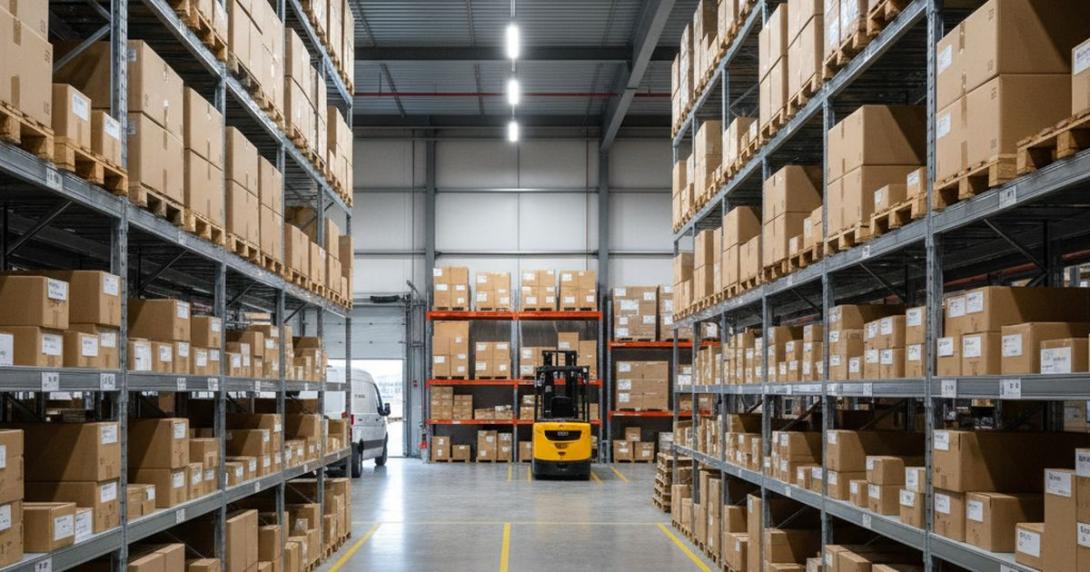
The UAE is MENA's e-commerce capital. Online retail crossed an estimated AED 100 billion of gross merchandise value in 2024, anchored by Noon, Amazon AE, Carrefour Online, and Talabat. Card penetration, smartphone reach, and a young expatriate consumer base mean a Dubai-licensed seller can reach roughly 10 million UAE residents and another ~50 million GCC consumers within 48-hour delivery windows. The setup choices — licence, marketplace versus D2C, payment gateway, logistics, VAT — interact, and getting them right at incorporation is far cheaper than retrofitting.
At a Glance
| Aspect | Detail | Where |
|---|---|---|
| Cheapest licence | DED Trader Licence | Dubai DED, from ~AED 1,000+ |
| E-commerce free zone | Dubai CommerCity | Umm Ramool, Dubai (operational 2021) |
| Flexible free zones | IFZA, DMCC, RAKEZ | Silicon Oasis, JLT, Ras Al Khaimah |
| Mainland licence | DED e-commerce permit | Each emirate's DED |
| Top marketplace | Noon | UAE-HQ, founded 2017 |
| Global marketplace | Amazon AE | Acquired Souq.com 2017 |
| D2C platform | Shopify | Own domain |
| Card gateways | Stripe UAE, Telr, Network International, PayTabs | Stripe live since March 2023 |
| COD share | ~30–40% of UAE online orders | Across categories |
| Logistics anchor | Aramex | ADX-listed, UAE-HQ |
| VAT on online sales | 5% | FTA via EmaraTax |
| Customs duty | 5% standard, GCC Common External Tariff | Free zone re-exports exempt |
Most founders pick between two routes: a DED Trader Licence for solo sellers, or a free zone e-commerce licence (Dubai CommerCity, IFZA, DMCC) for businesses building a brand and selling cross-border.
Step 1 — Choose Your Setup
E-commerce in the UAE can be licensed three ways. The right one depends on staffing, target market, and how seriously the business will scale.
Free zone e-commerce licence
Most free zones support an e-commerce activity code alongside trading and professional licences. Two specialist routes stand out:
- Dubai CommerCity — the world's first dedicated e-commerce free zone, operational from 2021 in Umm Ramool, Dubai. Bundles licence, office, and on-site logistics (warehousing, fulfilment, customs) on a single campus.
- IFZA, DMCC (/uae/dmcc), and RAKEZ — general free zone e-commerce licences for D2C brands not needing on-site fulfilment. IFZA and RAKEZ are the budget benchmarks; DMCC carries more prestige.
Free zone advantages: 100% foreign ownership, full profit repatriation, customs-free re-export, and access to Qualifying Free Zone Person (QFZP) treatment for 0% corporate tax on qualifying income (see /business-guide/corporate-tax). The trade-off: a free zone seller cannot ship to mainland customers without a distributor or dual licence — though most marketplaces (Noon, Amazon AE) act as the on-shore counterparty, neutralising the restriction in practice.
Mainland e-commerce permit
A mainland LLC with a DED e-commerce permit suits sellers invoicing mainland B2B customers directly, running physical retail alongside online, or bidding for government tenders. Dubai DED's e-commerce activity, ADDED in Abu Dhabi, SEDD in Sharjah. Headline cost runs higher than a free zone budget package once Ejari and Chamber fees are included.
DED e-commerce / Trader Licence — solo sellers
For individual sellers — Instagram boutiques, home bakers, dropshippers — Dubai DED's Trader Licence (often marketed as the DED e-commerce licence) is the entry point: year-one fees from around AED 1,000+ with no Ejari or office requirement. Solo trader only, limited activity scope, no employee visa allocation beyond the owner — the cheapest legitimate way to start, not a substitute for a proper LLC once revenue scales.
Step 2 — Sales Channels
A UAE e-commerce business sells across some combination of marketplaces, a D2C storefront, and social commerce. Most successful brands use all three.
Marketplace selling
Noon, Amazon AE, and Carrefour UAE dominate the marketplace layer. Each runs a seller programme with category commission rates and fulfilment options. Marketplaces deliver instant traffic, established trust, and ready-made logistics — at the cost of margin (typically 5–20% commission), pricing pressure, and limited customer-data ownership. A new brand with no organic audience usually starts here.
D2C / Shopify storefront
A Shopify storefront on an own domain is the default D2C route. UAE founders typically use Shopify Payments through Stripe UAE or alternatives like Telr and PayTabs, with Aramex or local couriers for fulfilment. D2C delivers full margin, customer data, and brand control — at the cost of having to acquire every visitor through paid or organic channels.
Social commerce
Instagram Shopping, TikTok Shop UAE, and WhatsApp Business carry meaningful share in fashion, beauty, food, and homeware. For solo founders on a Trader Licence, social commerce + COD is often the entire stack. For larger brands it works as a top-of-funnel into the Shopify storefront or marketplace listings.
Marketplaces vs D2C — which to start with
The pragmatic split: start on marketplaces if discovery is the bottleneck (commodity products, price-driven categories — electronics accessories, generic homeware, supplements). Start D2C if margin is the bottleneck (premium, niche, brand-led products where 15–20% commission would kill economics — designer fashion, specialist beauty, custom goods). Most brands end up on both within 12 months.
Step 3 — Payments
Card acceptance, gateway fees, and settlement timing decide whether D2C economics work.
- Stripe UAE went live in March 2023 with full local acquiring — the default for Shopify storefronts and SaaS billing UAE customers.
- Telr is a UAE-headquartered gateway with strong support for local cards, multi-currency, and Arabic checkout.
- Network International is the largest UAE acquirer, suited to higher-volume merchants ready for a direct acquirer relationship.
- PayTabs is a regional gateway popular with SMEs across the GCC; fast onboarding and competitive fees.
Cash on delivery still represents an estimated 30–40% of UAE online orders, particularly outside Dubai and Abu Dhabi. Disabling COD removes meaningful demand in fashion and electronics. Most logistics partners — Aramex, Quiqup, Carrefour fulfilment — collect COD as a paid add-on. For the corporate banking side, see /business-guide/business-banking.
Step 4 — Logistics & Fulfilment
The UAE has some of the densest e-commerce logistics in the region. Four routes, often combined:
- Aramex — the UAE's largest logistics company (ADX-listed, founded 1982, Dubai HQ). The default first-mile and last-mile partner for independent sellers: pickup, COD collection, returns, and tracked delivery across the GCC, with a Shopify integration out of the box.
- DHL UAE, FedEx, UPS — for international parcels to Europe, the US, or Asia. Higher unit cost than Aramex regionally; better network trans-continentally.
- Marketplace fulfilment. Amazon FBA runs in the UAE: ship inventory into Amazon's Dubai warehouses and Amazon handles pick, pack, ship, COD, and returns. Carrefour UAE offers an analogous programme to its marketplace sellers.
- Last-mile specialists. Quiqup runs same-day and next-day in Dubai and Abu Dhabi; Trukker handles B2B bulk; Fetchr and Shipa cover niche routes.
For sellers running their own warehousing, three free zones cluster fulfilment: Dubai CommerCity (on-site warehousing, customs, offices on one campus), JAFZA at Jebel Ali Port for sea-freight imports, and Dubai South for air-cargo around Al Maktoum International Airport.
Step 5 — VAT & Customs
Online sales in the UAE are taxed like any other supply, with a few cross-border twists.
VAT on online sales. Most UAE online sales are subject to 5% VAT under Federal Decree-Law No. 8 of 2017 — the same rate as offline retail. Sellers register through EmaraTax with the Federal Tax Authority. The mandatory threshold is AED 375,000 of taxable supplies in the previous 12 months (or reasonably expected in the next 30 days); voluntary registration opens above AED 187,500. Marketplace sellers are typically responsible for VAT on their own sales. Full mechanics in /business-guide/corporate-tax.
Customs duty on imports. A 5% customs duty applies to most imported goods under the GCC Customs Union Common External Tariff, with many products zero-rated and a few categories (alcohol, tobacco) at higher rates. Goods entering a UAE free zone and remaining inside or being re-exported are generally exempt — duty is collected only when goods enter the mainland for consumption. This is one operational reason sellers warehouse in a free zone: stock can be received, repacked, and shipped onward to GCC neighbours without UAE customs duty.
Cross-border GCC sales. Goods exported outside the GCC implementing states are zero-rated for VAT (input VAT recoverable). Intra-GCC movements involve customs paperwork and the buyer's local VAT registration. Expect Saudi and Egyptian e-commerce regulations to be more onerous than UAE domestic sales.
Step 6 — Marketing
UAE e-commerce marketing is a specific mix.
- Google and Meta ads are the workhorses — high CPMs by global standards, matched by high average order values. Localise creative for English and Arabic audiences.
- Influencer marketing is unusually large in the UAE: Instagram and TikTok creators drive measurable revenue in fashion, beauty, food, and lifestyle. Individuals who advertise on social media, paid or unpaid, need the National Media Authority's Advertiser Permit (free for the first three years for UAE citizens and residents, AED 1,000 after that).
- SEO for Arabic keywords is the most-overlooked channel. A large share of GCC consumers search in Arabic, and Arabic SERPs are far less competitive than English equivalents.
- WhatsApp marketing — broadcast lists, abandoned-cart recovery, customer service — is more central in UAE e-commerce than in Western markets, particularly for COD-heavy categories.
Major UAE E-commerce Players
- Noon — founded 2017 by Mohamed Alabbar (Emaar) with Saudi Arabia's Public Investment Fund. Headquartered in Dubai, multi-billion-dollar valuation, pan-regional across UAE, Saudi, and Egypt. The strongest local alternative to Amazon AE, with sub-brands Noon Daily, Noon Food, and Noon Minutes.
- Amazon AE — originally Souq.com (founded 2005) until Amazon acquired it in 2017 for around USD 580 million and rebranded to Amazon.ae in 2019. Full Amazon stack — FBA, Prime, Amazon Ads.
- Carrefour UAE / Majid Al Futtaim — Carrefour, operated under franchise by MAF, runs the largest grocery and hypermarket network in the UAE alongside Carrefour Online, integrated with the physical store network.
- Talabat — UAE-headquartered food and grocery delivery, a subsidiary of Germany's Delivery Hero. Dominant in restaurant delivery; expanding into quick-commerce (Talabat Mart).
- Mumzworld — UAE-based mother, baby, and child marketplace; one of the region's earliest verticals to scale.
- Sharaf DG — major UAE electronics retailer with a substantial online operation alongside its stores.
Other players: Namshi (fashion, owned by Noon), Ounass and Faces (premium, MAF), 6thStreet and Brands for Less (off-price).
Cross-border to GCC
A UAE e-commerce business has natural reach beyond its border. Saudi Arabia, the GCC's largest consumer market, is 24–48 hours by road from Dubai or by sea from Jebel Ali. The cross-border layer adds three things: customs paperwork (commercial invoices, certificates of origin under the GCC Customs Union), VAT treatment (zero-rated UAE export, plus destination import VAT — Saudi VAT runs at 15%), and destination regulations (Saudi SABER product registration, Arabic-language requirements). Many UAE sellers serve Saudi through Noon and Amazon SA rather than direct shipping. For regional brands, Riyadh and Jeddah warehousing becomes a Year-2 question.
Frequently Asked Questions
How do I start an e-commerce business in the UAE?
Pick a structure (DED Trader Licence for solo sellers, free zone e-commerce licence for serious operators, mainland LLC for onshore B2B), register with the relevant authority — Dubai DED, Dubai CommerCity, IFZA, DMCC, or another free zone — open a corporate bank account, set up a payment gateway (Stripe UAE, Telr, Network International, or PayTabs), arrange logistics (Aramex is the default), register for VAT through EmaraTax once supplies cross AED 375,000, and list on Noon, Amazon AE, or your own Shopify storefront. Full walk-through at /business-guide/business-setup.
What is the cheapest e-commerce licence in the UAE?
The Dubai DED Trader Licence is the cheapest legitimate route, with year-one fees from around AED 1,000+ for a solo seller with no Ejari or office requirement. Among free zones, IFZA, RAKEZ, and SPC Free Zone Sharjah are the entry-tier benchmarks for full e-commerce LLCs. Confirm pricing with the authority before budgeting.
Can I sell on Amazon UAE without a UAE company?
Amazon AE seller onboarding generally requires a UAE trade licence, a UAE bank account, a Tax Registration Number where applicable, and a UAE address. Non-UAE sellers can list internationally, but to operate as a UAE-domestic seller — with FBA, AED payouts, and Amazon Prime UAE — a UAE entity (free zone, mainland, or Trader Licence) is the practical answer.
How do I sell on Noon?
Apply through the Noon Sellers programme with a UAE trade licence, bank account, VAT registration where applicable, and product catalogue. Noon onboards across electronics, fashion, beauty, home, grocery, and a long tail of categories, with category-specific commission rates and fulfilment options including Noon's own warehouses.
What's Dubai CommerCity?
Dubai CommerCity is the world's first dedicated e-commerce free zone, operational from 2021 in Umm Ramool, Dubai. It bundles e-commerce licence, office, and on-site logistics on a single campus, structured around three clusters: Business, Logistics, and Social. A joint venture between Dubai Airport Free Zone Authority and wasl.
Is dropshipping legal in the UAE?
Yes — dropshipping is legal with the right licence. A DED Trader Licence or a free zone e-commerce licence covering retail trading and online activity is the standard structure. The seller is responsible for VAT on UAE sales, customs on imported goods, product compliance, and consumer-protection rules. Selling through marketplaces does not eliminate licensing — Noon and Amazon AE both require a valid UAE trade licence.
Do I need to register for VAT to sell online?
Mandatory once taxable supplies and imports exceed AED 375,000 in the previous 12 months, or are reasonably expected to in the next 30 days. Voluntary registration opens above AED 187,500 — common for B2B sellers wanting to recover input VAT. Registration is through EmaraTax at the Federal Tax Authority, with returns filed quarterly for most businesses. Full mechanics in /business-guide/corporate-tax.
Can I sell to Saudi Arabia from a UAE company?
Yes. Goods exported from the UAE to Saudi Arabia are zero-rated for UAE VAT. Customs paperwork follows the GCC Customs Union framework — commercial invoice, certificate of origin, and SABER product registration in Saudi Arabia for many categories. Saudi VAT of 15% applies on import. Many UAE sellers serve the Saudi market through Noon and Amazon SA rather than shipping direct.
What are the best UAE e-commerce payment gateways?
The four most-used gateways are Stripe UAE (default for Shopify), Telr (UAE-HQ, strong on local cards and Arabic checkout), Network International (the largest UAE acquirer), and PayTabs (regional gateway, fast SME onboarding). Established sites also support Apple Pay, Google Pay, and cash on delivery.
Is Stripe available in the UAE?
Yes. Stripe UAE launched in March 2023 with full local acquiring — UAE-domestic businesses can take cards, settle in AED, and use Stripe's standard APIs. It is the default for Shopify storefronts and SaaS billing in the UAE.
For context: Business Guide hub, How to Set Up a Business in the UAE, Business Banking, Corporate Tax & VAT, DMCC.
General information based mainly on official public sources, not legal, immigration, tax, financial or medical advice. Rules and fees change: confirm with the relevant authority or a qualified professional before acting. See our Terms of Use.