الإمارات العربية المتحدة
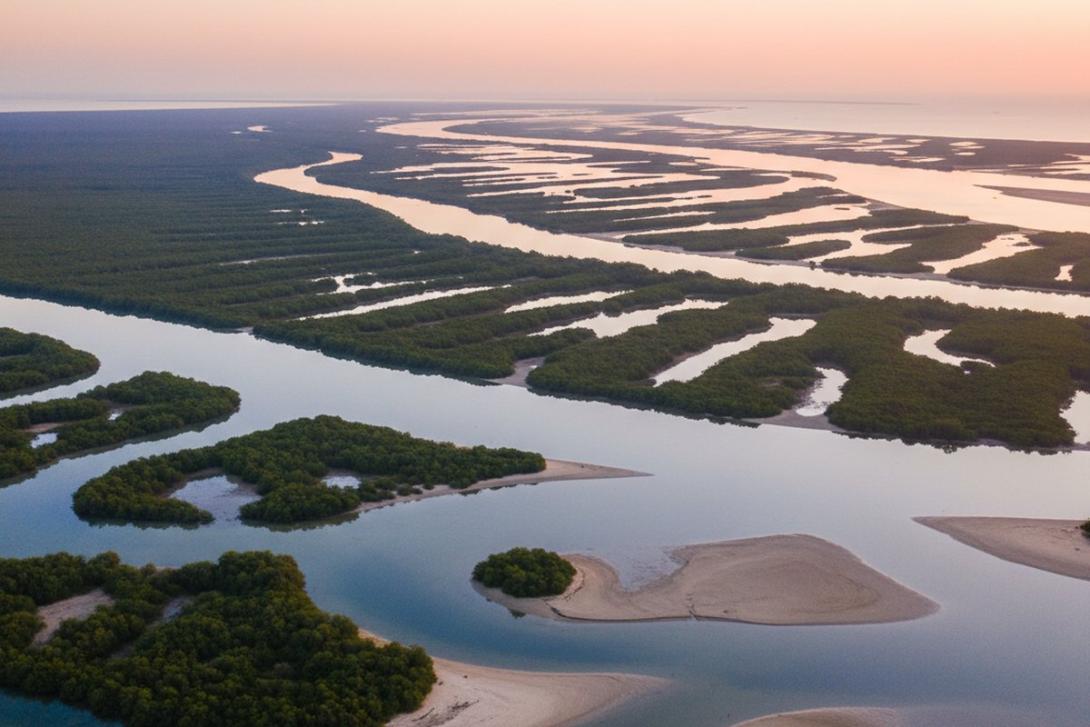
The Umm Al Quwain mangroves stretch across Khor Al Beidah, a sprawling tidal lagoon on the north-east coast of the emirate that covers roughly 14,000 hectares. It is the largest contiguous mangrove ecosystem in the United Arab Emirates and the country's quietest watersport destination — half-day kayak and paddleboard tours typically run with no more than a dozen other guests on the water at once. This guide covers what is on offer, how to book, what wildlife you can realistically expect, and how to combine the trip with the rest of UAQ.
At a Glance
| Field | Value |
|---|---|
| Location | Khor Al Beidah lagoon, Umm Al Quwain |
| Total area | ~14,000 hectares of mangrove and tidal flats |
| Dominant species | Avicennia marina (grey mangrove) |
| Wildlife | Flamingos (winter), herons, sea turtles, reef sharks (rare), crabs |
| Activities | Guided kayak, paddleboard (SUP), birdwatching, sunset cruises |
| Tour length | 1.5–3 hours typical; full-day options available |
| Distance from Sharjah | ~45 km / 40 min by car |
| Distance from central Dubai | ~70 km / 55–70 min by car |
| Kayak tour price | From AED 150 per adult, varies by operator |
| Best months | November to April for daytime; year-round at sunrise/sunset |
What's Inside
Kayaking and Paddleboarding
Several operators run guided kayak and SUP tours from launch points on the western edge of Khor Al Beidah. Tours move slowly through narrow tidal channels lined with mangrove walls, opening into wider lagoons further inland. The water is sheltered from open Gulf chop and is ankle- to chest-deep through most of the route. No prior experience is required. The most common formats are:
- Sunrise tour (~2 hours) — the coolest option year-round and the most active for birdlife
- Sunset tour (~2 hours) — the most photographed; mangroves silhouette against the orange Gulf horizon
- Half-day exploration (3–4 hours) — covers more of the lagoon, includes a short stop on a sandbank
- Full-day combo — kayak in the morning, lunch on the water, swim or fish in the afternoon
Wildlife
The UAQ mangroves are quieter than Al Zorah but better for serious birdwatching because of their sheer scale. Expect flamingos in winter, year-round populations of grey heron, western reef heron, little egret, kingfishers, ospreys, and Socotra cormorants offshore. Sea turtles occasionally surface in the channels; small reef sharks have been documented in deeper sections but are rarely seen from a kayak. Crabs and mudskippers are constant on the channel walls.
Beach and Sandbank Access
At low tide, several sandbanks emerge inside the lagoon — flat, completely deserted, and a popular stop on longer tours for swimming and a packed lunch. The water around the sandbanks is shallow and warm year-round.
Birding from Land
Khor Al Beidah's western edge has a network of dirt tracks that birders use for shore-based viewing without booking a tour. The road north of UAQ city runs alongside the lagoon for several kilometres, with informal pull-outs for telephoto setups. Sunrise is the most productive time.
Getting There
By Car
Driving is essential — public transport into UAQ is limited. From Sharjah, take Emirates Road (E611) north and exit for Umm Al Quwain town centre, then continue north on the coastal road towards the lagoon — roughly 40 minutes. From Dubai Marina, the trip is 70 minutes via E311, or longer in heavy traffic. Free parking is available at the main launch points.
By Taxi or Ride-Hailing
Careem operates patchily in UAQ; expect higher fares and longer wait times than in Dubai. A one-way ride from Dubai Marina is approximately AED 150–200, making the round trip an expensive option compared with a rental car.
By Bus
RTA bus routes do not extend to Khor Al Beidah. The nearest stop is Umm Al Quwain bus terminal, served by route E400 from Sharjah; from there a taxi to the lagoon takes 10–15 minutes.
Best Time to Visit
- November to April — ideal conditions, with daytime tours comfortable and bird activity at peak.
- May to October — sunrise and sunset tours only. The water cools the air enough to make these comfortable even in July, but midday is impractical.
For minimal crowds, weekday mornings outside school holidays are reliably empty. For the best photographs, pick a low-tide sunrise in December or January when the air is dry and the light is sharp.
Practical Notes
- Closed-toe water shoes are strongly recommended — the channel floor has shells and crab burrows
- Life vests provided and mandatory; full instruction precedes every tour
- Bring biodegradable sunscreen — operators ask guests to avoid heavy chemical sunblock that can damage the mangroves
- Phones and action cameras are fine; bring waterproof cases
- Pack water and snacks; no food vendors at the launch points
- The mangroves are a protected habitat — do not pick foliage, feed wildlife, or leave litter
- UAQ is a "wet" emirate with licensed venues but the lagoon itself is alcohol-free
Nearby
Combine a mangrove tour with the rest of Umm Al Quwain to make a full day. Dreamland Aqua Park is 15 minutes north and offers the best swimming pool infrastructure in the Northern Emirates. UAQ National Museum in the old fort town centre has a small collection of pearl-diving and Bedouin artefacts. The Marine Club offers fishing trips. For visitors continuing further north, Ras Al Khaimah's Jebel Jais is a 90-minute drive.
Frequently Asked Questions
What is Khor Al Beidah?
Khor Al Beidah is a 14,000-hectare tidal lagoon on the north-east coast of Umm Al Quwain, home to the UAE's largest contiguous mangrove forest and a year-round destination for kayaking, paddleboarding, and birdwatching.
How much does kayaking in the UAQ mangroves cost?
Guided kayak tours start from approximately AED 150 per adult for 1.5–2 hour formats. Half-day and full-day tours cost more depending on the operator and inclusions.
Where are the UAQ mangroves?
On the north-east coast of Umm Al Quwain emirate, accessed from launch points on the western edge of Khor Al Beidah lagoon. Approximately 70 km from Downtown Dubai and 45 km from Sharjah city centre.
What wildlife will I see in the UAQ mangroves?
Year-round species include grey heron, western reef heron, little egret, kingfishers, and crabs. Pink flamingos are present in winter. Sea turtles surface occasionally; small reef sharks have been recorded but are rarely seen from kayaks.
How do I get to the UAQ mangroves from Dubai?
Drive north on Sheikh Mohammed bin Zayed Road (E311) towards Umm Al Quwain — approximately 70 minutes. Public transport does not reach the lagoon directly; the nearest stop is UAQ bus terminal followed by a 15-minute taxi.
Is the UAQ mangrove tour suitable for beginners?
Yes. No prior kayaking experience is required. Operators provide a short briefing, life vests, and tandem kayaks for first-time paddlers. The water in the channels is calm and sheltered.
Can I visit the UAQ mangroves without booking a tour?
Yes for shore-based birdwatching from the public road north of UAQ town. To enter the lagoon by water, you must book a guided kayak or SUP tour with a licensed operator.
When is the best time to visit?
Sunrise during November to April, at low tide, for the best combination of cool weather, bird activity, and clear water. Midday tours are not advisable from May to October due to extreme heat.
Is the lagoon safe to swim in?
Yes, in the shallow areas near sandbanks at low tide. Tour operators stop at one or two sandbanks on longer tours where guests can swim. Open-water swimming outside designated stops is not recommended.
Are the UAQ mangroves better than Al Zorah?
For sheer scale and remoteness, yes — Khor Al Beidah is roughly seven times larger than Al Zorah. Al Zorah is closer to Dubai, has slightly more developed visitor infrastructure, and a guaranteed flamingo flock. Both are good choices; serious birders pick UAQ, casual day-trippers often pick Al Zorah.