Growing Industries in the UAE: AI, Fintech, Web3 & More
Updated

The UAE's economic story for the past decade has been deliberate diversification away from oil. Non-oil GDP has overtaken oil in headline output, and the federation has built dedicated regulators, free zones, and state-backed champions to seed new industries. UAE Vision 2031 targets a knowledge-led, AI-native economy with food security and climate resilience as headline goals. Eight sectors do most of the visible growth in 2026 — and a few smaller niches are positioning to be next.
For broader context, see the business guide hub, the startup ecosystem overview, the regulations primer, and the UAE AI ecosystem deep-dive.
At a Glance
| Sector | Anchor company / programme | Regulator / Free zone home | Why now | Key statistic |
|---|---|---|---|---|
| AI and ML | G42, Falcon LLM, AI71 | Hub71, Masdar City, ADGM | UAE Strategy 2031 targets AI as a top GDP contributor | G42 reported at USD 100B+ valuation in 2024 press |
| Fintech | Wio Bank, Mashreq Neo, Careem Pay | DIFC FinTech Hive, ADGM RegLab | Regional fintech capital plus regulator-led sandboxes | DIFC FinTech Hive 750+ firms |
| Crypto / Web3 | Binance MENA, OKX, Bybit, Crypto.com, Tether (AE Coin) | VARA (Dubai), FSRA (ADGM), DFSA (DIFC) | First major economy with a dedicated virtual-asset regulator | VARA established 2022; FSRA virtual-asset regime since 2018 |
| Climate tech | Masdar, ADQ, COP28 legacy | Masdar City Free Zone | UAE hosted COP28 (Dec 2023); 50% renewable target by 2050 | UAE Net Zero 2050 strategy in force |
| Healthtech / biotech | M42, Cleveland Clinic AD, Mediclinic | DHCC, Hub71, ADGM | Post-pandemic telehealth plus M42 build-out | M42 operates dozens of UAE clinics |
| E-commerce / logistics | Noon, Amazon AE, Talabat, Careem | Dubai South, Dubai CommerCity | One of the highest mobile-commerce penetrations globally | Noon raised USD 1B in its 2017 round |
| EdTech | Dubai International Academic City, NYU AD | DIAC, Dubai Knowledge Park | Foreign-university anchor and AI-first curricula | DIAC hosts 27+ universities |
| Foodtech / agritech | Bustanica (Crop One x Emirates), Pure Harvest | Dubai Industrial Park, SRTIP | Food Security Strategy 2051 — 50% local target | Bustanica 330,000 sq ft, world's largest indoor vertical farm |
AI and Machine Learning
AI is the UAE's flagship industrial priority. The state-backed G42, chaired by Sheikh Tahnoun bin Zayed, is the country's AI champion — a holding spanning compute, models, healthcare, cloud, and geospatial. Press reports in 2024 placed implied G42 valuations above USD 100B following Microsoft's USD 1.5B strategic investment. G42's Condor Galaxy clusters, built with Cerebras Systems, brought wafer-scale compute into the UAE from 2023.
On the model side, the Technology Innovation Institute (TII) released the Falcon LLM family — among the strongest open-weight LLMs at launch. The G42 spin-out AI71 commercialises Falcon-derived enterprise products. The federal government appointed the world's first AI minister in 2017 and rolled out the UAE Strategy for Artificial Intelligence 2031, embedding AI across health, education, transport, and government services.
The supporting ecosystem is dense. Hub71 runs an AI track with Mubadala, ADQ, and global VC cheque deployment. Masdar City Free Zone hosts AI and clean-tech start-ups beside MBZUAI — the first graduate-only AI university. Federal data-centre build-out, sovereign GPU access, and Golden Visas for specialist talent make the UAE one of the few places outside the US and China with a vertically integrated AI stack.
Fintech and Digital Banking
Fintech is the most mature of the UAE's new sectors. The DIFC FinTech Hive — launched in 2017 — now hosts 750+ fintech and innovation firms across payments, wealth, insurtech, and regtech. Its Abu Dhabi counterpart, the ADGM RegLab, runs one of the world's earliest regulatory sandboxes. See the DIFC and ADGM profiles for the underlying jurisdictions.
Digital-only banks have proliferated. Wio Bank (backed by ADQ, Alpha Dhabi, e&, and FAB) launched in 2022 with retail and SME propositions. Mashreq Neo and Liv. by ENBD lead the incumbent-launched digital banks; ADIB Hayyak serves Sharia-compliant digital customers; e&Money sits inside the e& telco group as a wallet. Super-app Careem (Uber-owned) launched Careem Pay in early 2024, expanding into UAE-corridor remittances and wallet transfers.
Why now: regulator-led innovation, the world's highest expat-banking density per capita, abundant remittance flow, and a federal push toward cashless. Combined with the UAE's role as the region's wealth-management hub for Middle East family offices and inbound Russian, Indian, and South-East Asian capital, every layer of the fintech stack has scale demand.
Crypto, Web3, and Virtual Assets
The UAE is the first major economy with a dedicated virtual-asset regulator. VARA — Dubai's Virtual Asset Regulatory Authority — was established in 2022 and licences exchanges, brokers, custodians, and stablecoin issuers across Dubai outside DIFC. FSRA at ADGM has licensed virtual-asset firms since 2018 and is the institutional standard. DFSA at DIFC handles tokenised securities and select crypto activities; the federal SCA covers the rest of the country.
Major exchanges are licensed onshore: Binance MENA, OKX, Bybit, Crypto.com, and Kraken, plus a long tail of brokers and custodians. The DMCC Crypto Centre clusters Web3 builders. Tether issued AE Coin, a Dirham-pegged stablecoin, in late 2024 — among the first regulated dirham stablecoins for on-chain settlement. DFSA-regulated stablecoin issuance and tokenised-deposit pilots run in parallel through DIFC.
The sector is unusual because regulation is a marketing point, not a blocker. UAE-licensed exchanges use VARA or FSRA authorisation as a credibility signal globally. Expect continued growth in regulated stablecoins, tokenised real estate (a 2024 Dubai Land Department pilot), and institutional crypto-asset management out of ADGM.
Climate Tech and Renewable Energy
The UAE hosted COP28 in Dubai in December 2023, surfacing a sovereign push into renewables, carbon capture, and green hydrogen. Masdar (Abu Dhabi Future Energy Company), founded in 2006, is the country's renewable champion — operator of utility-scale solar and wind across 40+ countries, targeting a 100 GW portfolio by 2030. Masdar City Free Zone houses clean-tech start-ups, the Masdar Institute, and the IRENA HQ.
The federal Net Zero by 2050 strategy targets a 50% renewable share in the energy mix by 2050, with nuclear baseload from the Barakah plant (4 reactors, 5.6 GW). Carbon-capture and green-hydrogen pilots run through ADNOC and Masdar JVs. Mubadala and ADQ allocate climate capital alongside the USD 30B ALTÉRRA fund launched at COP28.
For start-ups, entry points are Masdar City Free Zone, Hub71 climate cohorts, and the Dubai-based Catalyst and Plug and Play climate accelerators. Utility-scale procurement is open to international bidders, and UAE corporates are early voluntary-carbon-credit buyers.
Healthtech and Biotech
UAE healthcare has moved from import-and-deliver to build-and-export. The G42 healthcare arm M42 — formed in 2023 from G42 Healthcare and Mubadala Health — operates the Cleveland Clinic Abu Dhabi, the Healthpoint network, and dozens of clinics. It runs the Emirati Genome Programme, one of the world's largest population-genome efforts.
Mediclinic Middle East runs Mediclinic City Hospital and Parkview in Dubai. Pure Health, the largest UAE-listed integrated group, owns SEHA, Daman, and Sheikh Shakhbout Medical City. Telehealth providers Altibbi and Okadoc, plus offerings inside Aster and NMC, accelerated through the pandemic.
Supporting infrastructure is purpose-built. Dubai Healthcare City (DHCC) is a free zone for clinics, hospitals, and biotech labs. Hub71 runs a healthtech track. ADGM licenses health-data and digital-therapeutics firms with a focus on regulated software-as-a-medical-device. Combined with Emirati Genome Programme data depth, UAE healthtech now has demand and infrastructure rare regionally.
E-commerce and Logistics
E-commerce is structurally favoured in the UAE: high smartphone penetration, dense urban geography, near-universal address standardisation via Makani, and one of MENA's highest digital-payment adoption rates. Noon, founded in 2017 by Mohamed Alabbar with the UAE and Saudi sovereign wealth funds, raised USD 1B in its launch round and is the homegrown counterweight to Amazon.ae (the rebrand of Souq after Amazon's 2017 acquisition). Talabat, Careem, and Deliveroo dominate quick-commerce.
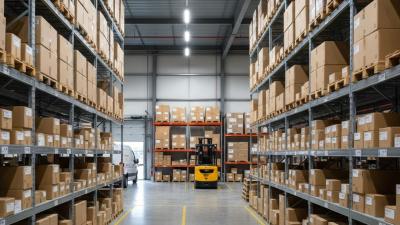
Logistics infrastructure underwrites this. Dubai South hosts the e-commerce free zone around Al Maktoum Airport. Dubai CommerCity — a DAFZA / Wasl JV — is the region's first purpose-built e-commerce free zone. JAFZA handles bulk e-commerce inventory through bonded warehousing — see the free zones overview.
Cross-border is the growth story. With Saudi e-commerce still maturing and African, Indian, and Pakistani diaspora flows running through Dubai, UAE-based fulfilment addresses a regional market well beyond the 10m UAE residents.
EdTech
Education is becoming a programmatic export rather than just a service for residents. Dubai International Academic City (DIAC), the world's largest education free zone, hosts more than 27 universities including Heriot-Watt, Middlesex, Manipal, Amity, and Murdoch. NYU Abu Dhabi, Sorbonne University Abu Dhabi, and MBZUAI anchor the higher-education side. The federal Higher Colleges of Technology (HCT) runs the country's largest applied-degree network.
EdTech start-ups cluster in Dubai Knowledge Park, DIAC, and the Hub71 / in5 / DTEC network. Strong verticals: K-12 tutoring, Arabic-language LLM tutors, professional upskilling for the post-2023 corporate-tax regime, and AI-native curricula. Mashreq Educational Hub provides student financing.
The growth thesis is regional. Dubai is becoming the higher-education and corporate-training hub for the wider GCC, North Africa, and Indian Subcontinent — a market of half a billion potential students.
Foodtech and Agritech
The UAE imports most of its food calories — hence the federal Food Security Strategy 2051, targeting 50% local production. The headline asset is Bustanica in Dubai Industrial Park: a Crop One Holdings / Emirates Flight Catering JV that opened in 2022 as the world's largest indoor vertical farm at 330,000 sq ft, supplying leafy greens to Emirates flights and UAE retail. Pure Harvest Smart Farms (Abu Dhabi) runs high-tech greenhouses across the GCC.
Aquaculture is scaling fast. Asmak and Sheikh Hamdan-backed Fish Farm LLC operate offshore and land-based finfish farms across Abu Dhabi and Dubai. Alternative-protein, lab-grown-meat, and food-waste-valorisation start-ups route through SRTIP and the Hub71 climate-tech track.
Demand-side is captive: federal procurement preferences for local food, retail-chain commitments to UAE-grown sourcing, and the strategic push to reduce import dependence after 2020 supply-chain shocks. Combined with long sun-hours, abundant seawater, and cheap solar, the UAE is an attractive R&D site for arid-climate agritech.
Sectors to Watch
Gaming. The Dubai Programme for Gaming 2033 (launched 2023) targets 30,000 jobs by 2033. in5 Gaming in Dubai Production City and a Dubai Gaming Visa support studios relocating from Eastern Europe and South Asia. UAE positioning as a publishing, esports, and Web3-gaming base is rising alongside Saudi-listed Savvy Games.
Space-tech. The Mohammed bin Rashid Space Centre put the UAE on the map with the Hope Mars Mission (2021), making it the fifth nation to reach Mars orbit. Follow-ons include the Rashid lunar rover and an asteroid-belt mission planned for 2028. A small private cluster — earth-observation, in-orbit servicing, satcoms — is forming around Masdar City and DIFC.
Legal-tech. With ADGM and DIFC running English common law, contract-automation, regtech, and legal-AI tools for Sharia-compliant transactions are an emerging niche, sandboxed via ADGM RegLab and DIFC Innovation Hub.
Agritech beyond vertical farms. SRTIP clusters arid-climate plant biology, water-recycling, and aquaculture R&D, with export to GCC and East African markets as the medium-term thesis.
Frequently Asked Questions
What is the fastest-growing sector in the UAE?
By capital deployed, AI is the headline sector, anchored by G42, Falcon LLM, and the Strategy for AI 2031. By number of new firms, fintech leads — DIFC FinTech Hive alone hosts more than 750 firms. By regulatory novelty, virtual assets and Web3 are unique globally. All three grow in parallel, with crossovers (AI-native fintech, on-chain AI compute) increasingly common.
Is the UAE good for fintech startups?
Yes — arguably the leading regional jurisdiction. DIFC FinTech Hive provides accelerator programmes, soft-licensing pathways, and incumbent-bank access. ADGM RegLab is one of the world's earliest regulatory sandboxes. The Central Bank of the UAE has been progressive on payments, open finance, and stored-value licensing. Strong customer demand and access to incumbent capital make commercial scaling straightforward.
Is crypto legal in the UAE?
Yes — virtual assets are explicitly regulated, not banned. In Dubai outside DIFC, VARA licenses exchanges, brokers, custodians, and stablecoin issuers. In Abu Dhabi, FSRA at ADGM has run a virtual-asset regime since 2018. DFSA at DIFC handles tokenised securities and select crypto activities. The federal SCA covers the rest of the country. Operating unlicensed is illegal; operating licensed is well-supported.
What is VARA?
The Virtual Asset Regulatory Authority is Dubai's dedicated crypto regulator, established in 2022 by Law No. 4. VARA licenses and supervises all virtual-asset activities in Dubai outside the DIFC: exchanges, brokers, custodians, advisory, lending, management, and virtual-asset issuance. It is the world's first standalone regulator for the sector.
What is G42?
G42 is Abu Dhabi's state-aligned AI conglomerate, founded in 2018 and chaired by Sheikh Tahnoun bin Zayed Al Nahyan. It operates across AI compute (Condor Galaxy), large language models (TII partnership and AI71), healthcare (M42), cloud (Core42), and geospatial (Bayanat). Microsoft made a USD 1.5B strategic investment in 2024, with press reports placing G42's implied valuation above USD 100B.
What support exists for AI startups?
UAE AI start-ups can access Hub71 in Abu Dhabi (with an AI-specific track), Masdar City Free Zone for low-cost incorporation beside MBZUAI, sovereign cheque deployment from Mubadala and ADQ, and Golden Visas for specialist talent. Compute access via G42's Condor Galaxy is a soft incentive; AI71 commercialises the Falcon LLM stack for enterprise customers.
What is the UAE Climate Tech focus?
The UAE hosted COP28 in December 2023, surfacing the Net Zero by 2050 strategy. Headline targets: 50% renewable share in the energy mix by 2050, solar and wind via Masdar (100 GW by 2030), nuclear baseload from Barakah, plus carbon-capture and green-hydrogen pilots through ADNOC and Masdar. The USD 30B ALTÉRRA fund launched at COP28 backs global climate-tech deployment.
What is the UAE Food Security Strategy?
The National Food Security Strategy 2051, published in 2018, targets 50% local food production by 2051 and a top-10 ranking on the Global Food Security Index. It funds vertical farming (Bustanica), high-tech greenhouses (Pure Harvest), aquaculture (Fish Farm LLC, Asmak), and alternative-protein R&D, and has reshaped procurement preferences across federal agencies and major retailers.
How does the UAE support Web3 founders specifically?
Three onshore routes dominate. VARA (Dubai outside DIFC) — flexible licensing mix and home to most major exchanges. FSRA at ADGM — institutional credibility, used by regulated stablecoin issuers and crypto-asset managers. DMCC Crypto Centre — infrastructure, NFT, and Web3-gaming firms in JLT under VARA coordination. All three carry Golden Visa eligibility and reliable access to UAE banking — a meaningful operational advantage given the global crypto-banking environment.
Where do I start if I want to relocate a tech business to the UAE?
Start with the business guide hub, then the startup ecosystem, the regulations primer, and the free zones overview to choose a jurisdiction. AI and Web3 founders should read the UAE AI ecosystem deep-dive; financial-services founders should review DIFC and ADGM.
General information based mainly on official public sources, not legal, immigration, tax, financial or medical advice. Rules and fees change: confirm with the relevant authority or a qualified professional before acting. See our Terms of Use.