The UAE is the most cited oxymoron in climate policy — a top-ten oil exporter that hosted COP28 in December 2023, committed to Net Zero by 2050 as the first MENA country to do so, and channels tens of billions of sovereign dollars into renewables through Masdar, Mubadala, ADQ, and TAQA. Masdar alone runs a portfolio above 30 GW across 40+ countries, with a 100 GW target by 2030. Dubai's Mohammed bin Rashid Al Maktoum Solar Park — already the world's largest single-site solar park — is on a planned trajectory to 5 GW by 2030. The contradiction sits behind the credibility: a hydrocarbon state deploying hydrocarbon revenue into low-carbon assets at scale. The result for founders is a real climate-tech cluster — sovereign-anchored, capital-rich, concentrated in identifiable programmes.
For broader context, see the business guide hub, the Masdar City profile, the growing sectors map, the UAE AI ecosystem, the government subsidies primer, and the Hub71 profile.
At a Glance
| Field | Detail |
|---|---|
| Headline commitment | UAE Net Zero by 2050 (announced October 2021) |
| First MENA Net Zero pledge | Yes |
| Hosted COP | COP28, December 2023, Expo City Dubai |
| Energy mix target | 50% clean energy by 2050 (UAE Energy Strategy 2050) |
| Sovereign anchors | Masdar (Mubadala-owned), TAQA, ADQ, ADNOC, DEWA |
| Masdar portfolio | 30+ GW across 40+ countries; 100 GW target by 2030 |
| Largest single-site solar park | Mohammed bin Rashid Al Maktoum Solar Park (planned 5 GW by 2030) |
| Climate fund launched at COP28 | ALTÉRRA, USD 30B vehicle |
| Federal sustainable-finance framework | UAE Sustainable Finance Framework 2024 |
| Lead climate accelerator | Hub71+ Climate (Abu Dhabi, launched 2023) |
| Free-zone home for climate tech | Masdar City Free Zone (IRENA HQ on-site) |
| Largest indoor vertical farm | Bustanica, Dubai Industrial Park (~330,000 sq ft, opened 2022) |
The UAE's Climate Commitment
The UAE's climate stance is unusual for a hydrocarbon producer: target is policy, federal architecture is in place, sovereign balance sheet is deployed.
Net Zero by 2050. Announced in October 2021, the UAE Net Zero by 2050 Strategic Initiative was the first such commitment by a major Gulf hydrocarbon producer and the first MENA-wide, written into the UAE Vision 2071 framework. The pledge does not retire hydrocarbons — UAE oil and gas capacity is still expanding — but it sets a regulated decarbonisation trajectory for power, transport, industry, waste.
COP28, December 2023. The UAE hosted the 28th UN Climate Change Conference at Expo City Dubai. It produced the first global stocktake under the Paris Agreement and the headline language calling on parties to "transition away from fossil fuels". The UAE launched ALTÉRRA, a USD 30 billion vehicle anchored at Lunate (Mubadala / ADQ-aligned), at the same event.
UAE Energy Strategy 2050. The federal plan targets a 50% clean-energy mix by 2050 — solar, nuclear, wind — and a sharp reduction in the carbon footprint of power. The Barakah nuclear plant (4 reactors, ~5.6 GW) provides regulated baseload and is the only operating nuclear plant in the Arab world.
UAE Sustainable Finance Framework 2024. The federal framework sets disclosure, taxonomy, and green-instrument expectations for UAE banks, insurers, asset managers, and corporates. DIFC's Sustainable Finance Catalyst and ADGM's Sustainable Finance Regulatory Framework route licensed funds and issuers into green bonds, sustainability-linked loans, and ESG-disclosed vehicles.
Sovereign capital, deployed. Mubadala, ADQ, Masdar, ADNOC, TAQA, and DEWA direct capital into the transition — into projects, funds, and start-ups via Hub71+ Climate, Masdar Catalyst, Mubadala Capital, and ALTÉRRA. UAE climate-tech procurement is a sovereign procurement question, not a private-market one.
Government and Sovereign Anchors
Most of the climate balance sheet sits in five entities. Founders encounter at least one in any serious procurement, partnership, or fundraise.
Masdar — Abu Dhabi Future Energy Company. Founded 2006 as a Mubadala subsidiary, Masdar is one of the world's largest renewables companies. Active and committed projects exceed 30 GW across solar, wind, and storage in 40+ countries, with a 100 GW target by 2030. The equity stack pulls in Mubadala, TAQA, and ADNOC Clean Energy; an IPO has been mooted publicly but not executed as of 2024.
ADNOC's transition strategy. ADNOC is the federal hydrocarbon group, and its transition runs in parallel to core production: CCUS at megatonne scale, blue and green hydrogen with Mubadala and Masdar, and equity via ADNOC Clean Energy in Masdar.
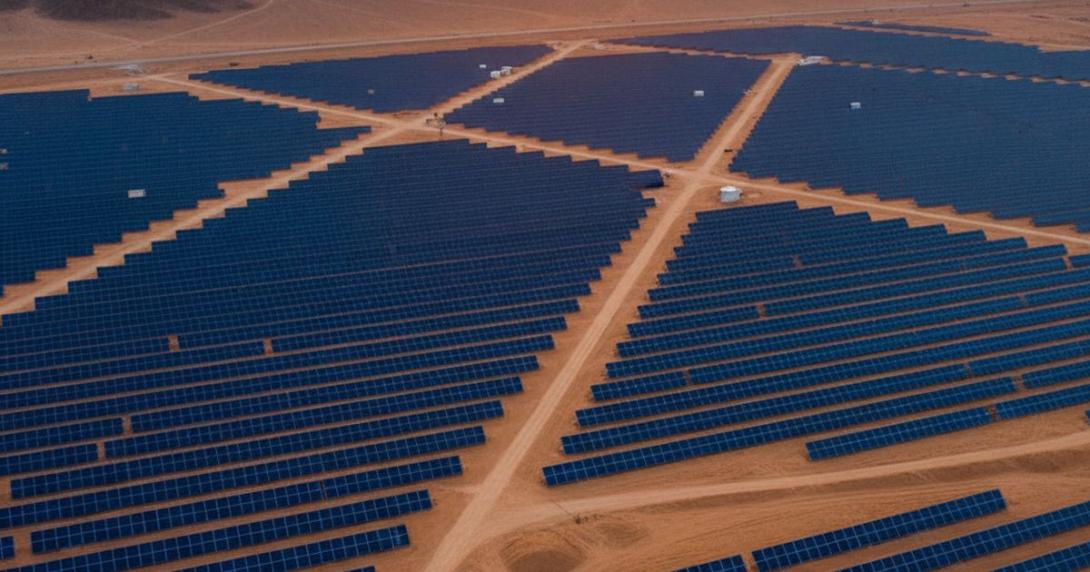
DEWA — Dubai Electricity & Water Authority. Dubai's vertically integrated utility owns and operates the Mohammed bin Rashid Al Maktoum Solar Park — the largest single-site solar PV plant globally, on a planned trajectory to 5 GW by 2030 — and is the procurement counterparty for any utility-scale solar bid in Dubai.
TAQA — Abu Dhabi National Energy Company. Listed on the ADX, TAQA is Abu Dhabi's vertically integrated utility — generation, transmission, distribution, water — and a key minority shareholder in Masdar. It owns regulated networks across the Northern Emirates and Abu Dhabi, plus a large international portfolio.
Mubadala and ADQ. Two of three Abu Dhabi sovereign investors (alongside ADIA) deploy directly into climate. Mubadala Capital runs thematic funds; ADQ holds federal infrastructure, food, and utilities stakes including Masdar and TAQA-adjacent platforms; both anchor ALTÉRRA.
Subsectors
Renewable energy. Utility-scale solar PV dominates — the Mohammed bin Rashid Al Maktoum Solar Park anchors Dubai, Noor Abu Dhabi and the Al Dhafra IPPs anchor Abu Dhabi, and Masdar's overseas wins span the GCC, Africa, central Asia, and the Western Balkans. Wind is mostly export (UK Dogger Bank). Battery storage rolls out alongside DEWA and ADWEC procurement.
Green and blue hydrogen. The federal National Hydrogen Strategy 2050 targets the UAE as a top-ten producer. Masdar's green hydrogen pipeline includes a low-carbon hydrogen JV with bp and ADNOC. ADNOC's blue hydrogen strategy uses CCUS-augmented natural gas reforming, positioning the UAE for hydrogen and ammonia exports to Japan, Korea, and Europe.
Carbon capture (CCUS). ADNOC operates the region's first large-scale CCUS project at Al Reyadah, scaling to multi-megatonne annual capture by the late 2020s. The voluntary carbon market is increasingly tied to UAE-based registries and verification platforms.
Electric vehicles and charging. UAE EV adoption is rising off a low base, with public charging rolled out by DEWA, ADDC, and private operators. Lucid Motors — Saudi PIF-owned, Nasdaq-listed — has UAE exposure through ADQ-aligned procurement and a discussed regional plant. The National EV Policy 2050 sets penetration targets across fleets.
Vertical farming and agritech. Bustanica — a Crop One / Emirates Flight Catering JV — opened in 2022 in Dubai Industrial Park as the world's largest indoor hydroponic farm at ~330,000 sq ft, supplying Emirates and UAE retail. Pure Harvest Smart Farms runs high-tech greenhouses across the GCC. Aquaculture, alt-protein, and food-waste start-ups route through SRTIP and Hub71. See the growing sectors map.
Water and desalination. The UAE is a long-running R&D site for reverse-osmosis and solar-powered desalination, plus water reuse. TAQA, Mubadala, and ACWA Power are utility-scale procurers; smaller start-ups cluster around Masdar City and SRTIP.
Climate fintech and voluntary carbon market. UAE corporates were early voluntary-credit buyers, and the AirCarbon Exchange (ACX) is licensed under FSRA at ADGM as a regulated carbon-credit exchange — among the first of its kind globally. ESG ratings, carbon accounting SaaS, and climate disclosure tooling cluster in DIFC and ADGM under the Sustainable Finance Framework 2024. See the DIFC and ADGM profiles.
Circular economy. Bee'ah in Sharjah operates one of the region's largest integrated waste businesses, and the Sharjah Waste-to-Energy plant — a Masdar JV — opened in 2022. Plastic, e-waste, and C&D recycling are growing niches across the Northern Emirates.
Key Programmes for Climate Founders
Hub71+ Climate. Launched in 2023 with Mubadala, ADQ, and ADGM, Hub71+ Climate is the climate-tech track of Hub71. It targets growth-stage start-ups across renewables, mobility, food and water, carbon, and the built environment, with cohort cheque deployment, ADGM-aligned licensing, sovereign-procurement introductions, and Golden Visa eligibility. For climate start-ups looking for an Abu Dhabi base, this is the right first conversation.
Masdar Catalyst Fund. Masdar's climate-tech venture arm backs early- and growth-stage companies accelerating renewables deployment, storage, hydrogen, or grid integration. Cheque sizes scale with stage and strategic fit with Masdar's pipeline.
Mubadala Capital climate funds. Mubadala Capital runs thematic strategies across climate infrastructure and technology, plus its anchor role in ALTÉRRA. For later-stage businesses, Mubadala is the largest UAE LP-and-direct combination.
Dubai Future Foundation accelerators. Dubai Future Accelerators runs climate, sustainability, and food-security cohorts pairing start-ups with Dubai government entities. Plug and Play UAE adds sustainability tracks.
ALTÉRRA. Not founder-facing in the conventional sense, but its two funds — ALTÉRRA Acceleration (LP commitments to top-tier global climate fund managers) and ALTÉRRA Transformation (concessional, blended-finance vehicle for emerging markets) — reshape the global LP stack with ripple effects on the UAE GP ecosystem.
For wider funding architecture, see the government subsidies primer and the Hub71 profile.
Free Zones for Climate Tech
Masdar City Free Zone. The default address for renewables, sustainability, AI-for-energy, and biotech. The cluster effect — IRENA's HQ, Masdar Clean Energy, Siemens UAE, GE Renewable Energy MENA, MBZUAI — is real, and the address signals genuine intent to sovereign procurement desks. Setup is typically AED 25,000-50,000 for a basic single-activity licence. See the Masdar City profile.
DMCC Climate Hub. Inside DMCC in JLT, the Climate Hub is a community-and-licensing track for sustainability, ESG, climate-fintech, and circular-economy firms. The advantage is the wider DMCC platform — 25,000+ firms, commodity-and-logistics adjacency, deep services ecosystem. Better suited to climate-fintech and ESG-ratings than engineering-heavy renewables.
DIFC Sustainable Finance Hub. DIFC is the base for green-finance, ESG-rating, climate-fintech, and sustainability-linked-instrument issuers. The DFSA sustainable-finance framework, the wider FinTech Hive, and global asset-manager density make DIFC the regional capital for green finance. ADGM is its peer in Abu Dhabi.
For the wider free-zone comparison, see the free zones overview and the business setup primer.
Sovereign-Aligned Risk Note
The UAE climate-tech bet is real, but heavily concentrated. Masdar, ADQ, Mubadala, ADNOC, DEWA, and TAQA hold most of the climate balance sheet; Hub71+ Climate, Masdar Catalyst, ALTÉRRA, and Mubadala Capital channel most of the venture flow. Three implications follow.
First, sovereign alignment is usually a precondition for serious UAE-based scale. Utility procurement runs through DEWA, ADWEC, TAQA, or ADNOC; growth-stage cheques run through Mubadala, ADQ, or Masdar Catalyst. Founders need a deliberate strategy for becoming legible to at least one counterparty.
Second, the voluntary carbon market and ESG-rating space remain young. ACX is the standout, but the wider ecosystem of MRV tooling, registries, project developers, and corporate buyers is still forming. The opportunity is real; the maturity is not.
Third, the federal climate framework is policy, not contract. The 50% clean-energy target and Net Zero pledge are increasingly written into procurement, disclosure, and tax expectations — but operational detail is still being built in 2025-2026.
The practical move is to build a UAE base around a named programme — Hub71+ Climate, Masdar Catalyst, Masdar City, DIFC Sustainable Finance, or DMCC Climate Hub — with a deliberate sovereign-procurement or sovereign-LP strategy, rather than expecting a generic UAE address to convert into climate procurement on its own.
Frequently Asked Questions
Is the UAE serious about climate tech?
Yes, with the caveat that it is also a major hydrocarbon producer. The UAE was the first MENA country to commit to Net Zero by 2050, hosted COP28 in December 2023 at Expo City Dubai, runs the UAE Energy Strategy 2050 with a 50% clean-energy mix target, and channels significant sovereign capital through Masdar, Mubadala, ADQ, and ALTÉRRA.
What is Masdar?
Masdar — Abu Dhabi Future Energy Company — is a Mubadala-owned renewable-energy company founded in 2006, running an active and committed portfolio above 30 GW across solar, wind, and storage in 40+ countries, with a stated 100 GW global target by 2030. The equity stack pulls in Mubadala, TAQA, and ADNOC Clean Energy; an IPO has been mooted publicly but not executed as of 2024.
Where is the world's largest solar park?
The Mohammed bin Rashid Al Maktoum Solar Park south of Dubai is the world's largest single-site solar park, on a planned trajectory to 5 GW by 2030. It is owned and operated by DEWA across multiple phases including conventional PV and concentrated solar power.
What is COP28?
COP28 was the 28th UN Climate Change Conference, hosted by the UAE at Expo City Dubai in December 2023. It produced the first global stocktake under the Paris Agreement and language calling on parties to "transition away from fossil fuels". The UAE also launched ALTÉRRA, a USD 30 billion climate-investment vehicle, at the same event.
What is Hub71+ Climate?
Hub71+ Climate is the climate-tech track of Hub71, Abu Dhabi's flagship start-up programme. Launched in 2023 with Mubadala, ADQ, and ADGM, it targets growth-stage start-ups across renewables, mobility, food and water, carbon, and the built environment, with cohort cheque deployment, ADGM-aligned licensing, sovereign-procurement introductions, and Golden Visa eligibility.
Is the UAE Net Zero by 2050?
The UAE has committed to Net Zero by 2050 — announced in October 2021 as the first MENA pledge of its kind and written into the UAE Vision 2071 framework. It sets a regulated decarbonisation trajectory for power, transport, industry, and waste, while UAE oil and gas production capacity continues to expand in parallel.
What is Masdar City?
Masdar City is a sustainable mixed-use development in Abu Dhabi, developed by Mubadala through its subsidiary Masdar. The 2008 master plan was by Foster + Partners. Today it is the UAE's main climate-tech cluster, hosting IRENA's global HQ, Masdar Clean Energy, MBZUAI, Siemens UAE, and GE Renewable Energy MENA. See the Masdar City profile.
Are there climate tech accelerators in the UAE?
Yes. Hub71+ Climate (Abu Dhabi, 2023) is the lead accelerator. Masdar Catalyst Fund is Masdar's venture arm. Mubadala Capital runs climate-thematic strategies. Dubai Future Accelerators runs climate cohorts pairing start-ups with Dubai government entities. Plug and Play UAE runs sustainability tracks.
What is the UAE green hydrogen strategy?
The federal National Hydrogen Strategy 2050 targets the UAE as a top-ten producer. Masdar runs a multibillion-USD green hydrogen pipeline including a low-carbon hydrogen JV with bp and ADNOC; ADNOC runs a parallel blue hydrogen strategy using CCUS-augmented natural gas reforming, positioning the UAE for hydrogen and ammonia exports to Japan, Korea, and Europe.
Can foreign climate startups raise capital in the UAE?
Yes — the UAE is increasingly an active LP and direct investor in global climate-tech. Routes include Hub71+ Climate for cohort cheques and sovereign introductions, Masdar Catalyst Fund for strategic-fit cheques, Mubadala Capital for growth-stage commitments, and ALTÉRRA for fund-of-funds LP commitments. The practical sequence is to incorporate in a relevant free zone — Masdar City, DIFC, ADGM, or DMCC — and pursue a Hub71+ Climate or Masdar Catalyst conversation alongside licensing. See the business setup primer.