Buying a Used Car in the UAE: Inspection, Transfer, and Scam Avoidance
Updated
Transferring ownership of a used car in Dubai costs AED 350 for a private light vehicle, plus AED 20 in knowledge and innovation fees — most buyers pay AED 370–420 all-in, and the transfer itself is done the same day, typically in 30–60 minutes. Those are the figures published by the RTA (Roads and Transport Authority), and the transfer happens at an RTA customer happiness centre, a Tasjeel branch, or fully online via the RTA website and Dubai Drive app with UAE Pass. Abu Dhabi charges the same AED 350 (plus AED 10 knowledge fee) through the TAMM platform run with Abu Dhabi Mobility.
The transfer is the easy part. The money is won or lost before it: the inspection, the accident-history check, the loan check, and — since the April 2024 storms — the flood-damage check. This guide covers all of it, for both buyer and seller.
At a Glance
| Item | Amount / detail |
|---|---|
| Ownership transfer fee (Dubai, private light vehicle) | AED 350 + AED 20 knowledge/innovation fees |
| Ownership transfer fee (Abu Dhabi, via TAMM) | AED 350 + AED 10 knowledge fee |
| Opening a Dubai traffic file (first-time buyers) | ~AED 200 |
| Registration test if the car is over 3 years old | AED 170 (Dubai) / AED 150 (Sharjah) |
| Comprehensive pre-purchase inspection | AED 250–500 (Tasjeel comprehensive test: AED 350) |
| RTA Vehicle Status Certificate (accident/owner history) | AED 120 |
| EVG / MOI accident check (non-Dubai registrations) | Free at evg.ae / moi.gov.ae |
| New Salik tag for the buyer | AED 100 before VAT at petrol stations (AED 50 tag + AED 50 balance), with 5% VAT on the tag fee since 1 June 2026; online adds about AED 20 for delivery |
| Time at the counter | 30–60 minutes, same-day Mulkiya |
Where People Buy Used Cars in the UAE
The market splits into four channels, each with a different risk profile:
- Franchise dealers and certified pre-owned (CPO) programmes. Agency-maintained cars with documented service history and a limited warranty. Prices run higher than private sales; the premium buys paperwork certainty.
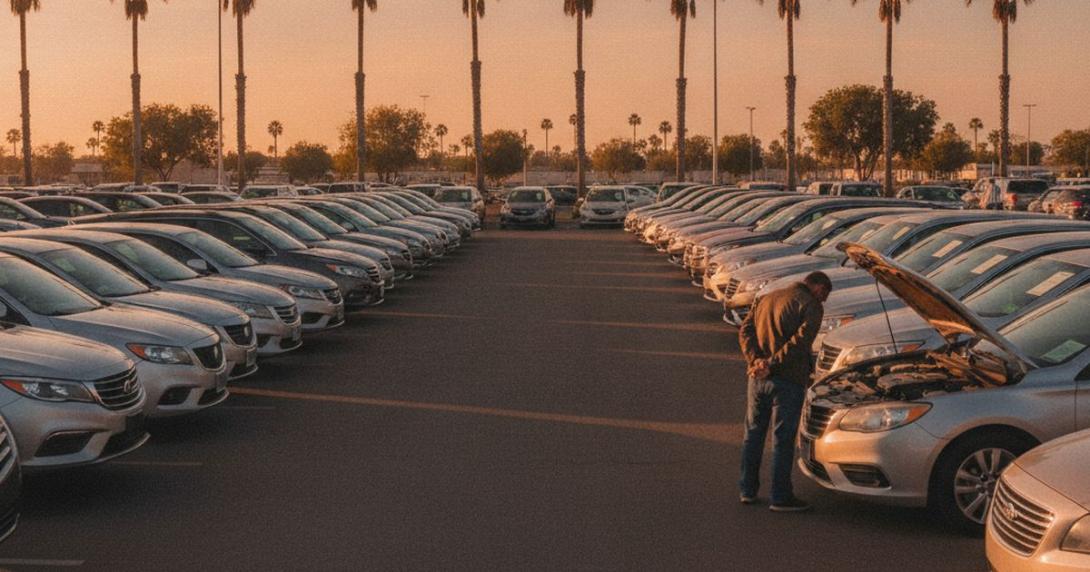
- Independent used-car dealers. Concentrated in areas like Al Aweer (Dubai) and Souq Al Haraj (Sharjah). Quality varies widely — the pre-purchase checks below matter most here.
- Classifieds platforms. dubizzle and Dubicars carry private and dealer listings. Private sales cut out dealer margin but put every verification task on you.
- Auctions. Houses such as Emirates Auction and Al Qaryah Auction sell fleet, bank-repossessed and insurance-recovery vehicles. Cars are sold as-seen; inspection windows are short and some lots are accident or flood write-backs, which is priced in — or should be.
Whatever the channel, the legal moment of truth is the same: ownership changes only when the transfer is recorded and a new Mulkiya (registration card) is issued in the buyer's name.
Pre-Purchase Checks That Catch Expensive Problems
1. Independent mechanical inspection — AED 250–500
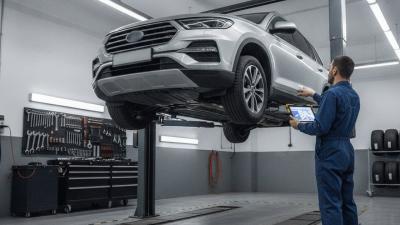
Never rely on the seller's word or a five-minute test drive. A comprehensive multi-point inspection at Tasjeel costs AED 350 (offered at Al Barsha, Al Qusais, Al Twar, Al Aweer and Al Warsan in Dubai, and Auto Village in Sharjah); independent workshops and mobile inspection services charge roughly AED 250–500 depending on the package. Tasjeel also offers a chassis inspection (AED 475 for light vehicles) and a valuation certificate (AED 250) if you need a price sanity-check. Insist on the inspection happening at a centre you choose, not one the seller suggests.
2. Accident history
Which tool works depends on where the car is registered:
- Registered in Abu Dhabi, Sharjah, Ajman, UAQ, RAK or Fujairah: the Emirates Vehicle Gate portal (evg.ae) and the MOI website/app show reported accidents against the 17-digit chassis number (VIN), free of charge.
- Registered in Dubai: Dubai cars do not appear in the EVG database. Use the RTA's Vehicle Status Certificate instead — AED 120, ordered on rta.ae with the chassis number, covering accident records, insurance history and previous owners. The current owner receives an OTP to approve the request; a seller who refuses is telling you something.
A clean report is necessary but not sufficient — unreported accidents and repairs done outside insurance never make the database, which is why the physical inspection still matters. If a seller will not share the chassis number at all, walk away.
3. Bank loan (mortgage) check
Financed cars carry a bank mortgage flag in the traffic system, and the RTA will block the transfer until the bank issues clearance. The financing bank is also shown on the Mulkiya. Ask to see the original registration card, and if a loan exists, insist the seller obtains the bank's electronic mortgage release before you hand over the full price — settling a stranger's loan on a promise is a classic loss scenario. The RTA website and Dubai Drive app vehicle-inquiry services let you confirm registration status before committing.
4. Fines and Salik on the plate
All traffic fines and unpaid Salik tolls must be cleared before the system allows a transfer — they are the seller's problem, but discovering AED 4,000 of fines at the counter kills a same-day deal. Check fines on the RTA or Dubai Police websites (or MOI for other emirates) using the plate number before you agree a completion date. Our traffic fines guide explains the post-2025 fine schedule under Federal Decree-Law 14/2024.
5. Odometer cross-check
Mileage rollback via cheap OBD-II tools is commonly reported in the UAE market. Cross-check the odometer against agency service records (any franchise dealer can print the history for cars serviced in-network), previous inspection certificates, and physical wear on pedals, steering wheel and driver's seat. A 60,000 km car with a shiny-smooth steering wheel deserves suspicion.
Flood Cars and Other Scams: The Tells
The April 2024 storms — up to 254 mm of rain in 24 hours, the heaviest since records began in 1949 — damaged tens of thousands of vehicles across Dubai, Sharjah and the Northern Emirates, with estimates running as high as 50,000. Insurers wrote many off, but a significant number were cosmetically refurbished and pushed back into the used market without disclosure. Flood damage often surfaces months later as electrical and transmission failures.
Flood-car tells: a damp or heavily perfumed cabin; silt or water lines under carpets, in the spare-wheel well or inside light housings; corrosion on seat rails and under-dash connectors; fogged instrument clusters; intermittent electrical faults. Ask the insurer-history section of the RTA Vehicle Status Certificate to flag total-loss records, and have the inspection centre specifically check for water damage on any car registered before mid-2024.
Other recurring scams:
- Deposit scams: a "relocating owner" asks for a WhatsApp deposit to hold the car, then disappears. Never pay anything before seeing the car and the seller's Emirates ID together.
- Fake escrow: links to professional-looking third-party "secure payment" sites the seller controls. The only safe completion is payment at the moment of transfer at the RTA/Tasjeel counter — cash or manager's cheque changing hands as the new Mulkiya prints.
- Hidden-loan cars: sold on a signed "agreement" without transfer because the mortgage blocks it. If the transfer cannot happen today, the deal is not a deal.
- Seller-side overpayment: a buyer "accidentally" transfers too much and asks for a refund of the difference before the original (fake or reversible) payment clears. Sellers: release nothing until funds are irrevocably in your account.
The Ownership Transfer, Step by Step (Dubai)
Requirements before anyone visits a counter: all fines and Salik cleared, any bank mortgage released, a passing registration test if the car is due one (mandatory for vehicles over 3 years old unless the current test is still valid), and — the step that surprises first-time buyers — insurance already issued in the buyer's name. Most insurers issue same-day cover against the chassis number; third-party is the legal minimum, comprehensive is worth pricing on any car you just spent money inspecting.
- Agree the sale and complete your checks (inspection, accident history, loan status).
- Clear the blockers: seller settles fines and Salik; bank releases any mortgage electronically.
- Buyer arranges insurance in their own name against the chassis number.
- Pass the registration test if due — AED 170 at Tasjeel and other RTA-authorised centres in Dubai.
- Complete the transfer: both parties (or a representative with notarised power of attorney) attend an RTA centre, Tasjeel branch or typing centre — or complete it remotely via the RTA website / Dubai Drive app, where both sides sign the digital sale agreement with UAE Pass. The online agreement lapses after 14 days if not completed.
- Pay the fees: AED 350 + AED 20 (buyer pays by convention, but it is negotiable). A buyer new to Dubai also pays ~AED 200 to open a traffic file, and a first-time driver needs a UAE licence — see our guide to converting a foreign licence.
- Collect the new Mulkiya — issued immediately in the buyer's name (or delivered, for online transfers). Check the expiry date printed on it: your annual renewal clock now runs from this card, and our registration renewal guide covers what happens twelve months later.
- Sort plates and Salik: existing plates usually stay with the car (replacement plates cost AED 35 for a standard short plate or AED 50 for a long plate, plus a AED 20 knowledge fee, if you change them). The buyer needs their own Salik tag — AED 100 before VAT at Emarat/ENOC/EPPCO/ADNOC stations (AED 50 for the tag and AED 50 of toll credit; Salik has charged 5% VAT on the tag fee since 1 June 2026), or the same kit delivered from salik.ae for about AED 20 more.
Driving an untransferred or unregistered car is not a paperwork technicality: under Federal Decree-Law 14/2024 (in force since 29 March 2025), driving an unregistered vehicle draws a AED 500 fine, with monthly escalation up to AED 3,000 commonly reported, plus possible impound — and an insurer can refuse claims on a car whose registration does not match the driver's story.
Transfer Fees by Emirate
| Emirate | Channel | Base fee | Notes |
|---|---|---|---|
| Dubai | RTA centres, Tasjeel, typing centres, RTA website / Dubai Drive app | AED 350 + AED 20 | Test AED 170 if due; traffic file ~AED 200 for new buyers |
| Abu Dhabi | TAMM portal / Muroor (Abu Dhabi Mobility) | AED 350 + AED 10 | Test AED 150 at ADNOC centres if due (cars over 3 years) |
| Sharjah | Traffic & Licensing Dept., Tasjeel Auto Village | AED 350 | Test AED 150; both parties attend |
Fee schedules change; the amounts above are the published figures widely confirmed in 2025–2026 sources, but confirm the exact total on the RTA app or TAMM before paying. Weighty vehicles (pickups, trucks) pay more than the private-light-vehicle rate.
Buying a Car Registered in Another Emirate
Living in Dubai and buying a Sharjah-registered car (a common outcome of Souq Al Haraj bargain-hunting — see our Dubai vs Sharjah comparison) adds a leg to the process:
- Transfer ownership at the seller's emirate traffic department (AED 350, fines cleared, same rules).
- Obtain an export certificate within the country plus temporary transit plates — commonly around AED 500 with short-term export insurance (valid about 7 days in Dubai's version) — or put the car on a recovery truck, since driving without valid plates is illegal.
- Re-register in your home emirate: new plates, new Mulkiya, and an inspection if the car is over 3 years old.
Budget roughly AED 1,000–1,500 extra for a cross-emirate purchase once the export leg, new plates and second set of counter fees are counted. One caution from the accident-history section: when a vehicle moves from a Northern Emirates registration into Dubai, its EVG history can become invisible to later buyers — pull the EVG report before the registration moves.
Selling? Your Liability Until the Transfer Completes
The single most important rule for sellers: until the transfer is recorded, everything the car does is legally yours. Every fine, every Salik crossing, every accident lands on your traffic file regardless of who is driving. UAE traffic law requires the ownership-change formalities — the seller's notification to the licensing authority and the buyer's transfer application with valid insurance — to be completed within 14 days, and the RTA's online sale agreement itself expires after 14 days. Dubai courts have ordered sellers-turned-plaintiffs and no-show buyers alike to pay thousands of dirhams over fines racked up on untransferred cars; "he promised to transfer it later" is an expensive sentence.
Seller's checklist:
- Never hand over the car before the transfer. Complete payment and transfer in the same sitting.
- Keep your insurance active until the new Mulkiya is issued — cancelling early can void cover on a car still registered to you. After the transfer, cancel the policy; insurers refund unused months pro-rata, minus fees, on most annual policies (confirm your policy's cancellation terms).
- Remove the vehicle from your Salik account (free, via salik.ae or the app) and peel the tag — tags are non-transferable, and if you skip this step the buyer's tolls bill to your account. Remaining balance stays on your account for your next car; details in our Salik and Parkin guide.
- Keep a copy of the sale agreement and new Mulkiya as proof of the transfer date in case a pre-existing fine is disputed later. If the buyer was ever involved in an incident before transfer, our accident procedure guide explains whose insurer answers.
Financing a Used Car, Briefly
UAE Central Bank rules (Regulation 29/2011) cap car loans at 80% of the vehicle's value — a 20% down payment minimum — and many banks lend only 70% on used cars. Banks also cap vehicle age, commonly at 8–10 years at loan maturity: financing a 7-year-old car on a 4-year loan usually fails the test, which is why older bargains are effectively cash-only. On a financed purchase the bank pays the seller directly and registers its mortgage on the new Mulkiya; you cannot sell the car on until that loan clears. Compare total interest cost (flat rates advertised by banks understate the effective rate roughly twofold), and remember the transfer cannot complete until the bank's cheque or transfer actually clears — plan the counter visit accordingly.
Frequently Asked Questions
How much does it cost to transfer car ownership in Dubai?
AED 350 for a private light vehicle plus AED 20 in knowledge and innovation fees — AED 370 at minimum. Add AED 170 if the car needs its annual test, ~AED 200 if the buyer has no Dubai traffic file, and AED 35–50 per plate if plates change. Most straightforward transfers land between AED 370 and AED 420.
Can I transfer car ownership online in Dubai?
Yes. The seller initiates the transfer on the RTA website or Dubai Drive app, both parties sign the digital sale agreement with UAE Pass, the buyer uploads insurance and pays the fees, and the new registration card is issued without a counter visit in most cases. The digital sale agreement is valid for 14 days; if it lapses, you start again. In-person transfers at Tasjeel and RTA centres remain available and take 30–60 minutes.
How do I check a used car's accident history in the UAE?
For cars registered in Abu Dhabi, Sharjah, Ajman, Umm Al Quwain, Ras Al Khaimah or Fujairah, run the chassis number through evg.ae or the MOI website free of charge. Dubai-registered cars do not appear there — order the RTA Vehicle Status Certificate instead (AED 120 on rta.ae), which covers accident, insurance and ownership history. Unreported accidents appear in neither, so pair the report with a physical inspection.
Do I need insurance before the ownership transfer?
Yes. The RTA will not process a transfer without a valid insurance policy already issued in the buyer's name. Insurers issue same-day cover against the chassis number, so this is a morning-of task, not a blocker — but arriving at the counter without it means going home.
What if the car still has a bank loan on it?
The transfer is blocked until the financing bank releases its mortgage electronically. The bank's name appears on the Mulkiya, so a loan cannot honestly be hidden from anyone who checks. Never pay the full price so the seller can "settle the loan and transfer next week" — either the seller clears it first, or your bank settles the seller's bank directly as part of a financed purchase.
How much is a used car inspection in Dubai?
The comprehensive pre-purchase test at Tasjeel costs AED 350; independent workshops and mobile inspectors typically charge AED 250–500 depending on depth. That is separate from the AED 170 registration test (AED 150 in Sharjah) that cars over 3 years old must pass before transfer or renewal.
Who pays fines and Salik charges from before the transfer?
The seller. Fines and Salik must be cleared before the system permits the transfer, and anything incurred up to the moment the new Mulkiya is issued sits on the seller's traffic file — including tolls billed to a Salik tag the seller forgot to deactivate. Buyers should still check the plate for fines before completion day to avoid surprises at the counter.
Can I buy a car registered in a different emirate?
Yes. Transfer ownership in the seller's emirate (AED 350), then either export it to your emirate on temporary transit plates with short-term export insurance (commonly around AED 500 for the export leg) or truck it over, and re-register it locally with new plates. Budget roughly AED 1,000–1,500 on top of a same-emirate purchase.
Related reading: the UAE driving guide hub · UAE traffic fines after the 2025 law · annual car registration renewal · Salik tolls and Parkin parking · what to do after a car accident · the Sharjah–Dubai commute.
General information based mainly on official public sources, not legal, immigration, tax, financial or medical advice. Rules and fees change: confirm with the relevant authority or a qualified professional before acting. See our Terms of Use.