UAE Utilities Setup: DEWA, ADDC, SEWA Deposits, Tariffs, and the Housing Fee
Updated
Update · August 2026
DEWA has automated security-deposit refunds — in April 2026 the authority reported that deposits up to AED 4,000 (around 90% of refund requests) are now refunded in as little as 8 minutes after account closure, down from a 30-minute automated cycle and about 4 days under the old manual process.
Read the full update
In Abu Dhabi, ADDC's published municipality-fee page now lists the expat housing fee at 5% of rental value — stale guides still quoting the original 3% are out of date.
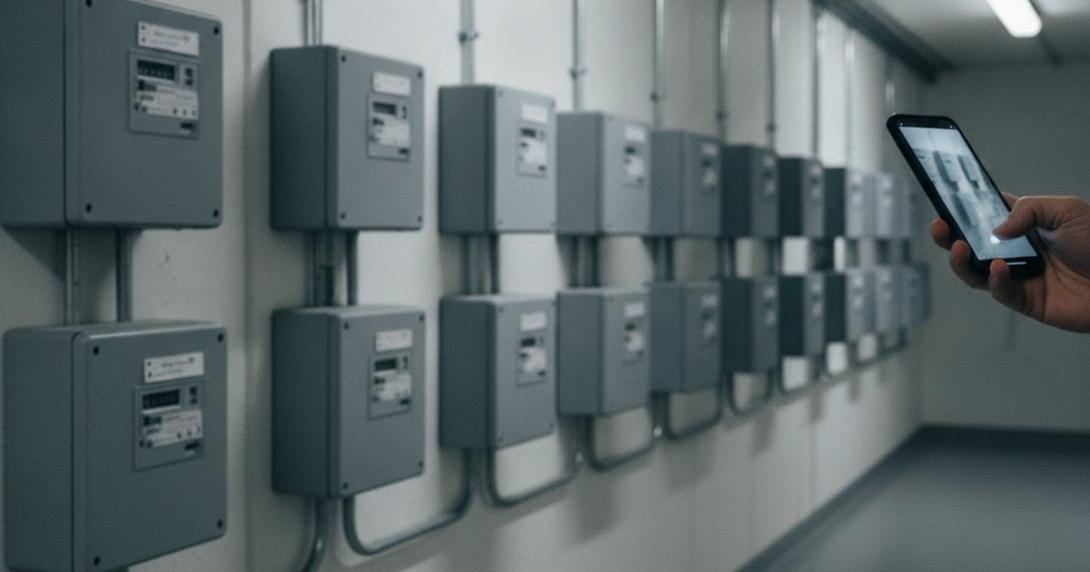
Setting up electricity and water in Dubai costs AED 2,130–4,300 up front — a refundable security deposit of AED 2,000 for an apartment or AED 4,000 for a villa, plus an activation fee of roughly AED 130 for a standard small meter — and DEWA activates service within 24 hours of payment, usually the same day. The numbers below come from the providers' own published fee schedules: DEWA (Dubai), ADDC/TAQA Distribution (Abu Dhabi, registered through TAMM), SEWA (Sharjah) and EtihadWE (Northern Emirates), plus Dubai Municipality's housing-fee rules, which add 5% of your annual rent to the DEWA bill in twelve monthly instalments. This page covers the whole utilities stack — power, water, the municipality fees hiding inside the bill, district cooling, and internet — assuming you have already signed a lease; the leasing process itself (agent fees, cheques, Ejari) is covered in our guide to renting in Dubai.
At a Glance: Deposits and Fees by Provider
| Provider | Coverage | Security deposit | Connection/activation | Typical activation time |
|---|---|---|---|---|
| DEWA | Dubai | AED 2,000 apartment / AED 4,000 villa | ~AED 130 small meter (AED 300 large), incl. knowledge and innovation fees | Within 24 hours, often same day |
| ADDC / TAQA Distribution | Abu Dhabi, Al Ain, Al Dhafra | ~AED 1,000 apartment, up to ~AED 2,500 villa (commonly reported) | Registered via TAMM; Tawtheeq required first | 1–2 working days |
| SEWA | Sharjah | Fixed by unit type; confirm the amount with SEWA | Tenancy attestation at Sharjah Municipality first | 2–3 working days |
| EtihadWE | Ajman, RAK, UAQ, Fujairah, Dhaid | ~AED 1,500–2,000 commonly reported | Online application free via UAE Pass | Approval within 24h, activation within next 24h |
| Empower / Emicool (cooling) | District-cooled buildings | Empower: AED 2,000 flat / AED 3,000 villa; Emicool: 8 months of capacity charge | Empower ~AED 2,000 connection + AED 1,000 admin; Emicool AED 200 activation (commonly reported) | At handover/registration |
All consumption charges carry 5% VAT. Deposits are refundable when you close the account and settle the final bill.
DEWA Move-In: Steps, Deposit, and Same-Day Activation
Dubai's process is the smoothest in the country — fully online, no office visit, no paper. You need an Ejari-registered tenancy contract (or title deed if you own) and your Emirates ID. The steps:
- Register your Ejari. DEWA pulls the tenancy data from the Ejari system, so this must exist first.
- Log in to the DEWA app or dewa.gov.ae with UAE Pass and choose "Move-in" (activation of electricity/water).
- Enter the premise number — a 9–10 digit code printed on a sticker near the unit's entrance or on any previous bill — plus your Ejari number.
- Pay the deposit and activation fee: AED 2,000 for apartments or AED 4,000 for villas, plus an activation charge commonly reported at AED 130 for small meters (AED 110 + AED 10 knowledge fee + AED 10 innovation fee) and AED 300 for large meters. The app shows the exact total at checkout.
- Wait for activation — DEWA commits to activation within 24 hours; in practice, applications completed in the morning are frequently live the same day.
If you are moving between two Dubai homes, use "Move-to" instead of closing and reopening: the deposit transfers with you and you avoid paying it twice.
DEWA Tariffs: Slabs and the Fuel Surcharge
DEWA charges on a rising slab system — the more you use in a calendar month, the higher the marginal rate. The published residential slabs:
| Slab (colour) | Electricity (monthly) | Rate | Water (monthly) | Rate |
|---|---|---|---|---|
| Green | 0–2,000 kWh | 23 fils/kWh | 0–27 m³ | AED 7.7/m³ |
| Yellow | 2,001–4,000 kWh | 28 fils/kWh | 27–54 m³ | AED 8.8/m³ |
| Orange | 4,001–6,000 kWh | 32 fils/kWh | Above 54 m³ | AED 10.12/m³ |
| Red | Above 6,000 kWh | 38 fils/kWh | — | — |
Water is billed in cubic metres: DEWA switched from imperial gallons to cubic metres with the March 2025 billing cycle (1 m³ ≈ 220 imperial gallons), so the bands above correspond to the older 6,000 and 12,000 IG thresholds you may still see on older guides and bills.
On top of the slab rate sits a fuel surcharge that DEWA sets monthly and prints as a separate bill line — commonly around 6–6.5 fils/kWh for electricity and roughly AED 1.1 per cubic metre for water in recent months (check the current month's value on dewa.gov.ae or your bill). A small Dubai Municipality sewerage fee tied to water consumption also appears on most bills, and 5% VAT applies to the utility charges. A one-bedroom apartment with moderate AC use typically lands at AED 400–700 per month before the housing fee; villas with pools and heavy summer cooling can run into the thousands — budget with our cost of living guide.
The Dubai Housing Fee: 5% of Your Rent — and How to Fix a Wrong One
Every expat household in Dubai pays a housing fee of 5% of the annual rent, charged by Dubai Municipality and collected by DEWA in twelve monthly instalments. On a AED 100,000 rent that is AED 5,000 a year — about AED 417 added to each DEWA bill. Tenants are assessed on the rent in their registered Ejari contract; owner-occupiers are assessed on 5% of the unit's rental-index value. UAE nationals are exempt. The housing fee itself does not carry VAT.
This is the line item most worth auditing. The fee is only as accurate as the rent figure the municipality has on file, and mis-billing is common in three situations: the fee is still based on the previous tenant's higher rent; your renewal reduced the rent but the fee was never re-linked; or the Ejari was linked to the wrong premise number. A widely shared post on the r/dubai subreddit reported a tenant recovering roughly AED 7,000 after discovering their housing fee had been calculated on the previous occupant's much higher rent for over a year — attribute that figure as reported, but the mechanism it describes is real and acknowledged by Dubai Municipality, which has publicly confirmed that overcharged tenants are refunded.
To check and correct it: multiply your monthly housing-fee line by 240 (i.e. ÷5%×12) — the result should equal your Ejari rent. If it doesn't, apply through the Dubai Municipality portal (dm.gov.ae) or the DubaiNow app under "Apply to Amend Dubai Municipality Residential Fee", quoting your DEWA account number, premise number and Ejari; you can verify your registered lease details in the Dubai REST app first. Amendments are commonly processed in about 3 working days, and refunds for past overcharges are claimed through Dubai Municipality's fee-refund service on dm.gov.ae, typically credited to your DEWA account.
Abu Dhabi: ADDC/TAQA Registration Through TAMM
Abu Dhabi city, Al Ain and Al Dhafra are served by ADDC (part of TAQA Distribution). Registration runs through the TAMM platform (tamm.abudhabi) with UAE Pass, and the hard prerequisite is a Tawtheeq-registered tenancy contract — without it the application cannot proceed. Deposits are lower than Dubai's: commonly reported at around AED 1,000 for apartments and up to roughly AED 2,500 for villas, with activation usually within 1–2 working days.
Two things make Abu Dhabi bills structurally different from Dubai's:
- Tariffs differ for nationals and expats. Expat residential electricity is commonly reported at 26.8 fils/kWh within the "green band" of subsidised daily consumption (about 20 kWh/day for flats and 30 kWh/day for villas) and 30.5 fils/kWh above it; expat water runs about AED 7.84 per m³ in-band and AED 10.41 above. UAE nationals pay substantially lower subsidised rates with far larger bands. Confirm current figures on addc.ae — the bands are averaged daily, so one heavy AC month can tip you into the higher rate.
- The municipality fee. ADDC's published municipality-fee page states the housing fee for tenants at 5% of the rental value or the rental index, whichever is higher, invoiced in monthly instalments on the utility bill; UAE nationals renting for their own use are exempt. The fee has a chequered history — it launched at 3% of rent in 2016 and its application has shifted over the years, which is why older guides still say 3% — so treat ADDC's current published position (5%) as the operative number and confirm the line on your first bill.
For the leasing side — Tawtheeq registration, rent rules and districts — see our guide to renting in Abu Dhabi.
Sharjah and the Northern Emirates: SEWA and EtihadWE
SEWA (Sharjah)
SEWA is the most paperwork-heavy of the major providers. Before it will open an account, your tenancy contract must be attested by Sharjah Municipality — part of the standard leasing flow covered in our renting in Sharjah guide. You can then apply through the SEWA e-portal, the SEWA app, the 991 call centre or a Customer Happiness Centre with the attested contract, Emirates ID and the premises' previous clearance certificate. SEWA states that the security deposit is "fixed as per the type of the leased unit" — confirm the exact amount at application. Activation commonly takes 2–3 working days, since a technician reads the meter before service starts. Recent reports indicate Sharjah's digital tenancy system can activate the connection automatically once the municipality attests the contract, so the process may run quicker than the traditional flow — but budget for the standard timeline until you see it happen. SEWA bills also carry line items that surprise newcomers (natural gas, sanitation and service charges beyond plain electricity and water) — read your first bill line by line so nothing comes as a shock.
EtihadWE (Ajman, Umm Al Quwain, Ras Al Khaimah, Fujairah)
The Northern Emirates — plus Dhaid — are served by Etihad Water and Electricity (EtihadWE, formerly FEWA). Apply online via etihadwe.ae or the app with UAE Pass, Emirates ID and your tenancy contract or title deed; online applications are free, and EtihadWE's published service standard is approval within 24 hours and activation within the following 24 hours. Security deposits are commonly reported in the AED 1,500–2,000 range for apartments, more for villas — the exact figure is confirmed at application. On disconnection, the deposit is refunded to your bank account or in cash at Al Ansari Exchange branches.
District Cooling: "Chiller Free" Is Not Always Free
In many towers and master communities, air conditioning is not part of the DEWA/ADDC bill at all — it is billed separately by a district cooling provider, most commonly Empower or Emicool in Dubai. Registering is a second move-in process with its own deposit: Empower's charges are commonly reported at a AED 2,000 deposit for apartments (AED 3,000 for villas), plus a connection fee of about AED 2,000 and a one-time administrative fee of about AED 1,000; Emicool applies a one-time AED 200 activation fee, with a security deposit equivalent to eight months of the unit's contracted capacity charge per its published FAQ. Confirm current figures with the provider named in your lease.
District cooling bills have two parts: a fixed demand (capacity) charge that accrues whether or not you switch anything on, and a metered consumption charge. When a listing says "chiller free", it usually means the landlord pays some or all of the cooling — but check the contract for which part: many "chiller free" deals cover only the capacity charge, leaving consumption with the tenant. Get the split in writing before you sign, and factor it into any rent comparison between chiller-free and chiller-paid buildings.
Internet and TV: A Quick Note
Home internet comes from du or e& (formerly Etisalat), and in most buildings only one of the two has fibre — check coverage by address before promising yourself a provider. You will need your Emirates ID and tenancy details, and installation is commonly completed within 2–5 working days for apartments in connected buildings; villas needing a new fibre run can take considerably longer. Entry-level fibre plans commonly start around AED 300–360 per month, and both providers bundle TV and landline options.
Moving Out: Final Bills and Deposit Refunds
Every provider follows the same logic in reverse: request deactivation, a final bill is issued, the deposit offsets any balance, and the remainder is refunded. The speed varies sharply:
- DEWA deactivates within 24 hours of the requested date and emails the final bill. Refunds are the fastest in the country: DEWA's April 2026 announcement reports automated refunds of deposits up to AED 4,000 — around 90% of refund requests — in as little as 8 minutes of account closure, paid to your IBAN without human intervention; larger deposits may take a few business days of manual review.
- ADDC/TAQA handles disconnection through TAMM; the deposit is refunded after the final bill is settled, commonly within a few working days.
- SEWA requires final settlement and issues a clearance certificate — which the next tenant will need, so landlords chase it. If the outstanding bill exceeds the deposit, you pay the difference before clearance.
- EtihadWE refunds to your bank account or in cash via Al Ansari Exchange after disconnection.
Practical tip: schedule utility deactivation for the day after your move, not the day of — a cheque handover or snagging inspection in a powerless, unairconditioned apartment in August is not an experience to repeat.
Frequently Asked Questions
How much is the DEWA deposit, and do I get it back?
AED 2,000 for an apartment and AED 4,000 for a villa, plus an activation fee of roughly AED 130 for a standard small meter. The deposit is fully refundable when you close the account: it first offsets your final bill, and the balance is returned to your IBAN — per DEWA's April 2026 announcement, deposits up to AED 4,000 are refunded automatically in as little as 8 minutes.
How long does DEWA take to connect electricity and water?
DEWA commits to activation within 24 hours of a completed move-in application and payment, and same-day activation is common for applications submitted in the morning. The process is fully online via the DEWA app or website — you need an Ejari-registered contract, your Emirates ID and the premise number.
What is the housing fee on my DEWA bill?
It is Dubai Municipality's charge of 5% of your annual rent, split into twelve monthly instalments and collected through the DEWA bill. On a AED 100,000 rent that is about AED 417 per month. Tenants are assessed on the Ejari rent; owner-occupiers on 5% of the unit's rental-index value; UAE nationals are exempt.
My housing fee looks too high — how do I correct it?
Multiply the monthly housing-fee line by 240; if the result exceeds your Ejari rent, the municipality has an old or wrong rent on file (often the previous tenant's). Apply to amend the fee via the Dubai Municipality portal or DubaiNow with your DEWA account number and Ejari; amendments are commonly processed in about 3 working days, and past overcharges can be reclaimed through Dubai Municipality's fee-refund service on dm.gov.ae, usually as DEWA credit.
How much is the ADDC deposit in Abu Dhabi?
Commonly reported at around AED 1,000 for apartments and up to roughly AED 2,500 for villas — lower than Dubai. Registration runs through the TAMM platform and requires a Tawtheeq-registered tenancy contract first; activation usually takes 1–2 working days.
Does Abu Dhabi charge a municipality fee on expat rent?
Yes. ADDC's published municipality-fee page states the fee at 5% of the rental value or the rental index (whichever is higher), invoiced in monthly instalments on the utility bill, with UAE nationals renting for their own use exempt. The fee originally launched at 3% in 2016, which is why older guides quote that figure — go by ADDC's current published rate and check your first bill.
How much is the SEWA deposit in Sharjah?
SEWA fixes the deposit by unit type rather than publishing a single figure, so confirm the amount with SEWA at application. You must attest your tenancy contract with Sharjah Municipality before SEWA will open the account, and activation commonly takes 2–3 working days.
Who supplies electricity in Ajman and Ras Al Khaimah?
Etihad Water and Electricity (EtihadWE) covers Ajman, Umm Al Quwain, Ras Al Khaimah and Fujairah, plus Dhaid. Applications are free online via UAE Pass, with approval within 24 hours and activation within the following 24 hours per its published standard; deposits are commonly reported at AED 1,500–2,000 for apartments.
Related reading: start with our UAE property guide hub for the full renting series, and see the UAE cost of living guide for how utility bills fit into a realistic monthly budget across the emirates.
General information based mainly on official public sources, not legal, immigration, tax, financial or medical advice. Rules and fees change: confirm with the relevant authority or a qualified professional before acting. See our Terms of Use.