UAE Traffic Fines and Black Points: Check, Pay, Dispute
Updated
Update · August 2026
UAE traffic penalties are governed by Federal Decree-Law No. 14 of 2024, which has applied since 29 March 2025.
Read the full update
It moved several violations — drink-driving, hit-and-run, driving without a licence, jaywalking on high-speed roads — from the fine schedule into the criminal courts. Any fine table dated before March 2025 is out of date.
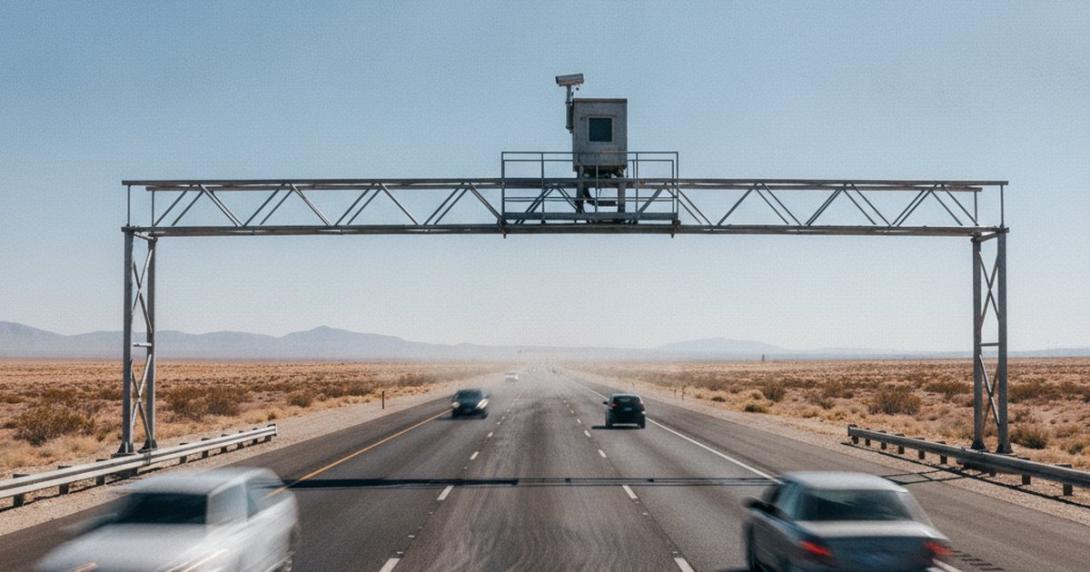
Most UAE traffic fines fall between AED 300 and AED 3,000, with 4 to 23 black points and vehicle impoundment for the worst offences; exceeding the speed limit by more than 80 km/h costs AED 3,000, 23 black points and a 60-day impound. The legal framework is Federal Decree-Law No. 14 of 2024 on Traffic Regulation, enforced through the published schedules of Dubai Police, the RTA, Abu Dhabi Police and the Ministry of Interior (MOI), and Dubai, Abu Dhabi, Sharjah and Ajman each run an early-payment discount of 35% if you settle within 60 days. This guide covers the fines people actually search for, how to check and pay them in each emirate, and what to do if you think a fine is wrong.
At a Glance
| Item | Key number |
|---|---|
| Governing law | Federal Decree-Law No. 14 of 2024, in force since 29 March 2025 |
| Typical fine range | AED 300 – 3,000 (court cases can reach AED 100,000+) |
| Licence suspension threshold | 24 black points within 12 months |
| Black point expiry | 12 months from registration on your file |
| Early-payment discount | 35% within 60 days in Dubai, Abu Dhabi, Sharjah and Ajman (exclusions apply) |
| Check fines | Dubai Police app, RTA Dubai, TAMM (Abu Dhabi), MOI UAE app (other emirates) |
| Dispute window | Commonly 30 days from the fine date (Dubai Police) |
| Registration renewal | All fines must be cleared before your Mulkiya renews |
How UAE traffic fines work
Traffic enforcement is federal in structure but local in delivery. Federal Decree-Law 14/2024 and its executive regulations set the national violation schedule — the fine amount, black points and impound days for each offence — while each emirate's police force issues and collects the fines, runs its own discount scheme, and can add emirate-level penalties on top. Dubai, for example, layers Decree No. 30 of 2023 over the federal schedule, which is where the widely reported AED 50,000 red-light release payment comes from (it is an impound release fee, not the fine itself).
Fines follow the vehicle and the licence across emirates: a Dubai-registered car flashed by a radar in Abu Dhabi will show the fine in both the Abu Dhabi Police and Dubai systems, because records sync through the MOI's unified platform. One practical difference between emirates: Abu Dhabi removed its radar buffer in 2018 and enforces the exact posted limit, while Dubai radars are commonly reported to allow a margin above the posted limit on some roads. That margin is not published policy — treat the posted limit as the trigger everywhere.
Note that Salik toll gate fines, Parkin/Mawaqif parking charges and municipal parking penalties are separate systems billed outside the police fine file — see our Salik and Parkin guide for those.
Speeding fines: the ladder
The speeding schedule for light vehicles is a ladder that escalates sharply past 60 km/h over the limit:
| Over the limit by | Fine | Black points | Impound |
|---|---|---|---|
| Up to 20 km/h | AED 300 | — | — |
| Up to 30 km/h | AED 600 | — | — |
| Up to 40 km/h | AED 700 | — | — |
| Up to 50 km/h | AED 1,000 | — | — |
| Up to 60 km/h | AED 1,500 | 6 | 15 days (light vehicles) |
| More than 60 km/h | AED 2,000 | 12 | 30 days (light vehicles) |
| More than 80 km/h | AED 3,000 | 23 | 60 days |
Driving below the minimum speed posted on some highways is also a violation: AED 400. At the very top of the ladder, prosecutors can treat extreme speed combined with dangerous driving as a court matter rather than a fixed fine — and in Dubai, cars impounded for +80 km/h offences fall under the emirate's high release payments described below.
Phone, seatbelt, lanes and signals
These are the everyday fines that fill most people's violation lists:
| Violation | Fine | Black points | Impound |
|---|---|---|---|
| Using a phone while driving (holding or texting) | AED 800 | 4 | — |
| Driver or passenger without a seatbelt | AED 400 | 4 | — |
| Jumping a red light (light vehicle) | AED 1,000 | 12 | 30 days |
| Sudden swerving / dangerous lane change | AED 1,000 | 4 | — |
| Tailgating (not leaving safe distance) | AED 400 | 4 | — |
| Overtaking on the hard shoulder | AED 1,000 | 6 | — |
| Driving against the flow of traffic | AED 600 | 4 | 7 days (light vehicles) |
| Not giving way to emergency vehicles | AED 3,000 | 6 | 30 days |
| Child under the required age/height in the front seat, or no child seat | AED 400 | — | — |
AI-assisted cameras rolled out since 2025 automatically detect phone use, missing seatbelts and tailgating on major roads, so these fines increasingly arrive by SMS without a patrol stopping you. Jaywalking is in the schedule too: crossing away from a designated point costs pedestrians AED 400 — and becomes a criminal matter if it causes an accident (next section).
Documents, plates and parking
| Violation | Fine | Black points | Impound |
|---|---|---|---|
| Driving without number plates | AED 3,000 | 23 | 90 days (light vehicles) |
| Driving with expired registration | AED 500 (commonly reported) | 4 | 7 days (commonly reported) |
| Parking in a People of Determination space without a permit | AED 1,000 | 6 | — |
| Prohibited parking / obstructive parking | AED 400–1,000 depending on the violation | — | — |
Expired registration compounds quickly because you cannot renew a Mulkiya while fines are unpaid — see car registration renewal for the full sequence through Tasjeel or the RTA app. If you are buying a car, unpaid fines on the seller's file block the ownership transfer too — a standard check in our used car guide.
Serious offences that now go to court
Federal Decree-Law 14/2024 converted the most dangerous behaviour from fixed fines into criminal offences with jail terms and court-set fines. These are the headline changes, as published in the law and reported by Khaleej Times and the official u.ae portal:
| Offence | Penalty under Federal Decree-Law 14/2024 |
|---|---|
| Driving without ever holding a licence (first time) | Up to 3 months' jail and/or fine of AED 5,000–50,000 |
| Driving without a licence (repeat) | At least 3 months' jail and/or AED 20,000–100,000 |
| Driving on a suspended licence | Up to 3 months' jail and/or fine of at least AED 10,000 |
| Drink-driving | Jail and/or AED 20,000–100,000; licence suspended 3 months (first), 6 months (second), cancelled (third) |
| Driving under the influence of drugs | Jail plus fine from AED 30,000 (up to AED 200,000); suspension 6 months / 1 year / cancellation |
| Hit-and-run causing injury / fleeing police | Up to 2 years' jail and/or AED 50,000–100,000 |
| Causing death by negligent driving | Jail plus fine of at least AED 50,000; at least 1 year and AED 100,000 with aggravating factors (red light, DUI, suspended licence, driving into floodwater) |
| Jaywalking that causes an accident | Jail and/or AED 5,000–10,000 |
| Crossing a road with a speed limit of 80 km/h or more | At least 3 months' jail and a fine of at least AED 10,000 |
Because these carry court records, none of them qualify for the discount schemes below, and insurance consequences follow separately. If you are involved in any collision, the reporting steps in our car accident guide matter — leaving the scene is what converts an accident into a hit-and-run charge.
Black points: the 24-point system
Black points attach to the driver's licence file, not the car. Individual violations carry up to 24 points, and the thresholds work like this:
- 24 points within 12 months triggers a suspension: commonly 3 months for the first suspension, 6 months for the second, and licence revocation or a one-year suspension for the third.
- Points expire 12 months after they are registered on your file — a year of clean driving clears them automatically.
- For camera-caught violations, points are registered against the vehicle owner's file unless the owner identifies the actual driver.
You do not have to just wait the year out. Each emirate runs point-reduction options:
- Dubai: Dubai Police's black-points reduction course at the Traffic Institute (Al Barsha) removes up to 8 points; it is commonly reported at around AED 810 and open to drivers with more than 8 but fewer than 24 points. Register through the Dubai Police app.
- Abu Dhabi: Abu Dhabi Police traffic awareness courses (bookable via TAMM) remove up to 8 points for drivers under the 24-point threshold; fees have ranged from roughly AED 200 for standard courses to AED 800 for special mall-based programmes — confirm the current fee when booking.
- Sharjah: Sharjah Police runs a reduction course applied for in person at its service centres, plus periodic point-waiver campaigns tied to national occasions.
- Federal: the MOI's free "Accident-Free Day" initiative has repeatedly offered 4-point removals to drivers who pledge safe driving through moi.gov.ae — watch for the annual campaign.
New drivers should note the system is unforgiving early on: two phone fines and a red light already put you at 20 points. If you are still working toward a licence, the rules are covered in getting a UAE licence from scratch.
How to check your fines
Check by plate number, licence number, traffic file number or Emirates ID — no login is needed for a basic inquiry on most portals:
- Dubai: the Dubai Police app or dubaipolice.gov.ae ("Fines Inquiry & Payment"), the RTA Dubai app or rta.ae, or the Dubai Now app. All show the same police fine file; RTA also shows its own transport-related fines.
- Abu Dhabi: the TAMM portal (tamm.abudhabi) or the Abu Dhabi Police app / adpolice.gov.ae, signed in with UAE Pass.
- Sharjah: shjpolice.gov.ae or the MOI UAE app.
- Ajman, RAK, Fujairah, UAQ: the MOI UAE app or moi.gov.ae covers all emirates in one place; Ras Al Khaimah also lists fines on its eGovernment portal.
Because records sync federally, the MOI app is the simplest single check if you drive across emirates. Fines normally appear within 24–48 hours of a radar violation, and you should receive an SMS on the number registered to the vehicle — keep that number current, since the discount clock starts at the violation, not when you happen to look.
How to pay — and why fines block your Mulkiya
Payment channels mirror the checking channels:
- The Dubai Police, RTA Dubai, Dubai Now, Abu Dhabi Police, TAMM and MOI UAE apps all take card payments, and most support Apple Pay / Google Pay.
- Smart Police Station kiosks in Dubai and self-service kiosks in major malls handle payment without an appointment.
- Vehicle testing and registration centres (Tasjeel in Dubai and similar centres elsewhere) settle fines as part of the renewal transaction.
- Several UAE banks offer instalment plans on traffic fines — commonly 3 to 12 months at 0% interest above a minimum amount — and Dubai Police periodically offers instalment arrangements for large fine totals; check the app for the current terms before paying in one hit.
The enforcement backstop is registration renewal: your Mulkiya will not renew while any fine is outstanding on the vehicle, and driving on expired registration is itself a fine with impound risk. That is why most residents settle fines annually at renewal — though doing so can mean losing the 35% early-payment discount, which usually expires 60 days after each violation. The maths favours paying big fines early and letting only small ones wait. Full renewal walkthrough: car registration renewal.
Discounts: what each emirate offers in 2026
Every emirate now runs a standing early-payment scheme, but the details differ and campaign top-ups come and go — always confirm the discounted figure shown in the official app before paying:
| Emirate | Standing scheme | Notes |
|---|---|---|
| Dubai | 35% off if paid within 60 days of the violation; 25% off if paid after 60 days but within a year | Applied automatically in the Dubai Police/RTA apps; serious violations (impound- and court-linked) excluded |
| Abu Dhabi | "Pay Early, Gain Surely": 35% within 60 days; 25% from 60 days to one year | Excludes serious violations — confirm the exclusion list on TAMM before relying on the discount |
| Sharjah | 35% within 60 days — the reduction also applies to impound days, storage fees and late penalties; 25% (fine only) from 60 days to one year | Periodic black-point waiver campaigns on national occasions |
| Ajman | 35% within 60 days; 25% within a year | Has run 50% limited-time campaigns during Ramadan and National Day |
Northern-emirate police forces (RAK, Fujairah, UAQ) have historically joined the seasonal 50% amnesty campaigns around Ramadan and Eid Al Etihad rather than running permanent schemes — check the MOI app during those periods. Discounts apply to the police fine only: Salik, Parkin and Mawaqif charges follow their own rules (see Salik & Parkin).
Disputing a fine
You can object to a fine you believe is wrong — plate misread, cloned plates, a car you had already sold, or a radar error:
- Dubai: use "Traffic Fines Dispute" on the Dubai Police app or website (UAE Pass login), attach evidence — photos, dashcam footage, sale documents — and submit within 30 days of the fine date. Decisions are commonly issued within about 10 working days. You can also file at the General Directorate of Traffic in Al Barsha, or call 901 for guidance. RTA-issued fines have a separate dispute form on rta.ae.
- Abu Dhabi: file "Request a Grievance for Transport Violations" on TAMM; you pick a callback slot, explain the grounds and attach evidence.
- Sharjah and the northern emirates: object through the MOI UAE app's complaint channel; Sharjah Police also takes traffic queries through its official WhatsApp channel listed on shjpolice.gov.ae.
Be realistic: the burden is on you to prove you did not commit the violation, and objections without hard evidence rarely succeed. Do not pay before the objection is decided — payment is generally treated as accepting the fine. If an objection is rejected, escalation to the traffic prosecution and then the traffic court is possible, at which point most drivers weigh the court time against the discounted fine.
Impound rules and release payments
Impoundment under the new law targets the dangerous end of the schedule: red-light jumping (30 days), extreme speeding (60 days for +80 km/h), not giving way to emergency vehicles (30 days), and court offences like DUI and driving without a licence. Two cost layers matter:
- Release payments: Dubai's Decree No. 30 of 2023 classifies red-light running, extreme speeding and similar offences as grave violations and sets a release payment of AED 50,000 for the impounded vehicle — this is on top of the AED 1,000 federal fine, and Abu Dhabi applies comparable release amounts for its most serious impounds. Lower-tier impounds carry much smaller release fees. If the payment is not made, the vehicle stays impounded and can be sold at auction after the statutory period (around three months).
- Storage fees: a daily storage charge — commonly reported at AED 50 per day — accrues if you leave the vehicle in the pound after the impound period ends.
The practical takeaway: for a red light or +80 km/h violation in Dubai, the true worst-case cost is not the AED 1,000–3,000 fine but the five-figure release payment, which is exactly the deterrent the emirate intended.
Frequently Asked Questions
How do I check traffic fines in Dubai by plate number?
Open the Dubai Police app or dubaipolice.gov.ae, choose "Fines Inquiry & Payment", and search by plate number, licence number, traffic file number or fine number — no login is required for the inquiry. The RTA Dubai and Dubai Now apps show the same fines. For fines from any emirate in one place, use the MOI UAE app.
How many black points lead to licence suspension in the UAE?
24 black points within 12 months triggers a suspension — commonly 3 months for the first time, 6 months for the second, and revocation or a one-year suspension for the third. Points expire 12 months after they are registered, and several emirates offer courses that remove up to 8 points.
Is there a discount on Dubai traffic fines in 2026?
Yes. Dubai's standing early-payment scheme gives 35% off fines paid within 60 days of the violation and 25% off fines paid after 60 days but within a year. Serious violations linked to impoundment or court referral are excluded. The discounted amount appears automatically in the Dubai Police and RTA apps.
Do I have to pay all fines before renewing my car registration?
Yes. Every fine on the vehicle file must be settled before the Mulkiya (registration card) will renew, whether you renew through the RTA app or at a Tasjeel centre. This is the main collection mechanism, and it is why fines pile up until renewal for many drivers — at the cost of the 60-day discount window.
What is the fine for using a mobile phone while driving in the UAE?
AED 800 and 4 black points. Since 2025, AI-enabled cameras on major roads detect phone use automatically, so the fine can arrive by SMS without a police stop.
Is the AED 50,000 red light fine in Dubai real?
Partly. The federal fine for jumping a red light in a light vehicle is AED 1,000 with 12 black points and a 30-day impound. The AED 50,000 is Dubai's release payment under Decree No. 30 of 2023 to get the impounded car back — so the effective cost in Dubai can reach AED 51,000, but the AED 50,000 element is an impound release fee, not the fine.
Can I dispute a traffic fine and actually win?
You can object within about 30 days — via the Dubai Police app in Dubai, TAMM in Abu Dhabi, or the MOI app elsewhere — and decisions commonly come back within 10 working days in Dubai. Objections succeed mainly with hard evidence: plate misreads, a vehicle sold before the violation, or documented radar errors. Without evidence, expect a rejection, and do not pay before the decision, as payment is treated as accepting the fine.
What happens if I just never pay my traffic fines?
The fines do not expire. Your registration renewal is blocked (driving unregistered is a further AED 500 fine with impound risk), you cannot transfer or sell the vehicle, discount windows lapse, and impounded vehicles can be auctioned after the statutory holding period. Court-referred offences proceed regardless of payment.
Related reading: start with the UAE driving guide hub, then see car registration renewal for clearing fines at renewal time, what to do after a car accident, Salik tolls and Parkin parking for the charges that sit outside your police fine file, buying a used car for fine checks before transfer, and converting a foreign driving licence if you are newly arrived.
General information based mainly on official public sources, not legal, immigration, tax, financial or medical advice. Rules and fees change: confirm with the relevant authority or a qualified professional before acting. See our Terms of Use.