Renting in Sharjah: The 3-Year Rent Freeze, Attestation, and Disputes
Updated
Update · 29 September 2026
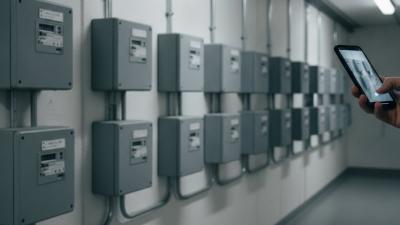
SEWA sets its electricity and water security deposit according to the type of unit rented, so confirm the amount with SEWA before you budget.
Read the full update
Sharjah tenancies are governed by Law No. 5 of 2024 on Real Estate Leasing, in force since September 2024. Rent is frozen for the first 3 years of a tenancy, and after that it can rise only once every 2 years, at "fair rent" levels — there is no fixed percentage cap, though a Rental Index benchmarking area rent levels launched in early 2025. Enforcement of contract attestation has tightened: Sharjah's Executive Council ran a registration amnesty from 1 November to 31 December 2025 (50% off overdue registration fees, administrative fines waived) for contracts concluded and expired before 19 September 2024, the date the law took effect.
If you rent in Sharjah, your landlord cannot increase the rent for the first 3 years of your tenancy, and after any increase must wait another 2 years before the next one — that is Article 16 of Sharjah Law No. 5 of 2024, issued by the Ruler of Sharjah in September 2024 and administered by Sharjah Municipality and the Rental Disputes Resolution Centre (established by the companion Law No. 6 of 2024). The other pillar of the system is attestation: every tenancy contract must be attested with Sharjah Municipality — the local equivalent of Dubai's Ejari — at a fee commonly reported at 4% of the annual rent (minimum AED 500), and without it you cannot connect SEWA electricity and water or file a rental dispute. This guide covers the freeze, the attestation procedure, eviction rules, disputes, and what Sharjah rents actually look like in 2026.
At a Glance
| Item | Position in Sharjah (2026) |
|---|---|
| Governing law | Law No. 5 of 2024 on Real Estate Leasing (replaced Law No. 2 of 2007); disputes under Law No. 6 of 2024 |
| Rent increase | Barred for the first 3 years of the tenancy; then only once every 2 years, at "fair rent" |
| Rent index | A Rental Index benchmarking area rent levels launched in early 2025, but there is no RERA-style increase calculator; "fair rent" is assessed case by case (executive regulations govern the method) |
| Contract registration | Attestation with Sharjah Municipality is mandatory; the law requires the landlord to attest within 15 days of signing |
| Attestation fee | Commonly reported at 4% of annual rent, minimum AED 500 (residential); in practice usually paid by the tenant — confirm the current tariff with Sharjah Municipality |
| Eviction protection | No eviction before 3 years (residential) or 5 years (commercial/industrial), except on listed grounds |
| Disputes | Rental Disputes Resolution Centre; judgments under AED 100,000 are generally final; 15-day appeal window above that |
| Utilities | SEWA connection requires an attested contract; deposit set by SEWA according to the type of unit — confirm the amount with SEWA |
The 3-Year Rent Freeze: How It Actually Works
Article 16 of Law No. 5 of 2024 bars the landlord from increasing the agreed rent before 3 years have passed from the start of the tenancy. The clock runs from the beginning of the contractual relationship, not from each annual renewal — so a tenant who signed in, say, September 2024 is protected through September 2027 even if the contract renews every year in between.
Two refinements matter:
- Mutual agreement is the exception. The parties can agree to a change earlier — but if the tenant accepts an increase, the landlord cannot raise the rent again until another 2 years have passed from that increase. Silence or refusal is not agreement; an increase imposed unilaterally inside the protected period has no legal standing and can be challenged at the Rental Disputes Resolution Centre.
- After the freeze, the cycle is 2 years. Once the first 3 years are up, an increase is permitted — but each increase then locks the rent for a further 2 years. There is no fixed percentage cap; instead the increase must reflect the "fair rent" of comparable properties, with the calculation method left to the law's executive regulations. The Executive Council also has power to amend these timeframes by decision, so check for updates before acting on an old renewal notice.
This is a materially stronger tenant position than Dubai's, where increases are permitted annually within the RERA index bands — see our guide to the Dubai rent increase rules for the contrast. The trade-off is what happens when the freeze ends: Gulf News reported Sharjah tenants whose contracts had exited the protected period receiving renewal increases of 18–25% in late 2024, well above typical Dubai renewal hikes, as demand from Dubai-priced-out tenants pushed the market up.
Sharjah's Rental Index vs Dubai's Calculator: How "Market Rate" Gets Argued
A question tenants ask constantly (including all over Reddit): is there a Sharjah version of the RERA rental index calculator? Not in the Dubai sense. Sharjah introduced a Rental Index in early 2025 — reported by Gulf News and Khaleej Times as a benchmark of area rent levels rather than a calculator — and it does not output a permitted increase percentage. Dubai's calculator is a RERA/DLD tool that applies only in Dubai.
In Sharjah, "fair rent" is a standard, not a formula. Law No. 5 of 2024 says increases after the freeze must align with the fair rental value of similar properties, and delegates the detailed controls to executive regulations. In practice, when landlord and tenant disagree, the number gets argued with evidence:
- Comparable listings and contracts — asking rents and attested contract values for similar units in the same building or area (portal listings, Bayut/Property Finder area averages, neighbours' attested contracts).
- Municipality data — Sharjah Municipality's Rental Regulation Department sees attested contract values across the emirate, and the 2025 Rental Index benchmarks area rent levels — committees draw on that record when assessing whether a demanded increase is in line with the area.
- The property's condition — age, maintenance, amenities, and whether the landlord has invested in the unit.
If you receive a renewal notice with an increase you believe is above market, you are not obliged to simply accept or vacate: you can renew under protest and file at the Rental Disputes Resolution Centre, which will set the rent by reference to comparable evidence. Keep every notice and quote in writing — WhatsApp screenshots are routinely submitted as evidence.
Attesting Your Tenancy Contract (Sharjah's Equivalent of Ejari)
Attestation is the registration of your tenancy contract with Sharjah Municipality — functionally the same role Ejari plays in Dubai and Tawtheeq plays in Abu Dhabi. Under Law No. 5 of 2024, the duty sits with the landlord, who must attest the contract within 15 days of signing; a landlord who fails to do so faces administrative fines, and the tenant can apply to the judge of urgent matters to compel attestation. In practice, the attestation fee is usually paid by the tenant at signing — agree who pays before you sign, because the law's allocation of the duty and the market's habit differ.
The fee is commonly reported at 4% of the annual rent, with a minimum of AED 500 for residential contracts (a temporary reduction to 2% ran during 2020–21 and still circulates in older guides — confirm the current tariff with Sharjah Municipality before budgeting). Typing-centre service charges and ancillary fees (proof-of-residency form around AED 100, expedited service around AED 150) can apply on top.
The modern route is fully online via the Digital Sharjah portal (ds.sharjah.ae), with the Sharjah Municipality portal and the Al Manakh customer service office as alternatives:
- The landlord submits the attestation request with the property details and uploads the signed contract on Digital Sharjah.
- The tenant is notified to review and digitally sign the contract using UAE Pass.
- The signed contract goes to SEWA and Sharjah Municipality for verification (title deed, Emirates IDs, and — for family accommodation — marriage certificate or family book may be requested).
- The tenant pays the SEWA security deposit and the Municipality attestation fee online.
- The attested contract is issued and the SEWA electricity and water connection is activated.
Why it matters: an attested contract is a precondition for a SEWA account, is mandatory evidence in any rental dispute, and is required for residence-visa housing proof and school registrations. The late-2025 amnesty (fines waived, 50% off overdue fees for pre-law contracts) was a clear signal that the Municipality intends to enforce registration — an unattested contract is now a liability for both sides.
Eviction Rules Under Law No. 5 of 2024
The law pairs the rent freeze with eviction protection: a landlord cannot seek eviction before 3 years of the tenancy for residential property, or 5 years for commercial, industrial and professional use — except on specific grounds. A sale of the property does not terminate the tenancy; the new owner steps into the old landlord's shoes.
| Ground | Key condition / notice |
|---|---|
| Non-payment of rent | Rent unpaid for more than 15 days after falling due / notice to pay |
| Breach of contract terms | Tenant gets a 30-day period to remedy the breach after notification |
| Unauthorised subletting or assignment | Subletting without the landlord's written consent is prohibited |
| Illegal or improper use of the property | Includes use contrary to the licensed purpose |
| Demolition or major renovation | Requires valid permits from Sharjah Municipality; conditions set by regulations |
| Landlord's personal use (self or first-degree relative) | Minimum 3 months' notice; landlord must own no other suitable property in the area and must occupy within 2 months of vacancy for 1 uninterrupted year — otherwise the tenant can claim compensation |
The personal-use conditions have teeth: if the landlord evicts "for family use" and then relists the unit at a higher rent, the former tenant can claim damages before the Rental Disputes Resolution Centre. Keep the eviction notice and check the property's listing status after you leave.
Rent Disputes: The Rental Disputes Resolution Centre
Law No. 6 of 2024 established a dedicated Rental Disputes Resolution Centre for Sharjah, operating alongside Sharjah Municipality's Rental Regulation Department (the long-standing rent committee system many residents still know by that name). It handles everything arising from the tenancy relationship: rent-increase challenges, eviction requests, deposit refunds, bounced-cheque claims and compensation.
Filing basics:
- Where: electronically through the Centre's/Municipality's online channels, or in person — check Sharjah Municipality's website for current filing locations and contact numbers.
- Documents: the attested tenancy contract (mandatory — an unattested contract weakens or blocks your claim), Emirates ID, payment receipts or cheque copies, written notices and correspondence, and an IBAN letter for any refund.
- Fees: case fees vary by claim type and value and are not published as a single flat rate — confirm the current fee schedule with the Centre when filing.
- Speed: the framework requires cases to be decided within 30 days of the first hearing, extendable to a maximum of 100 days in total — and a dedicated enforcement department executes verdicts (evictions, refunds, repairs).
- Appeals: judgments in disputes valued at AED 100,000 or less are generally final; larger disputes can be appealed to a three-judge appellate panel within 15 days of the judgment. Narrow exceptions — such as jurisdictional violations or legal errors — are reported to remain challengeable even below the threshold, so take advice on your specific case.
The process is deliberately similar in shape to Dubai's Rental Disputes Centre — if you are comparing emirates, our Dubai rental disputes guide covers the RDC equivalent.
Ending a Lease Early, Deposits, and Other Rules Worth Knowing
Early termination. A fixed-term tenant cannot simply walk away. The law allows early termination only for exceptional, unforeseen circumstances that make performing the contract burdensome — and even then the tenant pays the landlord compensation of at least 30% of the rent for the remaining term, unless the parties agree otherwise or the contract contains its own exit clause. If the landlord refuses a justified request, the Centre can rule on it.
Security deposits. Law No. 5 of 2024 does not fix deposit amounts; they are contractual. Around 5% of annual rent or a flat AED 1,000–3,000 is commonly seen for apartments. Document the property's condition at handover (photos, dated) — deposit-refund claims are among the most common Centre filings.
Payment terms. Sharjah rents are typically paid in 1–4 cheques; more cheques are increasingly negotiable in older stock. Non-payment beyond the 15-day mark after notice is the fastest route to an eviction case, so if you are in difficulty, negotiate in writing before cheques bounce — bounced rent cheques also fall within the Centre's jurisdiction.
Maintenance. As commonly allocated (and subject to your contract), major structural maintenance falls to the landlord and minor upkeep to the tenant — put thresholds in the contract, because Sharjah's older buildings make this the most frequent friction point after rent.
Sharjah Realities: Family Rules, Occupancy Limits, SEWA and the Commute
Family-oriented tenancy rules. Sharjah applies family-accommodation policies more actively than Dubai. Marriage certificates or family books are commonly requested when attesting family tenancies, and Municipality campaigns have restricted shared bachelor accommodation in designated family residential districts (areas such as Al Majaz and Al Nahda are commonly cited), directing worker accommodation toward industrial zones. Occupancy caps are also commonly reported — around 3 people for a studio, 4 for a one-bedroom, 6 for a two-bedroom and 9 for a three-bedroom. These rules are applied administratively and evolve; confirm the current position with Sharjah Municipality before committing to a shared arrangement.
SEWA. Electricity and water come from SEWA, and the connection cannot be activated without an attested contract. SEWA sets the security deposit according to the type of unit rented, so confirm the current amount with SEWA; it is refundable on final bill settlement. Budget realistically: SEWA bills in older, poorly insulated Sharjah buildings can surprise newcomers in summer — see our SEWA bill guide for tariffs, deposits and how to read the bill.
The value equation. Sharjah's draw is price: like-for-like apartments commonly rent at a large discount to neighbouring Dubai districts — a one-bedroom in Al Nahda (Sharjah) at around AED 37,000 versus AED 60,000+ for comparable Dubai communities. The cost is the border commute, which can run 45–90 minutes at peak. Weigh both sides with our Dubai vs Sharjah comparison and the Sharjah–Dubai commute guide before choosing the savings.
Sharjah Rent Snapshot 2026
Figures below are average annual asking rents from Bayut's annual Sharjah market report for 2025 (published for the 2026 market), rounded; year-on-year changes in brackets. Treat them as a negotiating benchmark, not a legal cap — Sharjah has no percentage cap, and Gulf News has reported renewal demands of 18–25% on contracts that have exited the 3-year freeze, though the same paper reports the 2025 Rental Index has since started to cool renewal rates.
| Area | Studio | 1-bed | 2-bed |
|---|---|---|---|
| Muwaileh | AED 26,000 (+6%) | AED 43,000 (+11%) | AED 58,000 (+11%) |
| Al Nahda | AED 29,000 (+14%) | AED 37,000 (+14%) | AED 48,000 (+15%) |
| Al Majaz | AED 28,000 (+26%) | AED 38,000 (+10%) | AED 51,000 (+14%) |
| Al Taawun | AED 29,000 (+20%) | AED 37,000 (+9%) | AED 49,000 (+10%) |
| Al Khan | AED 34,000 (+3%) | AED 38,000 (+13%) | AED 55,000 (+4%) |
Villas: 3-bedrooms average roughly AED 121,000 in Hoshi, AED 125,000 in Al Rahmaniya and AED 144,000 in Tilal City per the same report. Demand is being fed by tenants relocating from Dubai — The National and Gulf News both reported Dubai-spillover as the main driver of Sharjah's rent growth — so the freeze on your existing contract is worth real money: a tenant three years into an Al Majaz lease may be paying 20–30% below today's asking rents.
Frequently Asked Questions
How much can a landlord increase rent in Sharjah?
There is no fixed percentage cap. Under Law No. 5 of 2024, no increase is allowed for the first 3 years of the tenancy; after that, an increase must reflect the fair rental value of comparable properties in the area, and each increase locks the rent for a further 2 years. If you think a demanded increase is above market, you can challenge it at the Rental Disputes Resolution Centre with comparable listings and contracts as evidence.
Can my landlord increase the rent every year in Sharjah?
No. Annual increases are not permitted. The rent is frozen for the first 3 years from the start of the tenancy, and thereafter can change at most once every 2 years. An increase imposed inside the protected period without your agreement has no legal effect.
Is there a rent calculator or rental index in Sharjah like Dubai's RERA index?
Not in the Dubai sense. Sharjah introduced a Rental Index in early 2025 that benchmarks area rent levels, but it does not output a permitted increase percentage; Dubai's RERA calculator applies only in Dubai. In Sharjah, "fair rent" after the 3-year freeze is assessed case by case — by negotiation, and if needed by the Rental Disputes Resolution Centre using comparable rents and Municipality contract data. The law's executive regulations govern how fair rent is calculated.
What is the tenancy attestation fee in Sharjah and who pays it?
The fee is commonly reported at 4% of the annual rent with a minimum of AED 500 for residential contracts (older guides citing 2% reflect a temporary 2020–21 reduction). The law places the duty to attest within 15 days on the landlord, but in practice the tenant usually pays the fee — agree this in writing before signing, and confirm the current tariff with Sharjah Municipality.
Can I be evicted in Sharjah before 3 years?
Only on specific grounds: rent unpaid more than 15 days, an unremedied contract breach after a 30-day notice, unauthorised subletting, illegal use, permitted demolition or major renovation, or the landlord's genuine personal use with at least 3 months' notice. Outside those grounds, residential tenants cannot be evicted before 3 years (5 years for commercial). Refusing an unlawful mid-freeze rent increase is not a ground for eviction.
How do I file a rent dispute in Sharjah and what does it cost?
File with the Rental Disputes Resolution Centre (Law No. 6 of 2024) online or in person, with your attested contract, Emirates ID, receipts and written notices. Case fees vary by claim type and value — confirm the current schedule when filing. Cases are required to be decided within 30 days of the first hearing (extendable to 100 days), and judgments in disputes of AED 100,000 or less are generally final.
Do I need an attested contract to get SEWA electricity and water?
Yes. SEWA will not activate a connection without a Sharjah Municipality-attested tenancy contract. The attestation and SEWA activation are now bundled in one flow on the Digital Sharjah portal, with a security deposit that SEWA sets according to the type of unit (confirm the amount with SEWA).
Can bachelors rent apartments anywhere in Sharjah?
Not everywhere. Sharjah Municipality restricts shared bachelor accommodation in designated family residential districts (Al Majaz and Al Nahda are commonly cited) and directs worker accommodation to industrial areas, with occupancy caps commonly reported at around 3 people per studio and 4 per one-bedroom. Single professionals renting a unit in their own name are generally in a different position from shared/partitioned arrangements, but rules are applied administratively — confirm the current position for the specific area with Sharjah Municipality.
Related reading: compare regimes with the Dubai rent increase rules and the complete Dubai renting guide, weigh the move itself with Dubai vs Sharjah and the Sharjah–Dubai commute, get set up with the SEWA bill guide, and browse the full UAE property guide for every emirate.
General information based mainly on official public sources, not legal, immigration, tax, financial or medical advice. Rules and fees change: confirm with the relevant authority or a qualified professional before acting. See our Terms of Use.