Camping in the UAE 2026–27: Winter Season Rules, Permits and Legal Spots
Updated
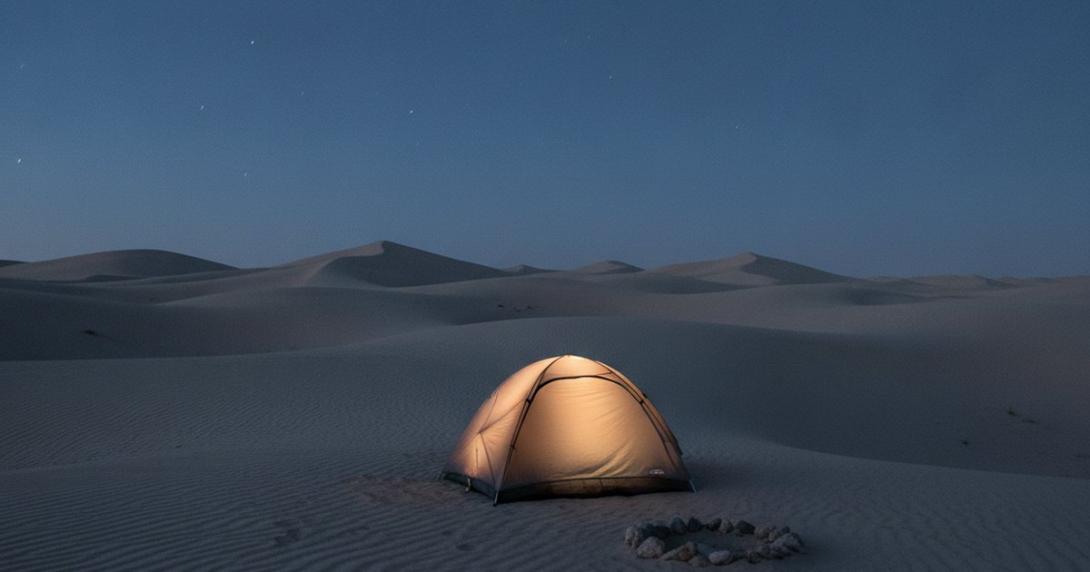
Camping is the UAE's default winter weekend: from late October to April the desert, the Hajar mountains and the east-coast beaches fill up every Friday night. The rules behind it — federal traffic and waste law, emirate permit regimes and protected-area bans — are less visible than the campfires. This guide is for residents and visitors planning one night or a full season: where camping is legal, which permits exist and who can get them, what fires, waste and wadis cost you, and how to stay safe. It is anchored on Dubai Municipality's temporary winter camp permit rules and the Ministry of Interior's flood-zone fine schedule, reflects the position at the end of August 2026, and sits within the expat guide.
Status as of 31 August 2026: Dubai Municipality has not yet announced the 2026–27 winter camp application date. Last season applications opened on 21 October 2025 at 10am for permits valid 1 November to 30 April; a similar late-October opening is expected but is to be confirmed by Dubai Municipality. The fee schedule quoted below is the last one Dubai Municipality published (October 2024); the October 2025 opening announcement did not restate the fees, so check the 2026–27 terms when they are posted.
At a Glance
| Question | Answer (as of August 2026) |
|---|---|
| Permit for a weekend tent? | None published for open desert; permits cover seasonal camps (Dubai, Umm Al Quwain) and Jebel Ali caravans; Sharjah Police fine unauthorised camping and Abu Dhabi requires a municipal licence to camp in public |
| Dubai seasonal camp permit | Al Aweer plots, 3–6 months, 44 fils per sqm per week (max 400 sqm), AED 2,000 refundable deposit (last published schedule, Oct 2024); Dubai-issued passport and family book |
| Entering a flowing wadi | AED 2,000, 23 black points, 60-day impound; gathering near wadis or dams in rain AED 1,000 and 6 points — traffic penalties against the driver and vehicle, not camping fines (Ministry of Interior) |
| Dumping waste | Up to AED 30,000 for individuals (Federal Law 12 of 2018); up to AED 500 for littering in Dubai |
| Unauthorised camping in Sharjah | AED 2,000, doubled to AED 4,000 on repeat (Sharjah Police, October 2025) |
| Emergency numbers | 999 police, 998 ambulance, 997 civil defence, 996 coastguard; DCAS SOS app (Dubai) and AD999 app (Abu Dhabi) detect your location |
Where Camping Is Legal — and Where It Is Not
Open desert, designated sites and managed campsites
The UAE has no federal camping law; what you may do depends on whose land you are on. Open desert outside reserves, farms and military zones is where most weekend camping happens and no emirate publishes a single-night permit for it — but Sharjah Police fine camping in unauthorised areas (patrols covered Al Badayer, Al Faya and Mleiha from October 2025, with no published list of authorised zones), and in Abu Dhabi an emirate-wide schedule (Department of Municipalities and Transport Decision 220 of 2024) fines camping or events in a public place without a prior municipal licence from AED 10,000, a rule Al Dhafra Region Municipality publicised in January 2026. Officially listed sites — Fujairah Tourism's camping destinations and the campsite at Jebel Hafit Desert Park in Al Ain — are the safest footing. Managed campsites carry the permits for you: Hatta Campsite, run by Dubai Holding at Hatta Wadi Hub near Wadi Hatta Park, has 18 bring-your-own-tent pitches with a fire pit and barbecue station, and Jebel Jais lists Camp 1770 and the Bear Grylls Explorers Camp as its overnight options. Both close over the summer: at end-August 2026 Hatta Resorts was still shut and the Jebel Jais site carried a maintenance-closure notice, so check each has reopened for 2026–27 before setting out.
Wadis and flood channels
Staying out of wadi beds is the most-broken rule in UAE camping. The Ministry of Interior's rain-weather schedule, reiterated in December 2025 and March 2026, sets entering a flowing wadi at AED 2,000, 23 black points and a 60-day vehicle impound regardless of the perceived danger, and gathering near wadis, flood channels or dams during rain at AED 1,000 and 6 points. Both are traffic-schedule penalties, landing on a driving licence and vehicle rather than being camping fines. Federal Decree-Law 14 of 2024, the current federal traffic law, goes further: where negligent driving causes a death, driving in a valley during flooding is an aggravating circumstance carrying at least one year's imprisonment and a fine of at least AED 100,000, or either penalty. See traffic fines for how black points accumulate. Pitch on high ground and move when the National Centre of Meteorology (NCM) issues a yellow or orange alert; the Jebel Jais road was closed for weeks in early 2026 after severe weather and a rockslide.
Protected areas and beaches
Reserves are closed to camping unless the managing authority says otherwise: the Environment Agency – Abu Dhabi fined a group of individuals a total of AED 165,000 in October 2024 for entering Al Wathba reserve without permits and damaging sensitive habitat. Dubai Municipality's December 2017 signboards banned camping, bonfires, barbecuing, littering and dog walking at Al Qudra Lake itself (AED 500 per violation, doubled on repeat), while a 2018 municipality clarification confirmed raised barbecue stands remain allowed in the wider Al Qudra area near the Al Marmoom camel racetrack and heritage village. Wadi Wurayah National Park and Mangrove National Park are reserves, not campsites. Beaches split by emirate: Ras Al Khaimah's municipality banned camping on all public beaches in May 2022 and has published no update since, Dubai allows only caravans at Jebel Ali, Fujairah lists three camping beaches.
Permits: Dubai and the Parallel Schemes
Dubai: the Al Aweer temporary winter camp
Dubai's only seasonal scheme is Dubai Municipality's Temporary Winter Camp Permit for fenced family camps on allotted plots in Al Aweer. The 2025–26 terms: applications opened on 21 October 2025 at 10am through the Dubai Now app (UAE Pass login) or the Dubai Municipality website; permits ran 1 November to 30 April for three to six months. Dubai Municipality's own October 2024 announcement published 44 fils per square metre per week on a maximum 400 sqm plot; press reports of the service listing add 800 sqm for a double camp, a refundable AED 2,000 deposit and about AED 125 in fixed charges (AED 20 knowledge and innovation, AED 100 demarcation, AED 5 local fee) — roughly AED 4,600 in weekly fees for a full-season 400 sqm plot. The required documents — a Dubai-issued passport, family book and IBAN — make it in practice a scheme for Emirati families (the 2024 scheme was reported as exclusive to UAE citizens with Dubai-issued passports), and the camps are for family use only, not rentable to hotels or companies. Camps must be fenced and keep a fire extinguisher; fireworks, loudspeakers, structures outside the permit limits and sand bikes above 20 km/h are banned; the plot must be cleared after the season to recover the deposit (the last published removal deadline, from 2018, was 7 May).
Dubai: caravans on Jebel Ali beach
Caravan and trailer owners can apply for a free NOC for Caravan Camping on Public Beaches via the Dubai Municipality website or Dubai Now: upload the caravan or trailer ownership document, a photo of it and an Emirates ID or passport copy, and the permit issues immediately, valid 30 days at Jebel Ali public beach (Makani 0001864652), the only location, with a second permit 15 days after the first expires.
Umm Al Quwain and Abu Dhabi
Umm Al Quwain runs the closest parallel: a winter camp permit in Aqran and Thunaiyah for three to six months (11 November 2025 to 30 April 2026 last season), costing AED 2,000 plus an AED 10,000 refundable deposit that may be forfeited on violation, with a UAQ-issued passport and family book; it is for private family use only and subletting is prohibited. Abu Dhabi has no seasonal scheme or central portal but does require a prior municipal licence to camp in a public place, with fines from AED 10,000; reserves need Environment Agency permits, and Jebel Hafit Desert Park's campsite is run by the private operator Pura Eco Retreat. Sharjah, Ras Al Khaimah and Fujairah publish no comparable seasonal scheme; Sharjah's authorities have told campers to seek permission before using camping areas, so check with Sharjah Police or the Environment and Protected Areas Authority first.
Applying for the Dubai Winter Camp Permit
Step 1 — Watch for the October announcement (it came on 17 October in 2024; both the 2024 and 2025 windows then opened on 21 October); plots go first come, first served (the 2025 window opened at 10am).
Step 2 — Prepare the file: Dubai-issued passport copy, family book, Emirates ID and the IBAN for the deposit refund. People of Determination have reserved plots near the front of the camping area.
Step 3 — Apply on opening day via Dubai Now (UAE Pass login) or the Dubai Municipality website; choose a single or double camp and three to six months.
Step 4 — Pay the area-based weekly fee, the AED 2,000 deposit and the fixed fees; the permit sets out the plot boundary.
Step 5 — Build to specification: fence the plot, keep an extinguisher, stay inside the boundary; no fireworks, loudspeakers, drones or subletting.
Step 6 — Clear the plot after 30 April by the municipality's deadline, then claim the deposit.
Fires and Waste
Fires and barbecues
No authority permits fires lit directly on the ground. Dubai Municipality's 2018 clarification for Al Qudra is the clearest statement of what is allowed: a barbecue stand with charcoal in it, used charcoal tipped into the labelled charcoal-waste drums, and AED 500 or more for fires on the sand. Sharjah Police advise campers not to damage plants and shrubbery or use them to kindle fires; Jebel Jais's official visitor guidance bars barbecues in open areas. Abu Dhabi Civil Defence's Winter Safety campaign (December 2025) stresses the safe use of stoves, barbecues and heaters and warns against burning charcoal or firewood in enclosed spaces — misuse risks carbon monoxide poisoning.
Waste
Federal Law 12 of 2018 on Integrated Waste Management makes it an offence to throw, bury, burn or dispose of waste in open areas, roads, waterways, parks or any undesignated place, with fines up to AED 30,000 for individuals and AED 1 million for private establishments. Routine fines: up to AED 500 for littering in Dubai public places and AED 1,000 for dumping waste on vacant land (a January 2026 Dubai Municipality pilot puts AI cameras on waste trucks to catch litterers), AED 1,000 to AED 2,000 in Sharjah depending on the offence, and AED 500 per violation around Al Qudra, reported in 2017 as tagged to the car number plate.
Inspectors and How to Verify an Official
Genuine inspections never involve cash. Dubai Municipality warned in November 2025 about people impersonating its employees and field inspectors to extract data or payments under the guise of inspections, violations or fines, stating that its services run only through verified platforms; Dubai Police added in March 2026 that officials never ask for UAE Pass codes or banking details. If someone in plain clothes demands a fee, document or transfer, ask for official ID and verify first on 800900 (Dubai Municipality) or 901 (Dubai Police non-emergency). Sharjah's camping fines are posted to the Ministry of Interior system against your vehicle and paid through official channels, not collected at the tent.
Safety: Flash Floods, Cold Nights and Emergency Numbers
Weather and gear basics
Winter nights are colder than newcomers expect — the NCM recorded 0.2°C on Jebel Jais at 5.45am on 22 January 2026 — so pack a proper sleeping bag and a warm layer. Rain is the bigger hazard: any NCM alert covering a mountain or wadi area means moving to high ground that evening, not in the morning. Check the NCM app before leaving, tell someone your plan, and carry spare water and a tow rope off tarmac. Long weekends around Eid Al Etihad on 2–3 December and New Year fill popular sites by Thursday afternoon — the dates are on the public holidays page. Ramadan 2027 is expected to begin around 8 February 2027, subject to moon-sighting, so roughly a month in the middle of the season falls inside it — the Ramadan guide covers daytime etiquette, which applies at a campsite too.
Emergency numbers and apps
The UAE Government portal lists 999 for police, 998 for ambulance, 997 for Civil Defence and 996 for the coastguard, plus two SOS apps with location detection: the DCAS SOS app for Dubai ambulance services and Abu Dhabi Police's AD999 app. See emergency care and, for a collision on the way, car accidents.
Legal Camping Spots and Rules by Emirate
| Emirate | Named area (official source) | Access and permit | Published penalties |
|---|---|---|---|
| Dubai | Al Aweer temporary camp plots (Dubai Municipality) | Permit holders only, 1 November–30 April (2025–26 terms) | Warnings for subletting, drone use and disturbances (reported December 2025) |
| Dubai | Jebel Ali public beach (Dubai Municipality) | Caravans only, free 30-day NOC | — |
| Dubai | Al Marmoom / Al Qudra desert (Dubai Municipality) | Raised barbecues and camping in the desert; banned at the lake itself | AED 500 per violation, doubled on repeat |
| Dubai | Hatta Campsite, Hatta Wadi Hub (Dubai Holding) | 18 managed pitches; seasonal, still closed for the summer at end-August 2026 | — |
| Abu Dhabi | Jebel Hafit Desert Park, Al Ain (DCT Abu Dhabi) | Campsite run by Pura Eco Retreat | Camping or events in a public place without a municipal licence AED 10,000–20,000 (DMT Decision 220 of 2024); public nuisance AED 500–4,000 |
| Sharjah | Al Badayer, Al Faya, Mleiha — patrolled areas (Sharjah Police, October 2025) | No published list of authorised zones or permit portal; confirm with Sharjah Police or EPAA | Unauthorised camping AED 2,000, AED 4,000 on repeat; littering AED 1,000 (2016 figure) |
| Umm Al Quwain | Aqran, Thunaiyah (UAQ Municipality) | Permit holders only, 11 November–30 April (2025–26 terms) | Permit cancellation and loss of AED 10,000 deposit on violation |
| Ras Al Khaimah | Jebel Jais: Camp 1770 and Bear Grylls Explorers Camp (visitjebeljais.com) | Managed camps; the 31 January 2026 entry-ticket rule was lifted on 11 February 2026; mountain closed for its summer pause at end-August 2026; no barbecues in open areas; public-beach camping banned (May 2022) | RAK Police guidelines (January 2026): noise, tent spacing, helmets, no parking on tracks |
| Fujairah | Jebel Yibir; Wadi Sana–Wadi Sidr plateau; Al Tawyeen; Wadi Tayyibah; Al Aqah, Al Fiquet and Coral Bay beaches (Fujairah Tourism) | Al Fiquet families only; no permit fee published | Up to AED 2,000 for unauthorised tents or leaving waste (reported October 2025) |
Frequently Asked Questions
Do I need a permit to camp in the UAE for one night?
No single-night tent permit is published by any municipality in the sources we verified. Permits exist for seasonal camps (Dubai, Umm Al Quwain) and Jebel Ali caravans; Sharjah Police fine camping in unauthorised areas and Abu Dhabi requires a municipal licence to camp in a public place, so check locally before pitching outside a listed site.
When do Dubai winter camp applications open for 2026–27?
Not announced as of 31 August 2026. The last two windows both opened on 21 October, so a late-October 2026 opening is expected — unconfirmed until Dubai Municipality posts it.
How much does the Dubai winter camp permit cost?
On the last published schedule (October 2024): 44 fils per square metre per week on up to 400 sqm for three to six months, plus a refundable AED 2,000 deposit and about AED 125 in fixed charges — roughly AED 4,600 for a 400 sqm plot over a 26-week season. Confirm the 2026–27 fees when Dubai Municipality posts them.
Can expats get the Dubai or Umm Al Quwain winter camp permit?
The requirements — a passport issued in that emirate and a family book — are documents only UAE citizens hold; the Dubai scheme was reported in 2024 as exclusive to UAE citizens with Dubai-issued passports. Expats use open desert, managed campsites or the Jebel Ali caravan NOC.
What is the fine for camping or driving in a wadi?
No municipality publishes a camping-specific wadi fine; the published penalties are traffic ones. Entering a flowing wadi costs AED 2,000, 23 black points and a 60-day impound under the Ministry of Interior's schedule; gathering near a wadi or dam in rain is AED 1,000 and 6 points, also recorded against the driver. If negligent driving in a valley during flooding causes a death, Federal Decree-Law 14 of 2024 sets at least a year in prison and a fine of at least AED 100,000, or either penalty.
Are campfires and barbecues allowed?
Raised barbecue stands are allowed in most desert areas, including around Al Qudra, where Dubai Municipality provides charcoal-waste drums; fires on the sand are fined from AED 500. Jebel Jais bars barbecues in open areas.
Someone claiming to be an inspector wants a fee at my camp. What should I do?
Do not pay. Dubai Municipality's November 2025 warning states its services run only through verified platforms, and Sharjah's fines are posted to the Ministry of Interior system. Ask for official ID, verify on 800900 (Dubai Municipality) or 901 (police non-emergency), and report impersonation.
Which emergency number do I call from the desert?
999 for police, 998 for ambulance, 997 for Civil Defence and 996 for the coastguard. If you cannot describe your location, the DCAS SOS app (Dubai) or the AD999 app (Abu Dhabi) detects it for the responders.
General information based mainly on official public sources, not legal, immigration, tax, financial or medical advice. Rules and fees change: confirm with the relevant authority or a qualified professional before acting. See our Terms of Use.